Saturday, February 20, 2016

Why a hard line on immigration will lose the election

https://c2.staticflickr.com/4/3525/4569689892_01fd9dc66d_b.jpg
Amid the Republican battle on illegal immigration and deportation of illegal immigrants, the effect of immigration policy on the general election is lost. The general election will likely hinge on the outcome of a handful of swing states, most of which were won by Barack Obama in 2008 and 2012. In order to win the White House, the Republican candidate must flip the states of Florida, Iowa, Ohio and Colorado as well as win North Carolina, which was won by Obama in 2008 and Mitt Romney in 2012.

The hardline stance of several Republican candidates in the primary is almost certain to make it difficult or impossible for them to win these swing states in the general election. Losing even one of these states would put Hillary Clinton or Bernie Sanders in the White House. To understand why immigration may kill the chance of electing a Republican president, let’s take a closer look at the State of Florida.

The Center for American Progress, a left-leaning think tank, recently published estimates of the racial and ethnic composition of swing state electorates. The group estimates that the largest minority voter group in Florida will be Hispanics with an estimated 20.2 percent of the electorate. Blacks are projected to increase to 15.5 percent of voters and Asians to 2.2 percent.

Pew Research puts the share of Hispanic voters for 2016 slightly lower at 18.1 percent. In either case, the Hispanic share of the electorate is steadily increasing. Exit polling also reported by Pew found that Hispanics made up 17 percent of Florida voters in 2012 and 14 percent in 2008 so a 2016 share of 18-20 percent is realistic.

While all minority groups are growing in the state, Hispanics make up the fastest growing group. In this year’s election, minority voters are likely to make up between 35 and 38 percent of the electorate. This would be a substantial increase over the 33 percent they represented in 2008.

Who do these groups vote for? Washington Post exit polls show information specifically for Florida for the past two election cycles. As is well established, Obama won virtual unanimity among black voters with 95 percent in 2012 and 96 percent in 2008.  

Among Hispanic voters, Obama won a less commanding majority. In 2008, Obama won the Hispanic vote by 57 percent to John McCain’s 42 percent. In 2012, the total was practically the same with Obama at 60 percent and Mitt Romney at 39 percent. In Florida, Romney lost by 74,309 votes out of 8.4 million votes cast. That is a margin of 0.8 percent.

Many observers believe that Romney lost the race with a comment in a primary debate in January 2012. In that debate, Romney stated that his plan for dealing with illegal immigrants was “self-deportation.” The election could have easily turned on the feeling of many Hispanics that Romney and the Republicans didn’t like them and didn’t want them in the country.

If Hispanics respond to an innocuous remark in a debate with a landslide for Democrats, the question that needs to be addressed is how they would respond to a policy of mass deportations and the elimination of birthright citizenship. Many conservatives believe that Hispanics and other legal immigrants will back conservative candidates with a hard line on illegal immigration because they resent the illegals who don’t wait their turn. Is this belief supportable by fact?

In August 2015, a Gallup poll found that two-thirds of Americans support a pathway to citizenship for illegal immigrants. Among Hispanics, support for what some Republicans call “amnesty,” runs even higher. Seventy-seven percent of Hispanics favor a pathway to citizenship for illegals.
thebluediamondgallery.com


On the issue of birthright citizenship, most Americans favor keeping the Constitution and birthright citizenship as is by a margin of 57-39 percent according to an August 2015 Pew poll. Among Hispanics, 73 percent oppose trying to end birthright citizenship.

The same poll found that 72 percent of Americans believe that illegal immigrants should be allowed to stay in the United States. Only 17 percent favor a national effort to deport all illegals. The survey did not give statistics on the question for Hispanics, but did note that 60 percent of Hispanics saw an increase in deportations as a bad thing and that 46 percent were concerned that a close friend or family member could be deported.

For most Americans, immigration reform is not an important issue. Last week, Gallup found that the economy was the most important issue for most voters at 17 percent. Ten percent of voters name immigration as the most important problem, placing it in a tie for third place with jobs and unemployment.

Hispanic voters agree that the economy and jobs are the most important issues according to a Univision poll from last July. Unlike most voters, Hispanics rank immigration as another “hot button” issue.

“A lot of individuals and a lot of people in the Hispanic community feel that the extreme right-wing, anti-immigration rhetoric tends to be code for anti-Hispanic rhetoric, and that’s why it has such traction,” said pollster Fernand Amandi. He added, “On the question of a pathway to citizenship, Hispanic voters that we asked say that the majority are more likely to support a candidate for president that advocates for a position that includes a pathway to citizenship, when it comes to a comprehensive immigration reform plan.”

Using the “Swing the Vote” tool from Five Thirty Eight, we can see that a shift of the Hispanic vote by three points nationally would move Florida to the Republican column. Specifically, in 2012, Obama won Florida by 74,309 votes. That means that flipping only 2.6 percent of Florida’s Hispanic vote would have flipped the state to Romney.

Winning 43 percent of Hispanics should not be an unattainable goal for Republicans. George W. Bush won 44 percent of Hispanics nationally as recently as 2004. Chris Christie won the Hispanic vote outright in New Jersey, a solidly blue state, in 2013.

The immigration vote will be important in other swing states as well. Colorado has a Hispanic electorate that, at 15 percent in 2012, is almost as large as Florida’s. Virginia and Ohio have fewer Hispanics, but have large immigrant populations, many of whom are naturalized and can vote. These voters can be reasonably expected to oppose candidates with policies that they perceive as anti-immigration and unfriendly.

The American Immigration Council estimates that almost five percent of Ohio’s population are immigrants. About half of these Ohioans are naturalized and eligible to vote. About two percent of Ohioans were Hispanic. This is 60 percent of Obama’s margin of victory in 2012.

In Virginia, the AIC statistics show that immigrants make up 11 percent of the population. About nine percent of these are Hispanic. Again, half of these Virginians are US citizens who are eligible to vote. Again, this is more than half of Barack Obama’s margin of victory.


Almost all swing states have Hispanic and immigrant populations that could easily be decisive in the 2016 general election. By focusing on the divisive issue of immigration rather than topics that unite voters against the Democrats, Republican candidates may be making it impossible to win the election in November.

Read, comment and share on Conservative Firing Line and Freedom Daily!

Friday, February 5, 2016

Marco Rubio gay arrest story debunked

 
Gage Skidmore/Wikimedia

An article began making the rounds on the internet this week alleging that Marco Rubio had been arrested for soliciting a gay prostitute in a Miami park in 1990. If true, the allegations could shatter the campaign of the Republican candidate who is currently surging in the polls.

The story, published on a website called The Political Insider, further claims that Angel Barrios, one of the teens arrested with Rubio that night, was later implicated in a gay porn ring. The article also contains a photo of a “gay foam party” with an arrow pointing to a man that is allegedly Marco Rubio. The Political Insider “bombshell report” concludes with a video from Infowars that makes many of the same allegations.

The Political Insider piece is based on two articles, one from the Washington Post and another from the Miami New Times. The article gets some details of Rubio’s 1990 arrest right, but omits and misrepresents crucial facts that are readily available in the same sources that Political Insider cites. It is true that Marco Rubio was arrested in Wainwright Park in Miami with two friends on May 23, 1990 when he was 18 years old. Political Insider paints this arrest as being connected with gay prostitution and implies that there was no other reason to be in the park at night, but neither original source makes these claims.

According to the Post story, a local homeowner association cited complaints about the park including “gang warfare, gunfire, prostitution (straight and gay), drug dealing and muggings.” The Post also quotes Delrish Moss, a Miami police public information officer, as saying, “It was very dark and had lots of trees. People went out there to smoke illegal substances, have sex, drink.” The Political Insider ignores everything except the gay prostitution angle.

Todd Harris, a spokesman for the Rubio campaign, told the Post, ““When he was 18 years old, he [Rubio] violated a municipal code for drinking beer in a park after hours. He was never taken into custody, never hired a lawyer and never appeared in court. Why The Washington Post thinks that is a story is beyond me.”

In response to the Rubio campaign’s response, The Political Insider breathlessly notes that “the police incident report never mentions alcohol!” The reason is explained in the Post article. The arrest was for the misdemeanor offense of being in the park after it was closed. The Post further explains, “There’s no indication that Rubio was involved in any illegal activity other than drinking beer and being in a public park after closing. The police incident report, which does not mention alcohol, states that drug activity was ‘not applicable.’” The misdemeanor charges were later dropped.

The Political Insider goes on to say that Angel Barrios, one of the boys arrested with Rubio that night, “was sued for running a gay pornography studio in a property his company owned.” The Insider quotes the Miami New Times which says that “Barrios was associated with perhaps the most notorious gay porn ring in Miami history….” Pretty damning guilt by association, right?

Not exactly. At the time, Barrios owned a property management company which rented a house to the firm that produced the porn. Barrios is quoted in the same article that the Insider cites as saying, “We are not in the gay porn business. We are not in the straight porn business. We are not in the porn business. My poor father, he had no idea what was going on in there.” The report continues, “Barrios says that he moved quickly to force the business out and that the gay porn site was gone within six months.” The incident occurred in 2007, 17 years after Barrios’ arrest with Rubio.

The New Times report goes on to say that the City of Miami sued Barrios and Cocodorm, the porn company, for illegally operating an adult business in a residential area. Barrios and Cocodorm countersued. Eventually the city waived the fines against Barrios and removed a lien from the house.

“They [Cocodorm] offered to pay all the attorneys' fees if we sued the city,” Barrios explained to the New Times. “I was looking at these huge civil citation fines from the city for something I had nothing to do with. So I was happy to let them go to court to try to get rid of these fines.”

Barrios denied that he and Rubio had a sexual relationship. “I have nothing against gay people, but this is just so far from the truth,” he said, “I have kids, and now they’re reading all this garbage online. It’s insane.” The New Times reported that Barrios “laughs out loud at the idea of having had a sexual relationship with Rubio.”

Neither source presents any evidence that Rubio and Barrios had any contact after the 1990 arrest.

Barrios did talk about the arrest and his friendship with Rubio in the Post. Barrios says that, while in school, they “were just messing around and partying. Trying to get pretty girls.” Barrios did not recall why they were at the park that night. “We never even used to go to that area,” he said. “That might have been the first time I went there.”

He also said, “I don’t think we got handcuffed and taken to jail.” Instead, they got a “piece of paper.” The Post describes this as a “promise to appear” in court, but Barrios said, ““I don’t think we even ended up going to court.” The Post notes that the charges were dismissed two months later and that “record searches turned up no evidence that mug shots were taken.”

As to the foam party, on the Jimmy Fallon Show Marco Rubio did talk about going to a foam party once, but there was no indication that it was a “gay foam party.” Rubio indicated that he did not enjoy the foam party since the foam ruined his boots, a tacit indication that he was clothed, unlike the men in the Political Insider photo.

The Insider links the picture to a gay website called Towleroad.com. Not mentioned by the Insider is Towleroad’s description of the picture: “Another photo shows a gay foam party at the ’90s South Beach gay nightclub Warsaw Ballroom, and show’s a man’s profile which Madsen says ‘is believed to be’ Rubio. The face is obscured, so it really could be anybody” [emphasis mine].

An additional photo on Political Insider allegedly shows Rubio dancing in what the New York Observer called a “Chippendales performance” when it published the photo in April 2015. The Insider does not provide any context for this photo, but far from being a strip club act, the picture was taken at an annual male talent show at South Miami Senior High School in 1989. The Observer identifies Rubio and the other dancers as members of the school football team, the Cobras.  Rubio also performed a rendition of “Still” by Lionel Ritchie. He did not win the title of “King Cobra.”

One final question is who “The Political Insider” really is. The site makes no pretense of objectivity with its claim that “we break down the barriers employed by the government and the liberal media….” To underscore the site’s pseudonews status, the byline of the Marco Rubio article is an anonymous handle, “Kosar,” not the actual name of a writer. The terms and conditions page of the site invites submissions and makes no mention of journalistic standards, editorial supervision or basic fact checking.

The information presented in this article is readily available. Much of it came from the same sources that the Insider linked in its piece. If a reader bothers to click the link and read the articles from real news sources, the truth is readily apparent. Instead, The Political Insider selectively quoted and misrepresented the real news accounts.

[An attempt was made to contact The Political Insider for this article, but no response was received. I have elected not to provide a link to the original article to avoid driving traffic to a fake news story. Caution should be exercised in visiting The Political Insider site. My computer got slow every time I went to the site.]


Rubio’s previously undisclosed arrest is a legitimate issue. Just prior to the 2000 election, news broke that George W. Bush had a previously undisclosed arrest for DWI in 1976. Bush had been leading in the polls, but the news of the arrest was enough to sway the popular vote to Al Gore.


Even though Rubio’s arrest was real, the charge that he is a closeted homosexual is unsupportable by fact. The article from Political Insider is nothing more than a very thinly veiled attempt to destroy Rubio’s character and standing in the conservative community.

Saturday, January 30, 2016

Marco Rubio: The most conservative candidate who can win

MarcoRubio.com
I entered the 2016 election season without a favorite candidate. I kept an open mind and examined all the potential nominees, but as the first round of primaries draws near, the best nominee for the Republican Party has become clear.

I like many of the Republicans running this year. In fact, that has been a big problem. There are too many. One of my initial favorites, Scott Walker, never caught on. In part this was due to the overcrowded field. In part, the Wisconsin governor just wasn’t ready for the national stage and foreign policy questions.

Even though candidates like Ben Carson and Carly Fiorina are appealing, I am leery of untested candidates in such an important election. Running for president is immensely challenging and candidates who have never run a campaign (or, in Ms. Fiorina’s case, won a campaign) would be at a large disadvantage against the Clinton political machine. Two candidates that I liked from previous elections, Mike Huckabee and Rick Santorum, simply did not catch on this cycle.

The man who defunded Obamacare

In the end, one of my early favorites became a strong contender and is one of the top three candidates as the primaries begin. I believe that Marco Rubio is the candidate that, as William F. Buckley put it, is the most conservative candidate who can win.

Many conservatives and Tea Party members have objections to Rubio. He has been charged with being a RINO and a squish. These charges are not supported by fact. The Heritage Foundation scorecard rates Rubio at 94 percent, well above the Republican average of 60 percent. The American Conservative Union rates Rubio at 96 percent. Investor’s Business Daily notes that this is identical to Rand Paul’s score and only four points behind Ted Cruz. Other scorecards compiled by various interest groups show Rubio to be strong conservative on fiscal, social and national security issues.

Even though he has only been in the Senate for six years, Rubio has an impressive list of accomplishments. He has become a strong voice for freedom and human rights. He coauthored a tax reform plan with Sen. Mike Lee (R-UT) that would lower tax rates and simplify taxes by replacing the current system with only two tax brackets.

Rubio’s most important accomplishment was pushing through the legislation that may ultimately kill Obamacare. In December 2015, Rubio was successful in including a measure to defund Obamacare’s risk corridors, i.e. insurance company bailouts, in the omnibus spending bill. The measure passed and the results can be seen as insurance companies withdraw from Obamacare amid huge losses.

In moving this measure forward, Rubio showed an understanding of how to accomplish a conservative agenda in a divided government. Grandstanding, ultimatums and brinksmanship are counterproductive. Reaching across the aisle to build a coalition to get a majority of votes can yield large victories.

Further, Rubio has already been the subject of millions of dollars of attack ads by PACs supporting Ted Cruz and Jeb Bush. Rubio has absorbed the attacks and emerged as a strong contender in spite of the onslaught.

Rubio’s imperfections

This is not to say that Rubio is perfect. Most conservative criticisms of Rubio center around two issues. First, Rubio was part of the “Gang of Eight” senators who attempted to create a bipartisan immigration reform bill in 2013. For his participation, Rubio has been labeled as a supporter of amnesty. This charge also does not stand up to scrutiny.

To make this charge, opponents of the bill must literally redefine the word “amnesty” to mean any immigration reform that does not deport all illegal aliens. In reality, Merriam-Webster defines “amnesty” as “a decision that a group of people will not be punished or that a group of prisoners will be allowed to go free” or “the act of an authority (as a government) by which pardon is granted to a large group of individuals.” Amnesty is a pardon, which is “an act of officially saying that someone who was judged to be guilty of a crime will be allowed to go free and will not be punished” or “forgiveness for something.”

The Gang of Eight bill did punish illegals, therefore, by definition, it cannot be amnesty. A Washington Post article explained that the Gang of Eight bill required illegal immigrants to pay a $1,000 fine and back taxes in order to become legal. This was predicated on triggers for the border security portions of the bill. Since the bill contained punishment for illegals, it cannot be an amnesty.

Second and more troubling is Senator Rubio’s support for the Campus Accountability and Safety Act (CASA). This is a bipartisan bill that addresses sexual violence on campus. CASA has been criticized by many conservatives as eliminating due process for people accused of rape on college campuses. My examination of the bill doesn’t turn up any evidence that it eliminates due process. It would be unconstitutional if it did. Nevertheless, it doesn’t solve the very real problem of presumption of guilt on many college campuses. The Foundation for Individual Rights in Education provides a summary of the bill. CASA has not been passed nor should it be in its current form. Nevertheless, nothing in it should be disqualifying for Rubio.

A unity candidate

On the plus side of the ledger, Rubio is the candidate most likely to unite both the Republican Party and the country. A recent poll by the Washington Post and ABC News found that Rubio had higher acceptability among Republicans and Republican-leaning independents than either Ted Cruz or Donald Trump. Rubio also had the smallest number of Republicans who viewed him as unacceptable.

Polling has also shown Rubio as the only Republican candidate who consistently beats Hillary Clinton, the likely Democratic nominee, but, as I pointed out a few weeks ago, national polling is meaningless in a presidential election. Presidential elections are a series of 50 state elections and one election in the Electoral College. To win, any Republican must win four states that President Obama won twice. These states are Florida, Ohio and Virginia plus another state such as Colorado or Iowa. In addition, the Republicans must hold on to North Carolina, which was won by Obama in 2008 and Romney in 2012. Of the three leading Republican candidates, Rubio is most likely to shift these swing states to the GOP.

His advantage in Florida is most obvious. Rubio would have a home field advantage in this swing state, but his position on immigration also gives him an important advantage over both Cruz and Trump. Rubio’s experience as majority leader and speaker of the Florida House of Representatives gives him a connection to Florida voters and experience in leadership and government that the other candidates lack.

Demographics and immigration

Pew Research points out that Hispanic voters will likely make up a historically large percentage of the electorate in 2016. In Florida, more than 18 percent of voters will be Hispanic. In Colorado, the number is more than 14 percent. This matters because Ted Cruz and Donald Trump have alienated themselves to many Hispanic and minority voters with their hard line on immigration.

In Virginia, more than 10 percent of the population is made up of immigrants according to The Commonwealth Institute. In Ohio, four percent of the population is foreign born and about half of these are naturalized citizens who are eligible to vote according to The American Immigration Council. Trump and Cruz’s rhetoric on immigration and anchor babies will hurt them in these must-win states where vote margins will be razor thin.

Last August, Gallup found that Donald Trump had a net disapproval rating of 51 percent among Hispanics. This means that the difference between the disapproval and approval was 51 points. Ted Cruz scored better, but still had a net disapproval of seven points. Neither candidate has moderated their view on immigration in the heated primary so both are likely to be even less popular among Hispanic voters now than they were five months ago.

The candidate who scored best was Jeb Bush with an 11 point approval margin. Marco Rubio was second with five points. For reference, Hillary Clinton had a net approval of 40 points.

Some conservatives say that Republicans cannot win Hispanics. This has also been proven false. In his 2013 reelection campaign, Chris Christie won 51 percent of Hispanics according to Pew’s exit polls. Even in a national election, George W. Bush won 44 percent of Hispanics in 2004 according to CNN exit polling. A Republican doesn’t have to win Hispanics outright, but they have to do better than John McCain’s 31 percent or Mitt Romney’s 27 percent.

In 2012, the Hispanics made up 10 percent of voters. In 2016, that number is likely to increase. Republicans cannot afford to nominate candidates who are alienating 10 percent of voters. This is especially true since black voters, 13 percent of the electorate in 2012, already flock to the Democrats almost unanimously.

Leaving demographics aside, Trump and Cruz would still have problems in the swing states because their harsh stance against legalization for illegal immigrants is at odds with public opinion. In August 2015, Gallup found that 66 percent of Americans support a pathway to citizenship while only 14 percent want all illegals deported. Fifty percent of Republicans support a path citizenship as do 77 percent of Hispanics. These numbers are consistent with other polls and long-term trends.


Opposition to deportation is likely to be significant in swing states, making it even more difficult for Republican candidates like Trump and Cruz to win there. Supporting deportation might win the Republican nomination, but it will lose the general election and possibly poison the well with Hispanics for decades to come.

The flawed frontrunners

Finally, Trump and Cruz have other negatives that Rubio does not. The two frontrunners share several similar traits. They both tend to make enemies rather than build coalitions, which will make victory in the general election difficult. Both have a strategy of dividing the Republican Party and hoping to lead the larger faction. Both demagogue other members of their party for their own benefit. Both have squared off against immigration reform and put themselves against the clear majority of voters in doing so. Finally, both Cruz and Trump are essentially showmen. They engage in political theater for the benefit of their supporters, but have little in the way of actual accomplishments.

Trump, in particular, is problematic for conservatives. He has a long record of supporting liberal causes and candidates and has admitted to using his money and influence to gain favorable treatment from politicians of both parties. While Trump claims to have converted to a conservative mindset, there is little evidence other than his own words that he has done so. Like Obama in 2008, Trump is a blank slate on most issues. He allows supporters to project on him their belief of what he is for while rarely taking a firm stand on any issue.

Gallup polling shows that people are familiar with Trump, but that they do not like him. He is not only the most disliked Republican, he is less favored that Hillary Clinton by more than 20 points. Such an approval deficit would be very difficult to overcome.

With Cruz, the case is more difficult. He is also not well liked by most voters outside the GOP, but has more room for improvement. I have trouble supporting Cruz for several reasons in addition to his support for deportation and his unpopularity with general election voters.

First, Cruz has reputation as being a principled conservative, but, in reality, has a long record of flip-flopping on important issues. Cruz has changed his mind on several areas of immigration including legalization, legal immigration visas, and deportation of nonviolent illegals. On all these issues, he has moved in the wrong direction for the general election. Cruz has also moved from nonintervention in Syria to supporting “carpet bombing” of ISIS (although it isn’t clear that he understood what the term meant), supporting other anti-Jihadist factions and possibly using ground troops. Cruz reversed himself on both Trade Promotion Authority (fast track negotiating authority) and the Trans Pacific Partnership (TPP). Cruz has also been inconsistent on national security issues such as NSA surveillance.

Second, Cruz’s time in the Senate has been replete with strategic errors and shows little actual accomplishment. He is most known for his spectacular failure with the government shutdown in 2013 in which his strategy caused approval of the Republican Party to plummet to a record low, but his antics also allowed lame duck majority leader Senator Harry Reid to approve a number of filibustered Obama judicial appointees in December 2014. His 2013 filibuster was all for show. He had arranged the speech with Harry Reid in advance and surrendered the floor so that the vote went along as scheduled. Cruz has returned to his shutdown strategy time and again while trying to prevent an increase to the debt ceiling or to prevent passage of the omnibus spending bill in 2015. Cruz seems not to realize or care that Republicans do not have the votes to force their will on President Obama and the Democrats.

Cruz’s problems have made him one of the most unpopular Republicans in the caucus. At this point, Ted Cruz does not have a single endorsement from a sitting senator, the people he works with every day. It seems that the people who know his work best do not think that he is presidential material. The lack of endorsements from Washington politicians is deemed a good thing by some, but in reality it says a lot about Cruz’s inability to build coalitions and turn his platform into law. Either Cruz is wrong or every other Republican senator is wrong.

Contrast Cruz’s endorsements with Rubio’s. Marco Rubio is endorsed by a long list of conservative elected officials. This includes four sitting senators as well as Joni Ernst, the freshman senator from Iowa, who stumped for Rubio without making an official endorsement. Rubio is also endorsed by such stalwart conservative congressmen as Trey Gowdy (R-SC) and Darrell Issa (R-CA).

The conservative solution

Emerging from a crowded field, Marco Rubio is the most qualified candidate who can unite the Republican Party in the primary and then win the general election by a large enough margin to create an unquestionable conservative mandate. In 2016, as Republicans attempt to undo the damage of eight years of Obama, eking out a victory by a slim margin is not enough. Democrat liberalism must be thoroughly and soundly rejected.

After eight years of Barack Obama, Republicans have one chance to get it right. If we nominate a conservative candidate who can win then we will have an opportunity to roll back Obama’s policies and begin to repair the damage of the last decade. If we nominate a candidate who cannot win, not only will Obama’s legacy be locked in by a Democratic president but we may lose congressional majorities and the ability to block the next Democratic agenda that may well include nominating Barack Obama to the Supreme Court.

Choose wisely, America.


Sunday, December 20, 2015

Electoral map requires flipping four states in 2016

While moving toward the 2016 presidential election, Republican voters would do well to remember that the election is not a single election, but 50 state elections plus the final election in the Electoral College. When these individual state elections are taken into account, national polls are almost meaningless. What matters is the polling in the individual states.

To be more precise, what matters is the polling and the elections in a handful of swing states. In 2012, Mitt Romney needed to win several swing states to win the Electoral College election. These states included Florida, North Carolina, Virginia, Ohio, Colorado, New Hampshire and Iowa. Of these, Romney was only able to win North Carolina with President Obama winning all other swing states.

Below is the actual 2012 electoral map.


To win in 2016, the Republican candidate must hold onto every state won by Romney as well as adding several more states to the Republican column. The map below flips the swing states of Florida, Virginia and Ohio to the Republicans. It is worth noting that no Republican has ever won the presidency without winning Ohio.

In past elections, Republicans have hoped for victories in other blue states such as Pennsylvania, Minnesota, and Nevada. So far these hopes have not been realized and at this point there is no reason to expect that 2016 will be different.


Moving these three states to the Republican candidate moves a total of 60 electoral votes, but this is still not enough to secure a Republican victory. A fourth state needs to be flipped to send a Republican to the White House.

There are several candidates for the state to bring the Republicans to 270 electoral votes, the number needed to win the presidency. The two most likely would be Iowa and Colorado, commanding 6 and 9 electoral votes respectively. Both states seem to have shifted to the right since 2012. In the 2014 midterm elections, both states replaced a Democratic senator with a Republican one (Joni Ernst and Cory Gardner)

The final electoral map shows the effect of adding Iowa’s six electoral votes to the Republican column.


Iowa’s six electoral votes would allow the Republican candidate to eke out a win in the Electoral College. The slim two vote margin above the required 270 is one of the most likely routes to a Republican victory.

The question that Republican primary voters should be asking is which candidate can deliver Florida, Ohio, Virginia and Iowa. A candidate that cannot deliver those four states is not going to win, regardless of how conservative he or she is.


The conservative leader, William F. Buckley, famously said that conservative voters should vote for the most conservative candidate who can win. Conservative voters should bear the electoral map in mind when deciding which Republican candidates are viable… and which are not. 

Friday, October 9, 2015

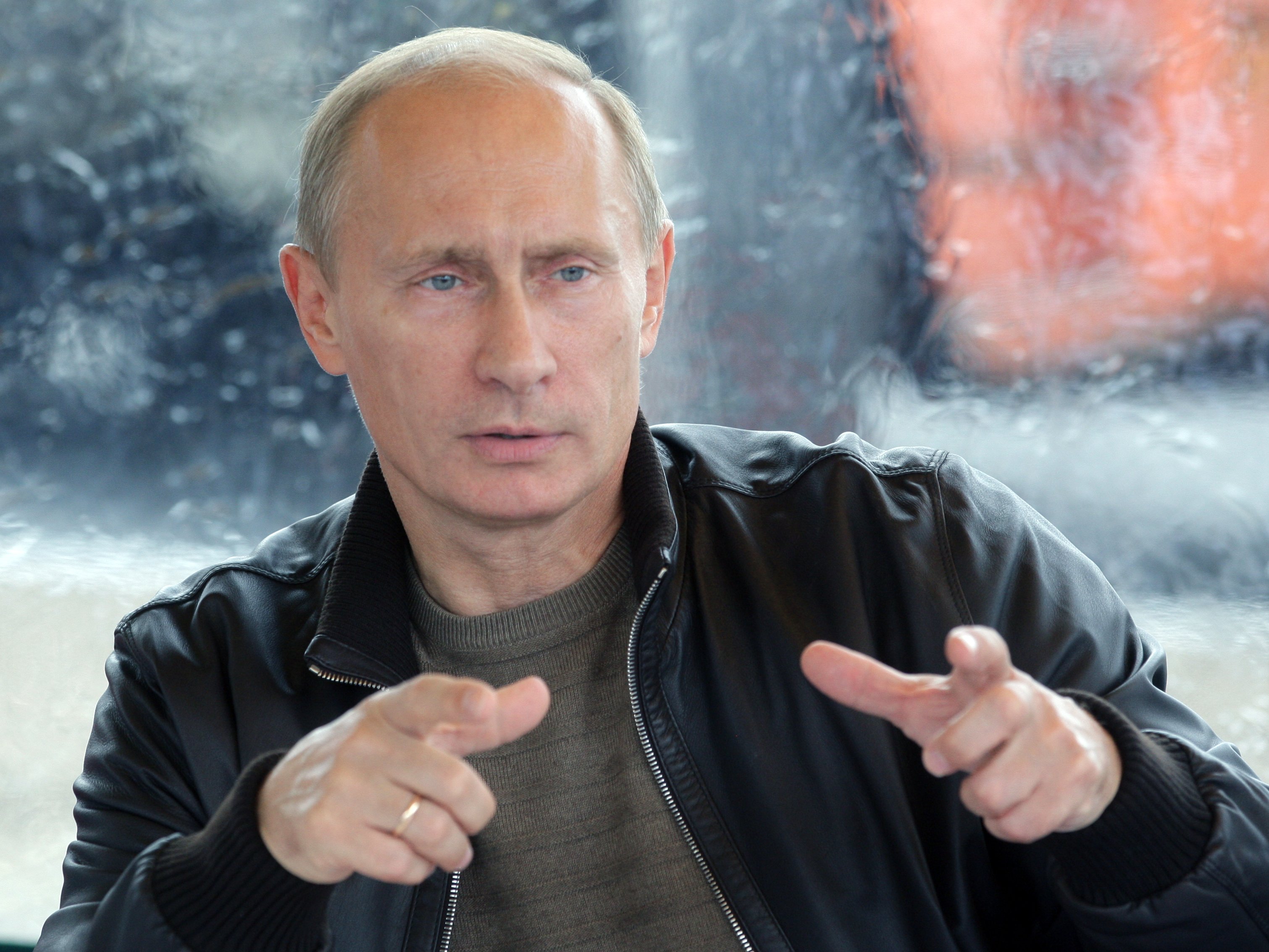
'Mad Vlad' Putin is no conservative hero


Many conservatives are applauding Russian President Vladimir Putin for his decision to intervene in the Syrian civil war. Even though the US-led coalition has been bombing ISIS for more than a year, many feel that Putin has taken a leadership role in the war in comparison to President Obama’s lackluster resolve.

A good example of the conservative applause for Putin comes from Robin McFee of Family Security Matters who applauded Putin for his “moral clarity” in pointing out the failures of the Obama Administration in the Middle East. Going even further, Walid Shoebat, a former terrorist who converted to Christianity, called Putin’s intervention in Syria “a holy war,” saying “it is the latest crusade of our time.”

“Putin is the St. Constantine of our time,” writes Shoebat, referring to the Roman emperor who stopped the persecution of Christians and legalized Christianity. “For like that priestly king of old,” he continues, “he has unsheathed the holy sword of the Church to strike down the enemies of God for the cause of humanity.”

Even Franklin Graham, son of evangelist Billy Graham and founder of Samaritan’s Purse, said, “What Russia is doing may save the lives of Christians in the Middle East.” Franklin continued, “You understand that the Syrian government for their good and for their bad over the history of this country, they have protected Christians, they have protected minorities from the Islamists.”

Graham’s view is likely close to the truth. Putin and Russia are not intervening to save Syrian Christians. They are intervening to save the Assad regime. The possibility that some Christians might be saved in the process is purely incidental to Putin’s primary goal.

On American Thinker, Fay Voshell writes that the “former KGB agent is now a devout Christian whose faith informs policy” and that “Putin's religious values are rooted in Russian Orthodoxy and personal religious experiences, including his wife's car accident in 1993 and a life-threatening house fire in 1996.”

Nevertheless, Putin’s actions in the two decades since his supposed conversion more closely resemble a Machiavellian strongman than a principled Christian. In 1999, when, as prime minister of Russia, Putin sent troops into Chechnya, it was to stop “the collapse of the Soviet Union,” not to protect Christians in the mostly Muslim republic. As World Affairs notes, Putin blamed Chechen terrorists for a series of bombings in Russia, but when an unexploded bomb was found, Russian agents were revealed to be the perpetrators of the false flag attack.

Putin’s concern for the innocent was not evident in his reaction to the hostage taking at Beslan School No. 1 in North Ossetia in southern Russia in 2004. Security forces responding to the terrorist attack used flame throwers and grenade launchers when they assaulted the school according to the Moscow Times. The attack resulted in the deaths of more than 330 of the 1,200 hostages. Most of the dead were children.

Putin invaded two other countries as well. The 2008 invasion of Georgia and the 2014 invasion of Ukraine bear many similarities. In both cases, Russia used the pretext of protecting ethnic Russians to seize outlying provinces from independent nations. In both cases, Russia seems unwilling to stop with its early gains. The Guardian describes a Russian border fence around South Ossetia that grabbed additional Georgian territory overnight. Likewise, the war in Ukraine is still raging and the country is bracing for a possible full-scale invasion.

After Russian-backed rebels in Ukraine shot down an unarmed Malaysian airliner in 2014, killing 298 people, Putin was quick to blame Ukraine and has continued to use the incident for propaganda against Ukraine. In the United Nations, he has blocked attempts to create a tribunal to investigate the incident.

Putin can be accurately described as a dictator, having been the de facto ruler of Russia since 1999 when he succeeded Boris Yeltsin as president. He served two terms as president until 2008 when Russia’s term limit forced him to step aside. Undaunted, he was appointed prime minister by Dmitri Medvedev and promptly had the constitution changed. When Medvedev’s term ended, Putin was elected to a third term in 2012.

Putin’s alleged Christian convictions did not stop him from ordering the deaths and imprisonment of countless political opponents and journalists. The list of Putin’s Russian victims is long and spans 20 years, not including his time as a KGB officer. The most infamous murder was Alexander Litvinenko, a former KGB officer turned dissident. In a plot worthy of James Bond, Litvinenko was poisoned with radioactive polonium in London in 2006.

Even Putin’s alleged concerns about Islamic radicalism are suspect. Both Syria and Iran have long been client states of Putin’s Russia. Syria’s relationship with Russia goes back to the days of the Soviet Union. Unknown to many, it is Russia that is building Iran’s nuclear program that now threatens, not only Israel, but Europe and the United States as well. Likewise, Russia has supplied Iran with modern fighter aircraft as well as air defense systems that would make an attack on those nuclear facilities difficult and costly. Putin is also a major supporter of President Obama’s nuclear deal with Iran. Business Insider points out that Putin actually took credit for the deal.

Although Putin’s support for Iran predates the Syrian civil war, Russia and Iran have found common cause there as the two main supporters of the Assad regime. Bashar Assad is a Shia Muslim as are the Iranians. The opposition to Assad is primarily Sunni. Russia and Syria have had a nonaggression pact since 1950 and Russia has had military bases in Syria since 1971. Fox News reported in August that the commander of the Iranian Quds Force, designated as a terrorist by the US, secretly traveled to Russia to meet with “senior Russian leaders.”

For hundreds of years, Russian foreign policy has been built around two goals. First is the desire to build a buffer zone to protect their borders from invasion. Second is the quest for a warm water port. Many Russian ports are blocked by ice during winter. Other Russian ports are blocked by narrow straits and potentially hostile neighbors. It is likely that Putin’s venture into Syria, in addition to propping up a friendly regime, is about making sure that Russian naval power is not expelled from the Mediterranean.

Russia’s intervention might also be economic. Russia has been battered by international sanctions and low oil prices. The ruble has lost half of its value and inflation for the year is predicted to be 18 percent according to Investopedia. Russia’s imperial wars may be both a distraction from the economic mess at home and an attempt to stabilize and increase the price of oil.

At his core, Putin is an opportunist who is seeking to restore the Russian empire. He seems to take Rahm Emanuel’s advice to “never let a crisis go to waste” when he can use it to expand Russia’s borders or sphere of influence.


In short, Putin is everything that conservatives fear that Obama is. He is a dictator who changed the constitution to stay in power and doesn’t have qualms about killing people who threaten him. He is known to have used false flags to justify war against Chechnya and Ukraine and works world crises to his advantage. Putin is no hero for conservatives.

Originally published on Conservative Firing Line

Thursday, August 27, 2015

America "racing toward judgment" as Shemitah draws to close


Jonathan Cahn / Hope of the World
As the 2014-2015 Shemitah year draws to a close, the world is once again falling into financial turmoil. The US stock market moved into correction territory last week and, in early trading this week, the Dow crashed more than 1,000 points before recovering to a mere 588 point loss. The current volatility in the market is not the only bad news of the current Shemitah, however. The Shemitah, which began last September, was ushered in with several ”shakings,” in the words of Rabbi Jonathan Cahn, who discovered the Shemitah pattern and wrote the book, “The Mystery of the Shemitah.”

"America is racing toward judgment," says Rabbi Jonathan Cahn in a video posted on You Tube. "Not one but multiple factors are converging."

The Shemitah began on September 24, 2014 with another stock market correction. CNN Money noted that the “September slump” did not last for the entire month of September. Instead, “starting on Monday, September 22, investors hit the pause button and kept hitting it for much of the rest of the month.” This coincided almost perfectly with the onset of the Shemitah.

Following on the heels of the stock market crash was a shaking of a different sort. On September 30, 2014, the CDC confirmed the first case of Ebola in the United States. Over the next few weeks, several other cases were identified around the country, prompting a state of near panic in many urban areas. The panic lasted throughout the month of October as more cases were diagnosed and the first patient, a Liberian immigrant, died. Spurring more fears, a number of medical professionals who had treated patients in the original outbreak in Africa flouted quarantines and traveled around New York and the country.

The stock market experienced a rough October as well. Both the S&P 500 and the Dow Jones Industrial Average experienced sharp downturns in mid-October. Although both indexes regained their losses over the next few weeks, Shemitahs have historically been marked by volatility in the markets and the current Shemitah is no exception.

 In early July, the Chinese stock market crashed after reaching a record high on June 12. On July 4, the Chinese government suspended the sale of stocks in an attempt to stave off losses. In spite of the Chinese government’s attempts to manipulate the market, the International Business Times reports that Chinese stocks lost more than eight percent of their value on what has come to be known as “China’s Black Monday.” Quartz notes that stock markets around Asia closed with sharp declines. Further, Zero Hedge listed 23 countries around the world where stock markets are currently crashing. Thomas DeMark, founder and CEO of DeMark Analytics, told CNBC that the Chinese stock market crash closely resembles the US crash of 1929 in which the stock market lost 50 percent of its value and the contagion spread around the world.

Other factors that may be contributing to the world’s economic woes are the collapse in oil prices, the Greek debt crisis and the Federal Reserve’s monetary policy. Holman Jenkins wrote in the Wall St. Journal that the Greek crisis has largely been resolved without Greece having to address its core problem of deficit spending. Reform of Europe’s welfare state has been kicked down the road and Europe’s debts will continue to mount.

Martin Feldstein, President Reagan’s chairman of the Council of Economic Advisors, wrote in the Wall St. Journal that some of the US market’s difficulty can be attributed to the Fed’s policy of low interest rates that dates back two seven-year Shemitah cycles to the September 11 attacks and the resulting stock market crash in 2001 on the last day of the Shemitah. The Fed kept interest rates low throughout the remainder of the Bush Administration which fed the real estate bubble that burst in 2008 on the last day of that Shemitah year. Feldstein notes that after the failure of President Obama’s 2009 stimulus, Fed Chairman Ben Bernanke promised to hold rates near zero for the long term. Low interest rates have also pushed investors into the stock market due to low yields on other investments. Recent articles have pointed out that with interest rates hovering near zero, the Fed has little room left to combat a new economic crisis and may even take rates into negative territory.

The confluence of bad economic news into a perfect storm scenario is compounded by the rejection of Judeo-Christian values and morals. The 2015 Shemitah has been hallmarked by a turning away from God. The most notable example of this is the Supreme Court decision to overturn the will of the people and thousands of years of tradition to redefine marriage. By the time the Supreme Court ruled on the Obergefell case, same sex marriage had become the law in a majority of the United States. In almost every state, the redefinition of marriage was imposed by a small clique of judges and not the voters of the state.

Also in the summer of 2015, a series of undercover Planned Parenthood videos unveiled the dark world of the abortion provider. The videos revealed the callous disregard for life among Planned Parenthood employees and the stark truth that the sale of body parts from aborted babies is a vital part of the organization’s business model. In one video, a former employee of a stem cell harvesting company accused Planned Parenthood, which receives federal government funding, of harvesting the brain of a baby whose heart was still beating. Contrary to the public face of abortion in which proponents deny the humanity of unborn babies by using the euphemism “fetus,” Planned Parenthood’s employees freely refer to “babies” on the videos as they joke about the killings. Even during the murder trial of abortion doctor Kermit Gosnell the horror of abortion has never been so clearly exhibited.

Symbolic of America’s rejection of God, a statue of Baphomet, a satanic deity, was unveiled in Detroit in July. The nine-foot tall statue was unveiled at what is purported to the “largest public satanic ceremony in history” according to Time.

A landmark event of the Shemitah that touches on both morality and policy is President Obama’s tentative nuclear deal with Iran. The deal marks not only a danger for the United States, since it fails to prevent Iran from developing nuclear weapons, but is a historic break between Israel and the United States. Since its birth in 1948, Israel and the United States have maintained close relations. The US was among the first countries to recognize the nation of Israel and the US provided valuable support to Israel during many of its wars for survival. Most notably, in the Yom Kippur War of 1973, it was resupply by the United States that helped Israel to survive a coordinated attack by its Arab neighbors.

The Iran deal changes the relationship between the two countries. Barack Obama has been more hostile to Israel than any other president. From the beginning of his administration, Obama pushed for a return to Israel’s almost indefensible pre-1967 borders. The deal with Iran will place the United States at odds with Israel as it provides financial support to the Iranians. The removal of sanctions and lack of inspections will make it easier for Iran to build nuclear weapons with which to threaten both Israel and the United States.

The 2015 Shemitah has been a momentous period. With three weeks left in the current Shemitah, which ends on September 13, there is the possibility of even more volatility and chaos. Secular analysts are predicting that the current financial unrest will continue for several months until markets find an equilibrium.


Rabbi Cahn believes that it is not too late to avert judgement. “I am led to call for a period of prayer, repentance and intercession for America, to end on Sept. 23, Yom Kippur," he says. "It is crucial the people of God come before Him now on the foundation of 2 Chronicles 7:14: 'If My people who are called by My name will humble themselves and pray and seek My face and turn from their evil ways, I will hear from heaven, I will forgive their sin, and I will heal their land.”

Friday, August 21, 2015

The scoop on birthright citizenship

Gage Skidmore/Flickr
When Donald Trump revealed his immigration policy this week, the aspect of the plan that got the most attention was his desire to deport the American-born children of illegal immigrants. Under current US law, children born in the United States automatically become US citizens. In his plan, Trump says that this policy, “birthright citizenship,” is the “biggest magnet for illegal immigration.”

Birthright citizenship is also called “jus soli,” which means “the law of the soil.” Like many aspects of American law, it has its roots in English common law. In Calvin’s Case, a 1608 ruling, the court determined that a Scotsman born under the reign of King James of Bible fame, whose rule united the kingdoms of Scotland and England, was also an English subject. The court found that “a person's status was vested at birth, and based upon place of birth—a person born within the king's dominion owed allegiance to the sovereign, and in turn, was entitled to the king's protection.”

The Naturalization Act of 1790, the first US law addressing immigration and naturalization, did not specifically address the citizenship of aliens living within the United States, but the fact that English common law subsequently became US common law was referenced in an 1866 federal circuit court decision in the case of United States v. Rhodes. Justice Noah Swayne wrote, “All persons born in the allegiance of the king are natural born subjects, and all persons born in the allegiance of the United States are natural born citizens. Birth and allegiance go together. Such is the rule of the common law, and it is the common law of this country, as well as of England.” The only two exceptions, Swayne wrote, were the children of ambassadors and the children of slaves.

The slave question had been raised nine years earlier by the Dred Scott decision, generally considered one of the worst decisions in Supreme Court history. In that case, the Court ruled that slaves were not US citizens and struck down the ability of Congress to prohibit slavery in the territories.

Earlier, in 1830, the Supreme Court had specifically endorsed jus soli in the Sailor’s Snug Harbor case. The Court held that the infant son of a loyalist, born in American-occupied New York City, was a US citizen by birth, even though children born after the British occupied the city were not.

After the Civil War, the 13th and 14th amendments were passed to effectively overturn the Dred Scott decision. The 13th amendment made slavery illegal while the 14th amendment extended citizenship rights to former slaves and banned former Confederate officials from holding public office.

Section one of the 14th amendment reads:

All persons born or naturalized in the United States, and subject to the jurisdiction thereof, are citizens of the United States and of the state wherein they reside. No state shall make or enforce any law which shall abridge the privileges or immunities of citizens of the United States; nor shall any state deprive any person of life, liberty, or property, without due process of law; nor deny to any person within its jurisdiction the equal protection of the laws.

The first clause of the amendment specifically codified the traditional birthright citizenship of common law. The phrase “subject to the jurisdiction thereof,” hearkens back to Calvin’s Case and Justice Swayne’s decision in US v. Rhodes. Under this view, being born in a country automatically makes one subject to the laws and jurisdiction of that country.

Even before Donald Trump burst onto the political scene, some Republicans were challenging birthright citizenship for illegal aliens on the grounds that immigrants who were in the country illegally were not “subject to the jurisdiction” of the United States government.

The Heritage Foundation makes this case by claiming that Senator Jacob Howard (R- Maine), author and proponent of the citizenship clause, specifically pointed out that Indians were excluded from citizenship because they owed their allegiance to their tribe and not to the nation even though they were born within the geographical limits of the United States.

Other historians point out that Howard also said that the 14th amendment was intended to mirror the Civil Rights Act of 1866. Sen. Howard was also a strong supporter of this law and indicated that it was the basis for the 14th amendment. The Act stated, “… all persons born in the United States and not subject to any foreign power, excluding Indians not taxed, are hereby declared to be citizens of the United States….”


Birthright citizenship has been established since 1898 when the Supreme Court ruled in favor of Wong Kim Ark. Ark was born in California to Chinese citizen parents. Ark moved to China with his parents after the passage of the Chinese Exclusion Act in 1882, but returned to the United States, the only home he had ever known. Four years later, he visited his parents in China and, upon his return, was not allowed to enter the US on the grounds that he was not a citizen. 

The Supreme Court ruled that a child whose parents “have a permanent domicile and residence in the United States, and are there carrying on business, and are not employed in any diplomatic or official capacity under the Emperor of China, becomes at the time of his birth a citizen of the United States by virtue of the first clause of the Fourteenth Amendment of the Constitution.” Ark’s parents, who were citizens of China, were not excluded from being under the jurisdiction of the United States.

While the Supreme Court has never ruled on the question of whether illegal aliens are subject to the jurisdiction of the United States, but the Wong Kim Ark case would seem to settle the question of whether having parents who are citizens of a foreign country would prevent birthright citizenship. The Supreme Court rejected this theory more than a century ago.

Rep. Steve King (R-Iowa) introduced a bill this year, H.R. 140, which would define a person born in the United States and “subject to the jurisdiction thereof” as a US citizen or national, a lawful permanent resident alien residing in the US or an alien performing active service with the US military. By redefining the meaning of “subject to the jurisdiction,” King and the bill’s proponents hope to legislatively end the ability of illegal aliens to anchor themselves in the United States with a native born child.

A possible problem with this strategy is that the second clause of the 14th amendment reads “No state shall make or enforce any law which shall abridge the privileges or immunities of citizens of the United States….” King’s bill, which would effectively abridge the birthright citizenship rights of the children of illegal immigrants, might well be considered unconstitutional under the 14th amendment.

With the present balance of power in Congress, King’s bill is unlikely to pass the Democratic filibuster. If it were approved by Congress, it would face a certain veto by President Obama. If it became law, it would almost certainly be challenged in court.

If King’s bill were ruled unconstitutional, the next step would be to amend the Constitution to change the 14th amendment. A constitutional amendment must be approved by a two-thirds vote in both the House and the Senate and then ratified by three-fourths of the state legislatures. An amendment repealing birthright citizenship would have no chance of passing the current Congress where Democrats control enough seats to prevent the amendment from even being considered.

An alternative method of amending the Constitution is by a convention called by two-thirds of the state legislatures. At last count, 27 states had passed a call for a convention of states, seven short of the necessary number. An amendment proposed by a convention of states, also called an Article V convention, would still have to be approved by three-fourths of the state legislatures. Only 13 states are needed to block an amendment and Democrats control more than enough state governments to prevent the redefinition of birthright citizenship.

Nevertheless, a number of Republicans have signed on to oppose birthright citizenship. Among the major presidential candidates, Scott Walker, Chris Christie, Ted Cruz, and Bobby Jindal have expressed support for redefining birthright citizenship according to CNN. Ohio Gov. John Kasich, who had supported a bill to eliminate birthright citizenship as a congressman, now opposes the change.

As noted by NPR, birthright citizenship is practiced almost exclusively in the New World where populations are made up largely of immigrants. Only 30 of the world’s 194 countries provide automatic citizenship for babies born within their borders.

Any attempt to change the traditional US policy of birthright citizenship faces an uphill struggle. If the change somehow makes it through Congress, it is almost certain to be challenged and struck down by the courts. For the near future at least, birthright citizenship is here to stay.