Showing posts with label impeachment. Show all posts

Sunday, February 2, 2020

Neither Side Looks Good On Impeachment


As the impeachment process begins its final phase this week, there is already debate over which side got the best of the other and who stands to benefit most in this year’s election. The one thing that can be said for certain is that neither side has emerged from impeachment looking good.

On one hand, Democrats look bad because of problems with their handling of the impeachment process. The House rushed its impeachment vote and then, perhaps realizing that they had committed a strategic error in placing the decision on whether to dig deeper in Mitch McConnell’s hands, inexplicably sat on the referral to the Senate for weeks. Republicans had a legitimate point when they asked why the House felt the need to urgently impeach the president and then delay his trial.

Republicans also had a good point when they asked why more witnesses were needed when House Democrats had said that there was overwhelming evidence. Even though about half the country seems to have agreed with the Democrats according to numerous polls, including a recent Fox News poll that showed 50 percent support for the president’s removal, House Democrats obviously did not convince their Republican counterparts in the Senate. Words like “inarguable,” “undeniable,” and “undebatable” are almost always proven to inadequate descriptors, especially in political matters, because both sides are adept at arguing, denying, and debating.

The Democratic error was a two-fold miscalculation in both rhetoric and wrapping up the investigation prematurely. While the House hearings way back in October did a good job of convincing a plurality of Americans that the president had committed impeachable acts, every new revelation that emerges in the Ukraine scandal is a reminder that House Democrats quit investigating after they had barely scratched the surface.

A final Democrat error was in not throwing the book at the president. Robert Mueller had already investigated and documented other obstructive abuses of power in his report. The president’s abuse of national emergency authority to subvert the will of Congress could have been another article of impeachment as well. The articles could have easily become a laundry list.

On the other hand, Republicans have acted to mislead voters in nearly every claim made in defense of Donald Trump. Since the news of the president’s quid pro quo deal attempting to exchange aid for an investigation of the Bidens was revealed back in September, the party’s members have continually shifted the goalposts and attempted to prevent the full truth of the president’s activities from being revealed.

First, Republicans claimed that the transcript of the July 25 phone call didn’t contain evidence of a quid pro quo. In reality, the document, which is not a direct transcript of the call, indicates that when Zelensky asked about getting Javelin anti-tank missiles from the US, the next word out of Trump’s mouth were “I would like you to do us a favor….”

That favor turned out to be two investigations. In his first request, the president raised the issue of Crowdstrike and the DNC server from 2016. This conspiracy theory had already been thoroughly debunked by Trump’s own Homeland Security staff before the call was made. The second investigation was into “talk about Biden's son, that Biden stopped the prosecution.” The president asked Zelensky to cooperate with Rudy Giuliani in looking into the Bidens. The Dispatch does a good job of laying out the facts of the Biden allegations, which turn out not to hold water.   

Second, Republicans argued that President Trump was not accused of a crime and that the Founders had intended impeachment as a punishment only for criminal acts. They are wrong on both counts.

The Constitutional Rights Foundation describes the history of “high crimes and misdemeanors” thusly: “Some of these charges were crimes. Others were not. The one common denominator in all these accusations was that the official had somehow abused the power of his office and was unfit to serve.”

The Republican constitutional witness to House impeachment hearings agreed. Jonathan Turley told House investigators that Alexander Hamilton had defined “impeachable offenses” in Federalist 65 as “those offences which proceed from the misconduct of public men, or, in other words, from the abuse or violation of some public trust.” What Turley objected to was not that the president’s actions were not impeachable, but “the paucity of evidence.” Turley thought that Democrats needed to keep digging and building their case.

Looking back through our history, about half of US impeachments have not involved criminal offenses. Abuse of power was a common charge in impeachment cases. If only presidential impeachments are considered, the Republican argument is still wrong. Andrew Johnson was impeached for violating a noncriminal statute as well as “designing and intending to set aside the rightful authority and powers of Congress….”

To the second point, President Trump broke numerous laws leading up to his impeachment. His freeze on the Ukrainian aid violated the Impoundment Control Act, a noncriminal violation of the law similar to Andrew Johnson’s violation of the Tenure of Office Act. Trump also likely violated campaign finance laws that prohibit soliciting or accepting help in an election from foreign governments.

The president almost certainly committed criminal acts as well. Several Trump supporters have made the case that there is no law against “obstruction of Congress.” While this may be true in the strictest sense, it is wrong in terms of case law that covers contempt of Congress. Obstruction of Congress is covered by series of other laws notes the Congressional Research Service. The statute isn’t called obstruction of Congress but laws against obstruction of federal proceedings and witness tampering are among the laws that prohibit obstructing Congress. The Democratic authors of the articles of impeachment should have specifically referenced these statutes.

Republicans were also less than honest when they claimed that it was abnormal for witnesses to appear in Senate impeachment trials. While Republicans claimed that Democratic handling of impeachment violated congressional tradition, it was the Republican refusal to hear witnesses that broke the tradition of every prior impeachment trial in US history.
   
Finally, I’m most disappointed in the Republican claims that the president has absolute immunity and a seemingly unlimited executive privilege. As I discussed in detail last week, legal precedent reaching back to the days of Thomas Jefferson does not support claims of absolute immunity and privilege. In fact, precedent points in the opposite direction, particularly when the president is attempting to use executive privilege to hide wrongdoing.

It’s hard to imagine that the Republican Party, which for most of my life proudly claimed to be the party of constitutionalists, is now twisting the original intent of the Constitution to protect presidential behavior that is exactly what the Founders were worried about, but that is where we are in 2020. In This bizarro world, the process errors of the Democrats are worse than the abuses of power by the president.

There were problems with both sides’ handling of the impeachment. The House should have subpoenaed more witnesses and asked courts to force the Administration to comply. The White House should have done its legal duty and complied with constitutional requests from Congress or at least fought them in court rather than ignoring them. The Senate could have chosen to rectify the errors of both sides by hearing witnesses and examining evidence that came to light after the House voted in December. Justice called for the Senate to find the truth.

The biggest error of Senate Republicans, however, was the almost total lack of curiosity about their president’s behavior. A new poll showed that 75 percent of voters, including about half of Republicans, wanted the Senate to call witnesses. Less than four percent of Senate Republicans honored the will of the people. Many of those voters will remember Friday’s vote when they cast ballots this November.

Republicans who do not want to hold President Trump accountable have said from the beginning that the people should decide his fate. When the president is acquitted next week, Trump’s fate will fall to voters after all. While the Senate was able to plug its collective ears and not hear the evidence against the president, the White House won’t stop other revelations in the media so easily. The witnesses that the Senate refused to hear will be splayed across newspaper headlines and television screens between now and Election Day.

When voters go to the polls, they will have a choice between the Democrats, who carried out an incompetent investigation, and the Republicans who, when faced with presidential corruption of YUGE proportions, chose to look the other way. The GOP may not be pleased to see how voters reward the actions of President Trump and his defenders.

Originally published on The Resurgent

Saturday, January 25, 2020

Executive Privilege And Impeachment


Over the course of the impeachment process, Trump supporters have argued that the White House is protected from responding to congressional subpoenas by executive privilege. The argument goes that, even if the president has nothing to hide by submitting the evidence subpoenaed by Congress, he is defending the executive’s constitutional independence from Congress.

As one commenter responded on my article from Friday, “He is defending the use of executive privilege by the executive branch so as not to place all the communications of the executive branch under the control of a random radical faction of the House that either party could exploit. There are legal and separation of powers issues at play that are bigger than Trump but the Never Trumpers can't see past their disdain for the man so they assume the worst motivations to explain everything he does.”

If that’s the case, he’s doing it wrong.

Many Trump supporters have accused me of being against executive privilege, arguing that if you aren’t for the absolute immunity claimed by the Trump Administration then you must be against any executive privilege at all. This is a logical fallacy. There is quite a lot of middle ground between unlimited congressional oversight and unlimited executive privilege. Since we live in a constitutional republic, we should ask what the Constitution and judicial precedent say about the issue.

Executive privilege isn’t specifically mentioned in the Constitution but its history in the United States goes all the way back to George Washington. One of the earliest incidents in our history that relate to the issue was in 1796 when, as legal historian Michael Dorf wrote, “President Washington refused to comply with a request by the House of Representatives for documents relating to the negotiation of the then-recently adopted Jay Treaty with England. The Senate alone plays a role in the ratification of treaties, Washington reasoned, and therefore the House had no legitimate claim to the material. Accordingly, Washington provided the documents to the Senate but not the House.”

The first court case involving executive privilege dates back to 1807 when Aaron Burr was being tried for treason. Burr’s counsel subpoenaed a letter from Thomas Jefferson, who was president at the time. Presidential claimed, as Trump’s lawyers do today, that the president was exempt from subpoenas requesting specific documents. Chief Justice John Marshall shot down this argument, ruling that presidents are not immune to subpoenas and that even national security was not grounds for refusal to comply. If documents were too sensitive to be made public, Marshall ruled, the court could keep them confidential.

In 1974, the Supreme Court ruled again on executive privilege in United States v. Nixon. As with Trump, Nixon’s articles of impeachment, which were approved by House committee but never reached a full vote, also cited obstruction alleging that the president “failed without lawful cause or excuse to produce papers and things as directed by duly authorized subpoenas issued by the Committee on the Judiciary of the House of Representatives….” The Supreme Court never had the chance to rule on that specific question due to Nixon’s resignation, but it did rule on his claim of executive privilege in withholding audiotapes and written records from the grand jury convened by the Watergate special prosecutor.

In the decision, the Court agreed to “the valid need for protection of communications between high Government officials and those who advise and assist them in the performance of their manifold duties," saying, "human experience teaches that those who expect public dissemination of their remarks may well temper candor with a concern for appearances and for their own interests to the detriment of the decision-making process."

Nevertheless, the Supreme Court ruled against Nixon, holding, as Dorf explains, that “the executive privilege is not absolute. Where the President asserts only a generalized need for confidentiality, the privilege must yield to the interests of the government and defendants in a criminal prosecution.” Nixon released the tapes and resigned amid the furor five days later.

President Clinton also attempted to use executive privilege to shield himself from being called to testify in the Monica Lewinsky investigation. A federal judge ruled in 1998 that executive privilege did not shield the president or his aides from subpoenas, although some of the testimony and evidence could be shielded from public view. Clinton ultimately testified under oath in a videotaped deposition.

In another blow to Donald Trump’s executive privilege claims, Dorf notes that “no case to this point holds that executive privilege applies to conversations between Executive officials and persons outside the government.” Therefore, Trump’s communications with Rudy Giuliani, Lev Parnas, and others would not be covered by executive privilege claims.

Since Giuliani was Trump’s personal attorney, the president could attempt to claim attorney-client privilege, but there are limits here as well. Exceptions to attorney-client privilege include conspiring to commit crimes or acts of fraud. Since Lev Parnas and three other Giuliani associates were indicted for the criminal acts of violating campaign finance laws and advancing “the political interests of at least one foreign official – a Ukrainian government official who sought the dismissal of the US ambassador to Ukraine” while Giuliani was on a shadow diplomacy mission for the president in Ukraine, Trump’s claim of attorney-client privilege may be on shaky ground as well. Although currently unindicted, Giuliani is reportedly under investigation by the US Attorney for the Southern District of New York for campaign finance and lobbying violations.

If the president wanted to fight the congressional subpoenas, he was within his rights to do so even though he would probably lose. Unfortunately, rather than fighting the subpoenas, he chose to instruct his subordinates to ignore them. Subpoenas can be fought but are ignored at the witness’s peril. Legally, the way to fight a subpoena is to file a motion to quash it, i.e. to ask a judge to remove it. That is not what the Trump Administration did. In fact, the White House started ignoring subpoenas back in April 2019, well before the impeachment began.

When the Administration ordered its staffers to ignore legal and constitutional congressional subpoenas, it became a criminal matter of obstruction. For those who have requested a law that Trump broke (even though criminal activity is not required for impeachment under the original meaning of “high crimes and misdemeanors”), the Congressional Research Service cited 18 U.S.C. 1505 in its 2010 report on “Obstruction of Congress.” The statute applies to “any pending proceeding is being had before any department or agency of the United States, or the due and proper exercise of the power of inquiry under which any inquiry or investigation is being had by either House, or any committee of either House or any joint committee of the Congress.” Additionally, 18 U.S.C. 1512 also prohibits witness tampering. Under its statutory power to punish contempt, Congress has the authority to levy fines and even imprison witnesses who ignore subpoenas.

An additional argument made by Trump supporters is that House Democrats should have pursued the legal case to compel the Administration to produce witnesses and evidence. While I do agree that this would have been a smart move politically, no law or congressional guideline mandates that Congress must sue the president in an attempt to force him to do his duty before impeaching him. While the Democrats could have gone through the courts and bolstered the already strong case against Donald Trump, the proceedings were not rendered illegitimate by their decision not to do so.

Historical precedent tells us that executive privilege exists but that it cannot be used as a shield to misconduct in the Oval Office. Executive privilege is not an absolute right to ignore Congress and get out of jail free. While ignoring the subpoenas may have temporarily protected the president from embarrassing revelations about his abuses of power, his obstruction actually sped up his impeachment process in the end. Now the embarrassing information about his Ukrainian activities is coming out anyway in a slow drip that may continue through the election.

While the president is not going to be removed from office, it looks as though defying Congress turned out to be a lose-lose proposition. Once again, the maxim that that best way to handle a scandal is to get out in front of it rather than engaging in a coverup seems to be correct.

Originally published on The Resurgent

Friday, January 24, 2020

Democrats Struggle To Find Fourth GOP Vote To Call Impeachment Witnesses


It was always understood that there would be little chance of removing Donald Trump from office through impeachment due to the requirement for a mass defection of Republican senators to get to the 67 votes required by the Constitution. Any victory in the Senate would be a moral one in which a small number of Republicans might join with Democrats to at least call more witnesses and get the truth about Trump’s actions out to the American people. Such a political victory would rely upon at least four Senate Republicans crossing the aisle to form a temporary anti-Trump coalition of 51 votes. A week into the Senate trial of the president, we still don’t know what the outcome of this aspect of impeachment will be.
Earlier this week, the Senate voted to delay the decision on whether to call witnesses to testify during the trial. At this point, it looks as though Democrats may be able to get three Republicans to join them in their quest, but the fourth may be a bridge too far.
Three Republicans have indicated that they are open to calling witnesses. These senators include Susan Collins of Maine, Lisa Murkowski of Alaska, and Mitt Romney of Utah.
Axios reports that several senators were targeted to be the fourth vote but that so far none has committed. The possibles include Lamar Alexander of Tennessee, Cory Gardner of Colorado, Thom Tillis of North Carolina and Joni Ernst of Iowa. The Hill adds Martha McSally of Arizona, Jerry Moran of Kansas, and Rob Portman of Ohio to the list.
Already Tillis has planted a flag on Trump’s side, calling the impeachment a “sham” and telling Fox News, “I don’t want to spend a lot of time doing what I expected the House to do. You’d think if there was any truth to it, they would have spent the time in the House to actually bring it forward”
The North Carolina senator is facing a tough re-election fight and seems to be concentrating on firming up the Republican base in a state where Trump’s approval rating is at 48 percent, a net of zero. There has been no recent polling on the Senate race but a poll from last spring showed Tillis trailing likely Democratic nominee Erica Smith.
Sen. McSally’s recent attack on a CNN reporter likely indicates which side she is on as well. McSally is another very vulnerable Republican as she prepares to face Mark Kelly in this year’s senate race. The Arizona Republican is already trailing in a number of recent polls and she can ill afford to lose support from the Republican base by angering Trump.
Corey Gardner and Joni Ernst might be more likely targets. Trump’s approval is 18 points underwater in Colorado and nine points in the negative in Iowa. Both senators are up for re-election this year as well and Gardner is already trailing in preliminary polling by double-digit margins. There are no public polls of the Iowa senate race so far.
But vulnerable Republicans may be between a rock and a hard place. CBS News reports that Senate Republicans were warned, “Vote against the president and your head will be on a pike.” Republican leadership seems to be gambling with their Senate majority that voters will not hold swing state incumbents accountable for conducting a show trial and speedy acquittal.
Portman in bellwether Ohio may be a good bet for the fourth vote. Portman told the Dayton Daily News recently that he thinks the trial “should be a fair process” and that “we should hear from both sides.”
Even if the Portman, Gardner, and Ernst can be kept on the reservation, there is another possibility. Lamar Alexander of Tennessee is not running for re-election and might be more insulated from pressure. The 79-year-old is unlikely to have his eye on higher office. Still, Alexander is close to Senate leaders and called impeachment “a mistake” back in October. A lot of new evidence has come forth since then, however.
“He is very well-respected by the entire conference and is close to Mitch McConnell. I’ve found Lamar to be one of the most effective members of the entire Senate,” Sen. Collins said of Alexander in Politico. “I don’t know what his position will be. I suspect that he’s waiting until he’s heard the case presented and the questions answered for the senators. And that’s a very logical position to take.”
An added complication is the possibility that Democrats might lose votes from their own caucus. Red-state Democrats such as West Virginia’s Joe Manchin or Alabama’s Doug Jones may well defect and make the math even more difficult.
 
If no fourth Republican comes forward, then votes on whether to call witnesses could end in a 50-50 tie. In that case, it would be up to Chief Justice John Roberts to decide the issue of witnesses. Roberts has given no indication of how he would vote, but NBC News speculates that judges often rule in favor of allowing relevant testimony. The fact that Roberts would be going against his party’s wishes and seems to place a high priority on not undermining the Supreme Court’s authority and image makes the situation more complicated, however.
Meanwhile, Republicans are still unable to explain why, if the president is not guilty of the impeachment allegations against him, they are so staunchly opposed to hearing witnesses who could offer exonerating evidence. On the contrary, Trump’s defenders are already making plans to stonewall testimony in the event that the Senate does vote to call witnesses such as former National Security Advisor John Bolton, Chief of Staff Mick Mulvaney, or Secretary of State Mike Pompeo.
Republicans say that the White House would probably block the testimony on grounds of executive privilege and national security. The resulting court battle would lead to a long, drawn-out battle that might not be resolved before the election.
That’s a lot of trouble to go to stonewall testimony about a “perfect phone call” from witnesses that the president has said he would “love” to hear.

Originally published on The Resurgent

Monday, January 20, 2020

Impeachment Update: A Dem Says ‘Fine’ To Hunter Biden Testimony While GOP Considers ‘Kill Switch’


As the Senate impeachment trial of Donald Trump gets underway, senators are establishing ground rules for the proceeding. As we’ve reported before, it now seems likely that the Senate will hear witnesses and at least one Democratic senator is agreeable to the idea that Hunter Biden could be called to testify. At the same time, Republicans are floating the idea of a way to rapidly end the trial with a dismissal vote if things get out of hand.

On CNN’s “State of the Union,” Sen. Sherrod Brown (D-Ohio) said yesterday that he thought it would be “fine” if Hunter Biden was called to testify before the Senate. The son of Joe Biden, Hunter’s association with Ukrainian energy company Burisma has been called unethical by Republicans and is at the root of President Trump’s decision to freeze military aid to Ukraine.

"We take the position that we want to hear from the witnesses. I don't know what Hunter Biden has to do with the phone call the President made," Senator Brown said. "The point is we need witnesses, we need to know who they are with the right to call witnesses, additional witnesses later. But I don't understand how you come to the American public, make the case that this is a real trial, if there are no witnesses and there is no new evidence."

On Fox News, Senator Ted Cruz (R-Texas) said that the Senate guidelines would include reciprocity of witnesses.

“What does that mean?” Cruz asked rhetorically. “It means if the prosecution gets a witness, the defense gets a witness. If the prosecution gets two, the defense gets two. That means if the prosecution gets to call John Bolton, then the president gets to call Hunter Biden.”

There is so far no evidence of any wrongdoing on the part of either Hunter or Joe Biden, but Republicans were critical of the House decision not to allow the Bidens to be called as witnesses during impeachment hearings in the lower body.

In other impeachment news, Fox reports that Majority Leader Mitch McConnell is close to finalizing a rule that would implement a “kill switch” for the impeachment proceedings. The provision would act as a “safety valve” to prevent the trial from dragging on into the primary election season.

Sen. Josh Hawley (R-Mo.) told Axios that the resolution would “give the president's team the option to either move to judgment or to move to dismiss at a meaningful time..." Hawley said that he would be "very, very surprised” if the organizing resolution for the trial did not include such a provision.

The difficulty for Republicans is that even if the rules for the trial allow the president’s supporters to move for a summary dismissal, so far there is not enough support among Republican senators for such a vote to pass. As Resurgent detailed last week, the Republican leadership has acknowledged that there are currently not enough votes to dismiss the matter without a full hearing.

The Senate is expected to pass an organizing resolution on Tuesday. The text of the resolution has not been released but CNN reports that it is expected to delay the issue of whether witnesses will be called until after opening arguments have been made. At a later point, senators will have an opportunity to vote on whether witnesses should be called. Polling has indicated broad support for calling more witnesses during the Senate trial.

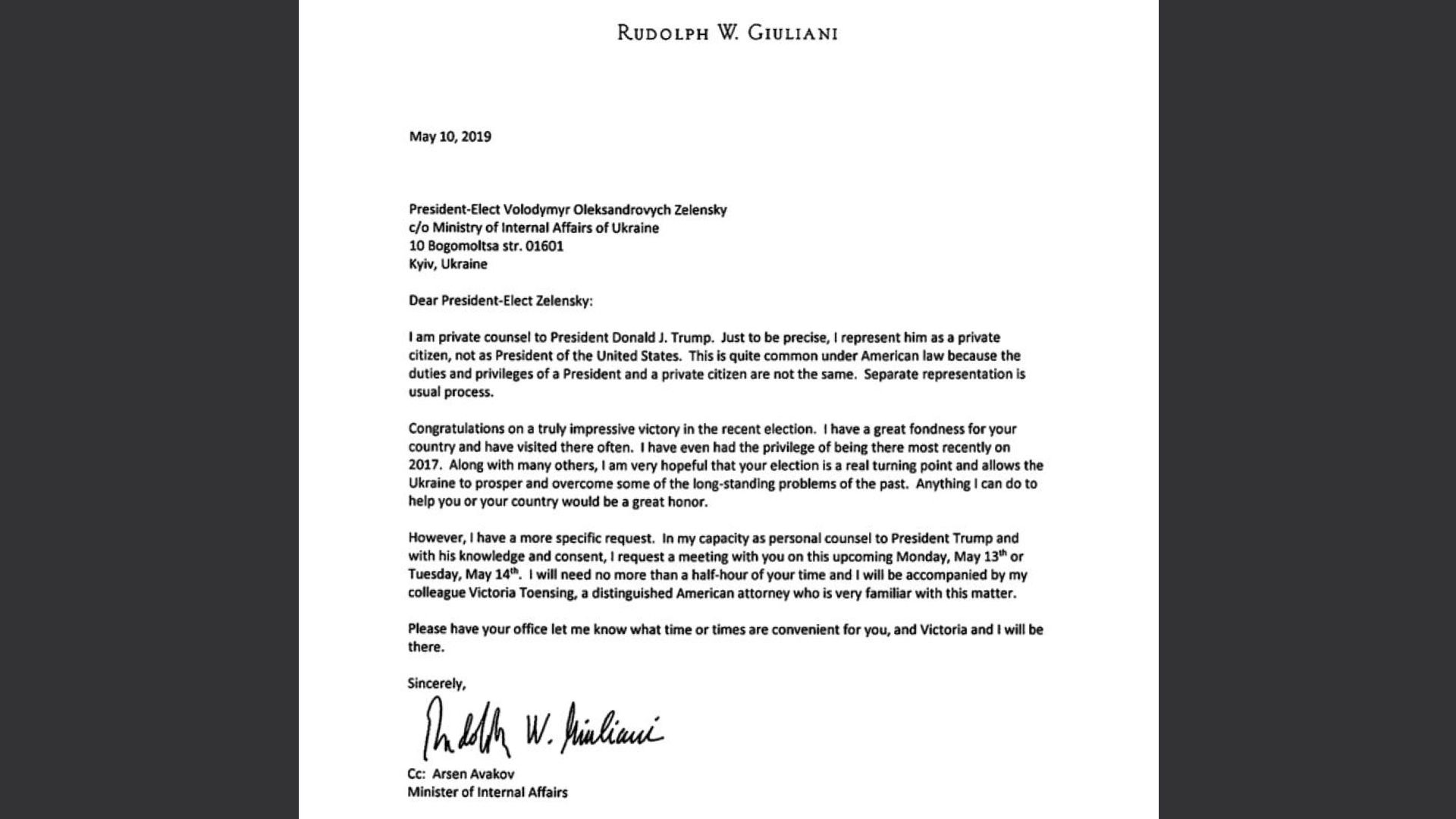
The two Republican initiatives seem at odds with each other. The threat to call extraneous witnesses such as Hunter Biden would prolong the trial without offering insight into what Rudy Giuliani’s introductory letter to President Zelensky referred to as a private mission rather than one that involved Donald Trump’s role as president.

Republicans could accomplish their stated goal of keeping the trail brief by limiting witnesses to people who are material to the charges against President Trump, people who were involved with the phone call and the subsequent aid freeze. In that vein, one would expect Trump’s defense team to call witnesses who could exonerate the president on the charges of abuse of power and obstruction such as Mick Mulvaney, John Bolton, Mike Pompeo, and Mike Pence.

I wonder why they won’t.

Originally published on The Resurgent
Friday, January 17, 2020

Can Lev Parnas Be Trusted?


Lev Parnas, an indicted Republican fundraiser, has dropped a bombshell into the impeachment hearing in the form of mountains of notes, text messages, voicemails, pictures, and other documents relating to Rudy Giuliani’s shadow diplomacy in Ukraine. Parnas is naming names from President Trump on down as he spills the beans on what happened behind the scenes as the Trump Adminstration allegedly pushed President Zelensky to announce an investigation of Joe and Hunter Biden. The big question is whether Parnas can be trusted.

The short answer is no. Parnas lacks credibility and has plenty of incentive to bend the truth in order to ingratiate himself to Congress and bargain his way out his own legal troubles. The longer answer is that what Parnas lacks in credibility, he makes up for in documentation.

For those who haven’t been following the emerging situation, Parnas and Igor Fruman were arrested last October at Dulles International Airport just prior to leaving the country on one-way tickets. The pair were charged with attempting to funnel money from foreign governments to American elected officials. Both men were associates of Rudy Giuliani and were involved in Giuliani’s Ukrainian fishing expeditions for dirt on Joe Biden. Though both men were US citizens, Parnas was born in Ukraine and Fruman was born in Belorus, both former republics of the Soviet Union.

In early November, Parnas agreed to cooperate with the House impeachment probe. It was only this week, however, that a trove of documents from Parnas was made public by House investigators after receiving judicial approval. The document releases can be viewed here.  

Since Parnas himself is not a credible character, the documents that he has presented are more important than his own testimony, which so far has not been under oath. Some of the documents are more credible than others. For example, Parnas’ handwritten notes are questionable but a letter from Giuliani to Zelensky is more compelling.

The Giuliani letter is important in that it undercuts one of President Trump’s strongest defenses, namely that he was acting in the national interest. In the letter, Giuliani specifically claims that he represents Trump “as a private citizen, not as President of the United States.”


Also compelling are the series of text messages between Parnas and Robert Hyde, another Republican donor who is currently running for Congress in Connecticut. The pair’s now-famous message exchange indicated that US Ambassador to Ukraine Marie Yovanovitch was under their surveillance to the extent that they knew not only her location but whether her phone and computer were on. If the messages are genuine, it is very difficult to explain why they were keeping tabs on Yovanovitch for any reason that is not either creepy or sinister. If the messages are not genuine, it is difficult to explain why they were constructed to include Hyde, an unknown.

Interesting but not as damaging is Parnas’ undated note on a Ritz-Carlton-Vienna pad. One item on the to-do list reads, “Get Zalensky [sic] to announce that the Biden case will be investigated.” The note supports previous testimony that Trump’s goal in withholding the Ukrainian aid money was to force the announcement, but without context such as a date, it is impossible to know if it is genuine or was created later.

While there may be some doubt about the note’s legitimacy, there is no doubt that Parnas himself is the real deal. Among the releases are text messages between Parnas and Giuliani, including one in which Giuliani told Parnas that he needed to get then-Ukrainian President Petro Poroshenko and Prosecutor General Lutsenko “on the record about the ambassador and Biden” and asked, “Can you make it happen?”

Parnas also appears in photographs with a veritable Who’s Who of Republican and Trump Administration officials including Giuliani, Kellyanne Conway, Mike Pence, and numerous poses with President Trump. Most of these officials deny knowing Parnas and say that they don’t recall taking the photos.

The piece de resistance, however, is a copy of an email from Jay Sekulow in which the president’s personal attorney writes to John Dowd, another lawyer who was also once an attorney for Trump, on the subject of “Lev Parnas and Igor Fruman.” Sekulow told Dowd, “I have discussed the issue of representation with the president. The president consents to allowing your representation of Mr. Parnas and Mr. Furman [sic].” The obvious question here is why Donald Trump is involved at all in the legal representation of two low-level flunkies.

Lev Parnas is a sketchy character and his claims should be questioned and verified, but that does not mean that they are irrelevant. In the end, Parnas is one more link in the chain of evidence against Donald Trump along with the OMB and Pentagon emails released under the Freedom of Information Act that pointed to Trump as the source of the aid freeze, and the new GAO assessment that the president violated the law in withholding the aid. Parnas’ claims and evidence must be viewed within the context of other evidence and testimony to help complete the picture of what happened.

The revelations of the past few weeks both underscore the mistake Democrats made in rushing the impeachment vote and the fortunate decision of Speaker Pelosi in delaying the referral of the articles to the Senate. Without the delay, the new information would still be coming out but the Senate might already have dismissed the case. On the other hand, if Democrats had taken their time, they could have transmitted a more complete case to the Senate, where many Republicans seem determined to ignore any new information that has come out since December 18.

As the impeachment trial gets underway in the Senate, the one thing that seems is clear is that the more information that comes out, the worse things look for Donald Trump. While it is still extremely unlikely that Senate Republicans will vote for removal, Congress and the media will keep shining lights on the actions of Trump and his agents in Ukraine. If the president survives impeachment, the tales of his abuses of power and corruption may mean that his stay in the White House is only prolonged by a few months.

Originally published on The Resurgent

Wednesday, January 15, 2020

House Refers Impeachment To Senate: Here Are The Details

The delaying tactics ended today as the House voted to send the articles of impeachment against President Trump to the Senate. The impeachment will now move to the majority-Republican upper house for the trial of President Trump.
The vote to refer the articles and appoint impeachment managers fell mostly along party lines. The only defector in the 228-193 vote was Rep. Collin Peterson (D-Minn.) who voted with Republicans against the measure.
The impeachment managers who will present the case against the president are headed by Rep. Adam Schiff (D-Cal.), head of the intelligence committee, and Rep. Jerrold Nadler (D-N.Y.), head of the judiciary committee. Other members of the prosecutorial team include Rep. Zoe Lofgren (D-Calif.), Rep. Hakeem Jeffries (D-N.Y.), Rep. Val Demings (D-Fla.), Rep. Jason Crow (D-Col.), and Rep. Sylvia Garcia (D-Texas).
There was speculation that Pelosi would reach out to former Republican Rep. Justin Amash to join the impeachment team, but CNN’s Jake Tapper reported that Amash said that the Democrats never reached out to him. With Amash considering a presidential run, it makes sense that Pelosi would not want to give him a platform to gain national notoriety.
The first step for the Senate will be to pass an agreement defining the rules of the impeachment trial. This process will start tomorrow, January 16. Majority Leader Mitch McConnell says that he would like the trial to follow the model set in the impeachment of President Clinton in 1999.
In the Clinton trial, witnesses were deposed behind closed doors in video-recorded sessions. Following the witnesses, each side presented closing arguments and the Senate deliberated behind closed doors. Senators were not allowed to speak during the testimony but were each given 15 minutes during the deliberations. Votes were held after deliberations concluded.
The chief justice of the Supreme Court presides over the impeachment trial. For Mr. Trump, that means that John Roberts is in charge of the proceedings. This induces a measure of uncertainty since McConnell cannot drive events as he normally does in the Senate. No one knows how active Roberts will be in his role. In the Clinton trial, William Rehnquist was largely a fly on the wall.
As I reported yesterday, Republicans now seem to lack the votes to dismiss the impeachment outright so the trial is likely to last for several weeks as witnesses present sworn testimony.
The prospect of witnesses leads to speculation that former National Security Advisor John Bolton will be invited to testify. This could set up another showdown since Bolton has previously said that he would honor a Senate subpoena, but the president has threatened to invoke executive privilege in an attempt to silence his former advisor.
Another early fight shaping up regards press access. Some senators have advocated new restrictions on the press for the duration of the trial. There is bipartisan opposition to these new rules, however.
For now, we’ll have to wait to see what ground rules senators agree to as the trial gets underway tomorrow.

Originally published on The Resurgent

Tuesday, January 14, 2020

There May Be More Witnesses At Senate Impeachment Trial After All


All hope is not lost for those who would like to see a real impeachment trial in the Senate rather than a pro forma acquittal of the president. When Senate Majority Leader Mitch McConnell announced last week that he had the votes to move forward on a quickie trial without Democratic input, it seemed that the impeachment would be over in a jiffy. Now, however, it looks as though the House impeachment managers may have a chance to call witnesses in the Senate after all.

On Tuesday morning, CBS News reported that unnamed “senior White House officials” said that they expected several Republican defections in the upcoming vote to establish ground rules for the trial. In addition to the usual dissidents, Lisa Murkowski of Alaska, Susan Collins of Maine, and Mitt Romney of Utah, the report also named Lamar Alexander of Tennessee, Corey Gardner of Colorado, and Rand Paul of Kentucky as Republicans who might possibly vote to hear additional witness testimony.

 Sen. Roy Blunt (R-Mo.), the Senate’s number four Republican, confirmed Tuesday afternoon to The Hill that Republicans did not have the votes to dismiss the impeachment articles out of hand, saying, “I think our members generally are not interested in a motion to dismiss. ... Certainly, there aren't 51 votes for a motion to dismiss.”

McConnell, speaking to reporters on Tuesday, also said in a Fox News report that “All 53 of us [the Republican caucus] have reached an agreement,” but he did not say exactly what that agreement entailed. McConnel did hint that a decision on witnesses would be made “at the appropriate time” and that “both sides will call witnesses they want to hear from” at that time.

The possibility of more testimony and evidence is even more important in light of evidence that has come to light since the House impeachment vote last month. First, a Freedom of Information Act request unveiled emails that directly implicated Donald Trump in the freeze of aid to Ukraine. Then former National Security Advisor John Bolton announced that he would testify if subpoenaed by the Senate. Then Lev Parnas, an indicted associate of Rudy Giuliani, turned over thousands of pages of documents, text messages, and photos to House investigators. The Senate should also subpoena White House officials and Rudy Giuliani, who ignored subpoenas from the House.

The cracks in Republican opposition to a trial that allows new evidence may be the result of polling that shows voters strongly oppose a dismissal of the articles of impeachment. Morning Consult found that voters supported a trial with more witnesses by more than two-to-one. Majorities of Democrats and independents favored more witnesses while Republicans were almost evenly split on the question.

While it is by no means certain that the Senate will call additional witnesses, it is at least no longer a foregone conclusion that Senate Republicans will block additional testimony. Regardless of which side of the impeachment debate you stand on, this is a good thing. Hearing more witnesses and seeing more evidence would present an opportunity for the Senate to get to the truth of the matter.

If you are a Trump supporter and believe the president is innocent, then you should support additional testimony and evidence that may exonerate the president and, in so doing, embarrass the Democrats. If you are a Trump critic, you should support the deeper inquiry because further evidence may help build a more compelling case that Mr. Trump abused his office. The only logical reason to oppose further investigation is if you believe that additional evidence will undermine your preconceived ideas about what happened.

As Louis Brandeis famously said, “Sunlight is said to be the best of disinfectants.” American voters want sunlight to shine on the details of the Ukraine scandal and let the chips fall where they may. The Senate should honor their wishes.

Originally published on The Resurgent

Saturday, January 4, 2020

Emails In Ukraine Scandal Point Directly To Trump


It has been several weeks since President Trump was impeached, but the evidence for abuse of power continues to roll in. Earlier this week, the defense website, Just Security, obtained unredacted emails that point directly to President Trump’s involvement in delaying aid to Ukraine and show that Administration officials questioned the legality of the move.

The emails were originally released in redacted form in December in response to a Freedom of Information Act request by the Center for Public Integrity. A federal court mandated that the government release 300 pages of emails, which were made public in two batches on Dec. 12 an Dec. 20. The emails obtained by Just Security can be compared with the redacted releases to confirm their accuracy as well as determine what the Trump Administration considered worthy of censorship.

Among the revelations from the redacted emails was the news that the Ukrainian aid was delayed immediately after the president’s July 25 phone call with Ukrainian President Zelensky. CNN reported last month that the redacted emails showed that efforts to freeze the aid began about 90 minutes after the phone call concluded.

Although the president’s interest in the aid predated the phone call, Michael Duffey, associate director of national security programs at the Office of Management and Budget (OMB), emailed Pentagon officials within hours of the call, instructing them to “please hold off on any additional DOD obligations of these funds….”

“Given the sensitive nature of the request,” Duffey added, “I appreciate your keeping that information closely held to those who need to know to execute the direction.”

Duffey was among the White House officials subpoenaed by House Democrats during the impeachment hearings last year. He did not comply with the subpoena and failed to show up at the hearing.

The emails show that Pentagon officials were concerned that the freeze violated the Impoundment Control Act. The law requires certain steps if the executive branch does not spend money appropriated by Congress. These steps, including congressional notification, were never taken by the Trump Administration. The Administration also never provided a rationale that explained either the initial freeze or its subsequent release.

Deputy Under Secretary of Defense Elaine McCusker followed up with an email to Mark Sandy at the OMB asking if the pause had been approved by legal counsel. The question was redacted in the original email release.

Sandy formalized the freeze on July 25 with a footnote in a budget document that held the money until Aug. 5. Initially, the hold was not deemed to affect the expenditure of the money by the end of the fiscal year.

The next day, July 26, Under Secretary of Defense for Policy John Rood emailed Secretary of Defense Mark Esper expressed unanimous agreement among the “Ukraine Deputies Small Group” that the aid should be released. The same email notes that the freeze was at “the President’s direction via the Chief of Staff [Mick Mulvaney].”

On Aug. 6, Duffey notified McCusker that the freeze was being extended. On Aug. 9, McCusker notified Duffey and Sandy at OMB that time was running out to spend the money before the end of the fiscal year. Subsequent emails continued to extend the freeze through the end of August, raising red flags at the Pentagon. Contractors became aware of the hold by Aug. 27 and Politico revealed the freeze publicly in an Aug. 28 story.

The emails point toward the Oval Office as the source of the freeze. In one example cited in the article, Duffey wrote on Aug. 30, that there was “clear direction from POTUS to continue to hold.”

Officials expressed hope that the money would be released after Vice President Pence met with Zelensky on Sept. 1, but the freeze continued after the meeting with the hold extended again on Sept. 5.

When McCusker emailed Duffey on Sept. 9 saying that the DOD would not be “able to ‘fully’ obligate by the end of FY,” Duffey responded by shifting the blame to the Pentagon, despite McCusker’s repeated warnings that time to spend the money was running out.


“OMB developed a footnote authorizing DoD to proceed with all processes necessary to obligate funds,” Duffey wrote in a formal email that copied in OMB and Pentagon lawyers. “If you have not taken these steps, that is contrary to OMB’s direction and was your decision not to proceed. If you are unable to obligate the funds, it will have been DoD’s decision that cause any impoundment of funds.”

McCusker’s incredulous response was, “You can’t be serious. I am speechless.”

Two days later, on Sept. 11, Duffey emailed McCusker that the freeze had been lifted. When she asked why, he responded, “Not exactly clear but president made the decision to go. Will fill you in when I get details.”

Just Security notes that, in the end, $35.2 million of the aid could not be spent before the fiscal year ended and it expired. The money had to be reappropriated by Congress.

As I discussed back in November, the aid was released two days after the inspector general notified members of the House Intelligence Committee about the whistleblower report. The whistleblower may have actually spurred the president to release the aid in time to avoid a larger violation of the law.

The email chains undercut Republican claims that the aid was held up due to a policy review. There is no evidence in the exchanges that any policy review was being conducted. Instead, officials bided their time while trying to convince the president and the OMB that the freeze was a bad idea. At the same time, many sought legal advice because they were concerned that they could become scapegoats if the money was not released in time for the money to be spent, which would have been a definite violation of the law.

The emails point directly at the president as the source of the freeze. The timing of the freeze points back toward President Trump’s request for the “favor” of a Ukrainian investigation into Crowdstrike and the Bidens as a motive for delaying the aid. The incriminating email exchanges between White House and Pentagon officials also explains why the Trump Administration refused to allow its staffers to testify and ignored congressional subpoenas for documentation about the freeze.

Further, comparing the redactions with the full emails shows that the Justice Department attempted to conceal Pentagon concerns about the freeze. Many of the emails that were redacted contain questions about the legality of the delay and warnings that the money might not be spent in time to comply with the Impoundment Act.

The release also shows that the Democratic decision to rush impeachment was an error. While this error has been somewhat mitigated by Speaker Pelosi’s decision to delay referring the articles of impeachment to the Senate and deny Donald Trump the ability to conduct a pro forma trial while information is still coming out, the House could have done a much better job of investigating the incident. If a third party organization could obtain this information quickly through the Freedom of Information Act, there is no reason that the House could not have asked courts to enforce its subpoenas and compelled Duffey and others to testify.

With the new information, the House can still rectify its mistake. House Democrats should reopen the impeachment investigation and keep digging. The officials mentioned in the email chains have firsthand information linking the freeze to the president. Congress – and the American public – needs to hear from them.

Originally published on The Resurgent

Thursday, December 19, 2019

Here’s Who Broke Ranks On The Impeachment Votes

The final impeachment vote tallies are in and the results are slightly different from what we reported immediately after the vote last night.
On Article I, alleging abuse of power, the official vote tally was 229-198. Three Democrats crossed the aisle to vote “no” while no Republicans broke ranks. The three Democrats were Jared Golden (Maine), Collin Peterson (Minn.) and Jeff Van Drew (N.J.). Presidential candidate Tulsi Gabbard (D-Hawaii) voted present.
Roll Call notes that Peterson is from a strong pro-Trump district while Golden said that he believed that Trump abused power but did not obstruct Congress. Gabbard’s present vote was a protest against “fragmentation and polarity.” Van Drew is rumored to be switching parties to become a Republican.
Three congressmen did not vote on Article I. This included two Republicans, Duncan Hunter (Calif.), who recently announced his resignation after pleading guilty on corruption charges, and John Shimkus (Ill.), who was on a trip to Tanzania to visit his son in the Peace Corps. Duncan was warned to cast any more votes by the House Ethics Committee. The sole Democrat not to vote, Jose Serrano (N.Y.), was hospitalized with Parkinson’s disease. He is not seeking reelection.
The final tally for Article II, alleging obstruction, was identical to Article I.
We initially reported that one Republican voted in favor of the impeachment. However, Jake Sherman of Politico tweeted that Michael Cloud (R-Texas) changed his vote from “yea” to “nay.” Rep. Cloud told the Dallas Morning News that his “yes” vote was due to a clerical error.