Saturday, July 4, 2026

Happy 250, America!

 I’ll keep this brief, but I couldn’t let America’s 250th birthday pass without comment. 

Many nations and constitutions don’t last 250 years, and there seems to be a lot doubt that we can hold together much longer. We are as divided and angry as I’ve ever seen us. 

I’m not that old, but I do remember the bicentennial in 1976. The national mood was entirely different with celebrations that were actually by large numbers of people and grassroots festivities around the country. Somewhere I’ve got a picture of all the kids at my church, me among them, dressed in colonial garb that included tricorn hats for the boys and bonnets for the young ladies. That was pretty typical of 1976.

But this year, the national mood is pensive and angry. The celebrations have largely fizzled, thanks in large part to a president who hijacked the America 250 initiative created by Congress and steered resources toward his newly-created Freedom 250. Like everything else, Trump made America’s birthday about himself and threw a wet blanket on the party. America’s 250th is a pale imitation of its 200th.

It’s ironic that America celebrates its 250th with a man at the helm who closely resembles George V. As someone pointed out, our current president checks a lot of the boxes on the list of the Founders’ complaints about the English king in their epic breakup letter

  • He has refused his Assent to Laws, the most wholesome and necessary for the public good.

  • He has erected a multitude of New Offices, and sent hither swarms of Officers to harrass our people, and eat out their substance.

  • He has kept among us, in times of peace, Standing Armies without the Consent of our legislatures.

  • For imposing Taxes on us without our Consent:

  • For transporting us beyond Seas to be tried for pretended offences:

  • He has abdicated Government here, by declaring us out of his Protection…

  • He has excited domestic insurrections amongst us…

A movement that promised to make America great again has done the opposite. The economy is slowing, corruption is rising, we are no longer respected by other nations, and American pride has fallen to a new low

I say all that to say this: Things have been worse and we’ve survived. Things were pretty dark in the years following 1776. The British burned the White House in 1814. Our internal divisions were worse in the 1860s and probably the 1960s as well. The Great Depression made us question the basis of our entire system,

If we’ve never seen America in worse shape, it’s because we haven’t lived long enough to have experienced our countries previous bottoms. Our history tells us that we can work through it. This too shall pass. The course correction has already started. 

My message today is to go celebrate America. Don’t confuse love of country with love of Trump or affirmation of what our government is doing. 

As Teddy Roosevelt said, “Patriotism means to stand by the country. It does not mean to stand by the president or any other public official, save exactly to the degree in which he himself stands by the country. It is patriotic to support him insofar as he efficiently serves the country. It is unpatriotic not to oppose him to the exact extent that by inefficiency or otherwise he fails in his duty to stand by the country. In either event, it is unpatriotic not to tell the truth, whether about the president or anyone else.”

My country, right or wrong, but those of us who love America should celebrate our nation while at the same time working to improve it and live up to the ideals of the Founders, the idea that “all men are created equal, that they are endowed by their Creator with certain unalienable Rights, that among these are Life, Liberty and the pursuit of Happiness.” 

A lot of us have lost sight of what America was intended to be, so let me recommend that we all take a few minutes over the next few days to read the Declaration of Independence and think about what our forefathers were fighting to be free from. 

Read the Declaration of Independence here: https://www.archives.gov/founding-docs/declaration-transcript

Or if you’d prefer, listen to a reading of it here on Spotify (I also recommend the History That Doesn’t Suck Podcast generally): 

Happy Independence Day and Happy Birthday, America. Let’s make ourselves worthy of the legacy that the Founders gave us. 

Thanks for reading The Racket News ™! This post is public so feel free to share it.

Share

Share The Racket News ™

Thanks for reading The Racket News ™! Subscribe for free to receive new posts and support my work.


From the Racket News

Wednesday, July 1, 2026

SCOTUS: Constitution means what it says

 In a second day of rulings, the Supreme Court once again made MAGA heads explode. However, as with Monday’s rulings, both sides have something to celebrate and something to mourn. Unlike Monday, Tuesday’s rulings seem to be more consistent and on firmer constitutional ground. (Also, unlike Monday, I did read through the actual decisions and dissents for Tuesday. Many of the briefs are pretty brief. [legal humor])

Tuesday’s main event was the birthright citizenship ruling. This long-awaited decision affirmed the plain language of the Constitution. Chief Justice Roberts was once again the author of the decision and led a 6-3 majority that included Barrett, Sotomayor, Kagan, Jackson, and, in part, Kavanaugh. For a case that involved the plain and simple language of the Constitution, this was a lot closer than it should have been, but it was still a big win for the rule of law.

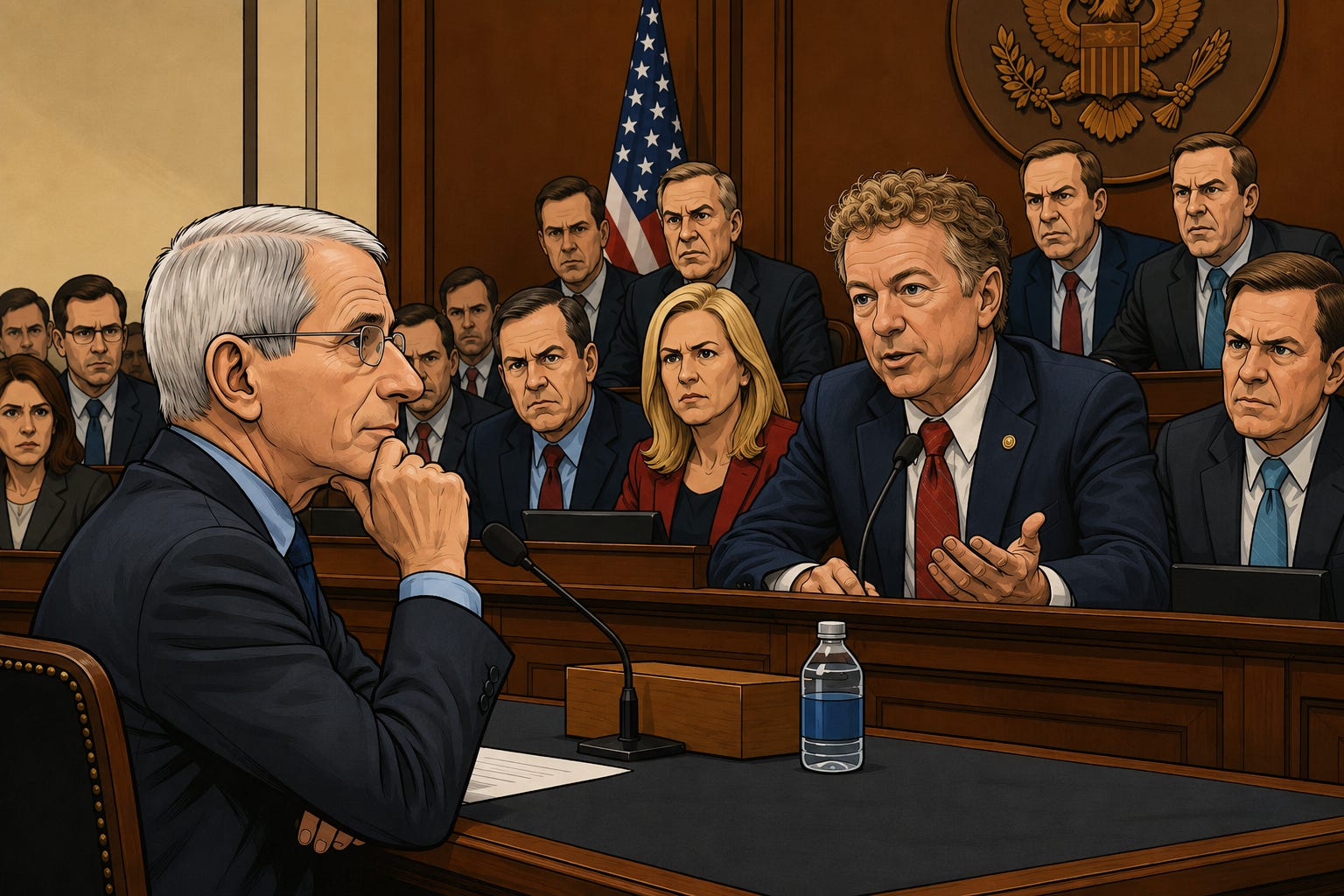
Image created by ChatGPT

Share

In the case, Trump v. Barbara, the disagreement centered on what the 14th Amendment meant when it said, “All persons born or naturalized in the United States, and subject to the jurisdiction thereof, are citizens of the United States and of the State wherein they reside.” In particular, the question involved the meaning of “subject to the jurisdiction.”

This seems a no-brainer because illegal immigrants are clearly subject to US jurisdiction, because they can be arrested and tried in our courts. The majority agreed, and noted that “ jus soli, or right of the soil” predated the Constitution in English common law.

Roberts points out that the language of the 14th Amendment mirrors the language of common law, and then goes on to specifically reject the argument that illegal aliens are not subject to US jurisdiction.

“The narrow exceptions to jurisdiction arose where exercising jurisdiction would ‘degrade the dignity’ of ‘foreign sovereigns’—most frequently in the case of ‘foreign ministers.,’” Roberts wrote. “But private individuals who traveled to the United States for ‘business or caprice’ were ‘amenable to the jurisdiction of the country.’ Children born in the United States to parents unlawfully or temporarily present here are thus subject to the Nation’s jurisdiction.” [emphasis mine]

The dissents fall flat. Justice Alito argues, “The Fourteenth Amendment confers citizenship on only those children who, at birth, owe allegiance solely to this country.” But the text of the amendment specifies a condition of jurisdiction, not allegiance.

In another long dissent, Justice Thomas puts his eggs in the basket that the Framers intended for citizenship to apply to those who are “domiciled” in the US. Again, that defies the plain language of the amendment.

In Kavanaugh’s partial dissent, he argues that Congress used the same language from the 14th Amendment in the Nationality Act of 1940 and the Nationality Act of 1952. This language, he notes, was used by the Court to affirm birthright citizenship in Wong Kim Ark.

“The Executive Order goes beyond what [statutory law] authorizes,” Kavanaugh wrote. “For the Executive Order to be lawful, therefore, Congress would need to amend [current law] or otherwise enact new legislation to encompass those two new exceptions. As of now, Congress has not done so.”

In other words, in Kavanaugh’s view, the 14th Amendment does not explicitly guarantee birthright citizenship, but existing immigration statutes do. Going further, Kavanaugh points out that an Executive Order cannot overrule a statutory law passed by Congress. If Congress decided to pass a law expanding exceptions to birthright citizenship, for example, setting a 12-month residency requirement for the mother, Kavanaugh would likely uphold that statute.

I’m going to nitpick the “text, history, and tradition” doctrine of the Court for a moment here as well. Kavanaugh writes that “significant illegal immigration into the United States is a new circumstance that was largely unknown as of 1868 and that the Framers of the Fourteenth Amendment could not have fully anticipated. And the Framers likely would not have anticipated.”

That’s true, but there are a lot of other things the Framers could not have anticipated as well. Among these are automatic weapons and mass shootings. Would the Court’s dissenters be as flexible with gun laws as they want to be with immigration law? My guess is that they would not. As a result, it’s better to stick with the text of the law than with what the Framers would have done under different circumstances. What Kavanaugh is suggesting is no different than the left’s “living Constitution.”

Kavanaugh’s statement also puts a finger on another problem with text, history, and tradition. When we face problems that the Framers never faced or even dreamed of, history and tradition aren’t very helpful. Laws can be constitutional, even if no similar law has been passed in our history.

It is disturbing to watch as the Court’s self-proclaimed constitutionalists become enamored with the “mystical aphorisms of the fortune cookie” in their jurisprudence after they became the majority on the Court, much the same as the Republican Party’s conservatives found a new love for government overreach. Thomas and Alito have been particularly disappointing.

Speaking of the left, they are enraptured over the birthright citizenship ruling, but they are likely to be enraged over a different decision. Or two.

The bigger case of the two was West Virginia v. BPJ, a ruling that upheld the authority of states to ban biological males from competing on female sports teams. The 6-3 ruling was split along ideological lines, with Sotomayor, Kagan, and Jackson dissenting.

The core of the ruling, authored by Kavanaugh, was the statement: “Title IX allows schools to provide separate women’s and men’s sports teams defined by biological sex.”

Again, I’d say this is the correct outcome based on a plain reading of the law, as well as common sense, which often has nothing to do with the law. As Kavanaugh spells out, “The term ‘sex’ in Title IX, the Javits Amendment, and the Title IX regulations cannot plausibly be interpreted to refer to anything other than biological sex.”

The dissenters don’t seem to have a serious argument against the wording of the law, but rather base their dissent on emotions. Justice Sotomayor wrote for the minority, “The majority extends great sympathy to those it favors: the young cisgender girls and women who play sports. I share that sympathy. Playing sports can lead to benefits that are immeasurable, and many are understandably invested in ensuring that competition stays fair and safe. Because the majority, however, inflicts a hardship on those it disfavors without giving them the fair and full opportunity the Constitution requires to litigate their contentions, I respectfully dissent.”

I don’t have any particular animus against transgender people, and I don’t think that transgender boys playing on girls’ team constitutes any sort of emergency, but I do agree with the majority that the plain language of the law and the concept of federalism, which also came up in the mail ballot case yesterday, means that the states get to work these things out for themselves in the laboratories of democracy.

If the left does not like the outcome here, I’d tell them the same thing that I’d tell the right on birthright citizenship and mail-in ballots, namely that there is a process to change laws that you don’t like. That process is centered on the legislature and not the courts or the presidency.

The final case for Tuesday was National Republican Senatorial Committee v. Federal Election Commission, which overturned a 2001 decision upholding campaign finance limits on coordinated expenditures by the parties and candidates. This was another 6-3 decision along party lines.

“Ultimately, the First Amendment question in this case boils down to whether [the Federal Election Campaign Act’s] limits on political-party coordinated expenditures are permissible in order to prevent circumvention of the base limits on contributions to candidates through earmarked contributions to parties,” Kavanaugh wrote for the majority.

Answering himself, Kavanaugh says, “ The Court agrees with petitioners that the political-party coordinated-expenditure limits are not proportionate, necessary, and narrowly tailored given the other less-speech-restrictive tools available to the Government to prevent circumvention—in particular, earmarking and disclosure laws.”

Here, as well, I agree with the majority. I tend to be an absolutist on free speech. Let people and parties say what they want, but disclose who is paying for it.

There is a chance that this ruling may help to strengthen the political parties against disruptive outsiders in the future. At least part of the political mess that we find ourselves in is due to the lack of influence of party leaders. Now, if we could just get rid of primaries.

Over the past two days, the Court has exploded the view that it is a rubber stamp for Donald Trump. The president and Republicans won some and lost some big ones, although not by as much as I would have liked.

Again, these rulings underscore the importance of electing good people. If we have reached a point where we are depending upon nine justices to preserve our rights and freedoms, then we are already much too far down the road of tyranny. And if we came within two votes of millions of Americans potentially losing their citizenship, there is ample evidence that freedom is endangered for many of us.

This week, Donald Trump’s own appointees often acted to stymie his power grabs, but in the future, it may not always be true that we have such independent justices on the bench. It is very important that we elect presidents who will nominate good judges (one of the few areas where I think Trump has done well, albeit unintentionally; he wanted justices who would be personally loyal) and senators who will confirm the good ones and dismiss the bad ones.

Thanks for reading The Racket News ™! This post is public so feel free to share it.

Share

MORE BAD SCOTUS NEWS FOR TRUMP In another blow to Trump, the Supreme Court refused to overturn his civil judgment for the rape and sexual abuse of E. Jean Carroll. Trump owes Carroll $5 million for his actions, and it now seems that he will have to pay up.

CLARITY FROM KAVANAUGH Yesterday, I speculated that the difference between the Cook and Slaughter rulings may have been the importance of the Federal Reserve to the economy. In his concurrence, Kavanaugh seems to have admitted as much:

Even temporary uncertainty about the status of the Federal Reserve could spark political upheaval, including confusion about whether the President could immediately remove multiple Governors at will, as well as turmoil in the U. S. and world economies. I would not go down that road. I would not risk destabilizing the U. S. economy just so that we can further mull over an issue that, in various permutations, we have been thinking about for many years.


Originally from The Racket News

The inconsistent Court

 The Supreme Court released a full broadside of decisions on Monday. There was something to please and anger everyone. There were decisions that were a blow to the Trump Administration and decisions that made Trump crow about the “Greatest Increase in Presidential Power in the last 100 years” [random capitalizations are his] on Truth Social. Yes, there’s something for everyone, but I think that both sides are likely to concentrate on the cases they lost.

For the record, I haven’t read the full decision in any of these cases and don’t plan to. I’m in the middle of a large library book, “Guadalcanal” by Richard Frank (the definitive account of the WWII battle; it says so on the cover), and I do this for free, so no, I’m not reading all these decisions, but I will explain them, aided heavily by other reports, particularly from SCOTUS Blog.

Image by Chat GPT

Share

Let’s start with Chatrie v. United States, in which the Court held that geofence warrants are legally considered searches and are subject to Fourth Amendment protections. Justice Kagan, joined by Chief Justice John Roberts and Justices Sotomayor, Kavanaugh, and Jackson, held that cellphone location data is subject to an “expectation of privacy… that society is prepared to recognize as reasonable.” This is a victory for civil libertarians.

In a ruling that has triggered meltdowns, pearl-clutching, and rending of garments among the MAGA set, the Court also held that states could choose to receive mail ballots after Election Day. Single-day elections and mail ballots have been a MAGA bogeyman since 2020, but the Court affirmed the constitutionality of America’s federalist system as it applies to state authority to run and regulate their own elections.

Watson v. Republican National Committee involved a challenge to a Mississippi law that allows mail ballots to be counted if they are received within five days of Election Day. It’s important to note that the ballots have to be postmarked by Election Day, not after, as some scaremongers are claiming. The ruling was 5-4, with Justice Barrett writing for a majority that included Chief Justice Roberts, Sotomayor, Kagan, and Jackson.

I’m a little surprised at how this one turned out, but as Barrett explains, “the election-day statutes require the electorate’s choice to be made on election day. That occurs so long as election day is the deadline for individuals to vote—as it is in Mississippi. But the election-day statutes do not set a deadline for ballot receipt, so they do not prevent Mississippi from counting ballots postmarked before election day yet received afterward.”

In my opinion, this was the right call. Once a mail ballot is placed into the care of the Post Office, the voter has no control over whether it is delivered quickly or not. It seems reasonable to allow some extra time for mail ballots to arrive after Election Day; otherwise, ballots mailed on Election Day would not be counted because same-day mail delivery is not a possibility.

As always, my advice to voters is to drop your ballot off in person if you can’t vote in person. (I typically vote early in person, and I highly recommend that strategy if your state allows it.) If you absolutely must mail your ballot, I strongly recommend that you do so well before your state’s deadline. Requesting a return receipt might not be a bad idea either, unless your state has a way to check whether the ballot has been received, like the Georgia MyVoter page.

Finally, there was a split decision on the ability of the president to fire members of independent agencies. In a 6-3 decision, the Court overturned Humphrey’s Executor, a 90-year-old precedent, and allowed the president to fire Rebecca Slaughter from the Federal Trade Commission. In the same breath, the Court denied the president the right to fire Lisa Cook from the Federal Reserve in a 5-4 decision.

In Trump v. Slaughter, Roberts, supported by Alito, Gorsuch, Kavanaugh, Barrett, and Thomas, held that “the President must have the assistance of officers he can trust. Although it is up to the Senate to decide whether to confirm those with whom the President would prefer to work, neither Congress nor the courts may saddle him with those with whom he cannot work. Subordinates who exercise the President’s power are subject to removal by him. Then, and only then, can they remain accountable to the President, and the President to the people.”

On the other hand, Roberts also wrote for the majority in Trump v. Cook, where he was joined by Sotomayor, Kavanaugh, Kagan, and Jackson. In that decision, Roberts wrote that allowing the president to fire Cook “would in effect transform the Federal Reserve’s for-cause protection into at-will employment—an interpretive leap out of step with the statute Congress enacted and our Nation’s tradition of central banking protected from political interference.”

It’s two Chief Justice Roberts’s in one! What are we doing here, guys?

If you’re wondering why Roberts and Kavanaugh would vote one way in one case and flip their votes in another, you’re not alone. Much of the legal and political world is wondering the same thing.

The core issue in both cases was the president’s authority over independent agencies established by Congress. In the statutes creating the agencies, Congress stipulated that members could only be removed for cause. In Slaughter, the Court seemed to reject that stipulation while it preserved it in Cook. This sends a very mixed message to Congress and lower courts.

The ruling in Cook raises the possibility that a president could make a pretextual case for firing a Fed governor and says that the bar for dismissal is not “very low” as the government claimed, but “not only the fact of independence but also the appearance of independence is key to the Federal Reserve’s design,” which in turn “counsels a substantial threshold for ‘cause.’”

Cook had been temporarily reinstated by a lower court, and this week’s ruling was based on the appeal of that temporary stay. The Court did not dismiss Trump’s attempt to fire Cook, but it did say that to remove her, the government must show that it would likely win on the merits of the case. Cook now gets to fight her dismissal in federal court while she continues to sit on the board of the Fed.

But what about Slaughter? The statute mandates that FTC commissioners could only be removed for “inefficiency, neglect of duty, or malfeasance in office,” yet Slaughter was fired without any indication of cause. Is Roberts’ ruling not making FTC employment “at will” without even a pretextual claim?

If there is any material difference between the two cases, except that the Fed controls the money supply and monkeying with the dollar could cause a global depression, most of us can’t see it. The twin decisions are almost schizophrenic.

Hopefully, future cases will lean more in the direction of Cook than Slaughter, but the cases underscore the need to elect honorable, trustworthy people to the presidency. If Slaughter is the ruling precedent, there is nothing to stop a president from firing bureaucrats of all agencies and restocking the pond with his cronies. Agencies like the Federal Trade Commission and the Federal Election Commission are supposed to have balanced partisan membership, but under Slaughter, that may be out the window as well.

Slaughter is another example of the “one-way ratchet” in which Congress delegates some authority to the president, and then courts strike down congressional limitations on the president’s use of that authority. The result is a large transfer of power to the executive that Congress almost never gets back.

I’m not sure what a good solution is here, because Congress does not have the expertise, the time, or the brainpower to make federal regulations on all the minutiae of modern life. Congressional geriatrics are not the best people to regulate cutting-edge issues like artificial intelligence. We need independent agencies to fill the gaps. Perhaps those agencies could be placed under congressional, rather than presidential, supervision, but would the courts allow that?

If you want to worry about anything in Monday’s decisions, worry about all the power that the Roberts Court is handing to the president as it strips away congressional guardrails. The extremes of unitary executive theory are bad no matter who is president, but they are especially bad considering the current president.

Again, the bottom line is that we need to stop electing incompetent and power-hungry presidents. We need trustworthy and able administrators, but we also need to enact reforms that make it easier for Congress to hold bad presidents accountable. We also need the courts to preserve congressional authority.

Add that to the list of much-needed post-Trump reforms. Is anyone writing this down?

Originally from the Racket News