Friday, October 8, 2021

Could the filibuster crash the economy? (Or save it?)

 The filibuster has sparked a lot of alternating concern and angst in recent years. Republicans/Democrats lobby to remove the legislative rule while their party is in power and then the Democrats/Republicans view it as an essential tool of democracy when they are in the minority. Both parties have a love/hate relationship with the Senate tradition while chipping away at its protections. That is the case again this week.

Photo by Ussama Azam on Unsplash

The latest on the debt ceiling fight is that Democrats are considering a change to Senate rules that would eliminate the filibuster for legislation that would raise the debt ceiling. It isn’t clear if such a change would be permanent or apply only to the current debt ceiling bill, but the change would allow Senate Democrats to overcome a Republican filibuster that has moved the federal government closer to a national default.

In a blatantly partisan but nonetheless true tweet, Andrew Weinstein observed, “It turns out that the people who opposed COVID restrictions and mandates to ‘save the economy’ are now perfectly fine with defaulting on our debt just because the current president is a Democrat.”

Ouch. But the fact is that the GOP resistance to raising the debt limit does seem decidedly partisan as well. After all, Republicans gave Donald Trump a holiday from the debt ceiling while adding $7.8 trillion to the national debt during The Former Guy’s term.

I’m against removing the filibuster, but its days are probably numbered. In fact, I noticed that I wrote at least two pieces during my days at The Resurgent with that title. One was in 2016 and the other in 2019. (Hey, if it works, stick with it.) In the latter, I predicted that the filibuster would die “the death of a thousand cuts” as the parties whittle away at it slowly. The current proposal could be another step in that process.

However, one man stands in the way. Joe Manchin (D-W.V) has reiterated, "I've been very, very clear where I stand, where I stand on the filibuster. Nothing’s changing.”

That statement would seem to preclude even a temporary change, much less a permanent carveout. Manchin could possibly be persuaded to change his mind, but that seems less and less likely as time goes on.

It’s true that the Democrats could pass the debt ceiling bill by themselves with a budget reconciliation, but it’s also true that they shouldn’t have to. Paying the bills for spending that has already been appropriated by Congress is one of the federal government’s most basic duties. And the fact that Republicans, who are normally thought of as the more fiscally responsible party, are driving the country closer to default by refusing to even negotiate for an increase to the borrowing limit shows how far the party has devolved.

If I was a Democrat, I would look very closely at combining the debt ceiling legislation with a pared-back human infrastructure bill that could win the support of Joe Manchin and Kyrsten Sinema. The kicker is that instead of raising the debt ceiling, I would eliminate it. (Alternatively, it could be raised to an absurdly high level so that it would not exist for practical purposes. On Twitter, Matt Gertz suggested raising the debt ceiling to $1776 googolplex, which should last us a while.)

Eliminating the debt ceiling would eliminate the semi-routine battles over raising the borrowing limit and put the focus on congressional approval of the spending bills where it belongs. If Congress never appropriates the money, no harm no foul. But if Congress refuses to pay for programs that it has already authorized, that is where we get into the problem of a possible national default. It makes much more sense for Congress to “just say no” to new spending than to spend the money and then let the bills go unpaid.

Granted, a lot of federal spending that needs to be cut is on autopilot and would be hard to cut, but defaulting on the debt does not actually cut the spending either. Not paying for automatic spending does not eliminate that spending, it just drives up the total debt.

It’s like when you have automatic debits set up for your bank account. If you don’t put money in the account before they draft your car payment, it doesn’t mean that you no longer owe that money. It just means that you are in the hole for not only the scheduled payment but also overdraft and late fees.

Although I’m a defender of the filibuster, I don’t like to see the tool abused. I believe that it should be used only in certain circumstances. It shouldn’t be used to grind the routine business of Congress to a halt but only to stop radically dangerous legislation. Think of it as an emergency brake rather than as an anchor.

To that end, there might need to be changes made to prevent filibuster abuse. Eliminating the filibuster on debt ceiling legislation would certainly fall into that category because we know that the debt limit is going to be increased at some point, hopefully before a default. Bypassing the filibuster to avoid crashing the economy in a game of fiscal chicken would be an acceptable change in my book.

The problem is that I don’t trust either party to (a) limit the exceptions or (b) not abuse the process. To start chipping away at the filibuster would probably mean the end of the filibuster in short order.

I’d much rather see the end of the debt ceiling. If you appropriate the money for something then just assume that it’s okay to pay for it, even if that requires deficit spending.

And while deficit spending is a problem, defaulting on the debt, with all the catastrophic consequences that would bring, is a much bigger problem. Spending and borrowing need to be cut, but the talk of doing it through a default is crazy talk.

If it came down to a default or saying goodby to the filibuster, I’d have to go with avoiding default. Neither is a particularly appealing option, but the devastation left by a national credit crisis would probably mean the end of the filibuster anyway. If one party (and I’m not just singling out Republicans because Democrats have done the same thing in the past) filibusters us into a default, at some point the adults in the room are going to rally and say, “Enough is enough.”

If the filibuster is eliminated, it might well mean that Democrats could ram through a radical leftist agenda with 51 votes, but it would also mean that Republicans would need only 51 votes to ram it back the other way. The reverse would also be true.

Who knows? Maybe after a period of veering wildly from one extreme to the other, we would stop sending wannabe internet influencers to Washington and find some statesmen who have the ability to work together for the common good. Don’t laugh! It could happen!

In the meantime, Mitch McConnell seems to have realized the danger that the country and the Republican Party are in. McConnell announced on Tuesday that Republicans would support a deal that would kick the debt ceiling can down the road… two months. Reuters reported on Wednesday that the Minority Leader has consented to allow the country’s bills to be paid until December. I would not be surprised if the possibility of losing the filibuster entered into McConnell’s calculations as he offered the deal.

Many Republicans will consider it a loss if the deal goes through. And it will be. Because Republicans once again picked an unwinnable fight and an indefensible hill to die on. In the debt ceiling battle, they will either surrender or get blamed for crashing the economy. It’s a rock or hard place situation.

The debt ceiling will be raised, one way or the other. It only remains to be seen whether the filibuster will be a casualty of the battle.

From the Racket

Why should conservatives continue to support Republicans?

 As many of my ramblings do, this one started on Twitter. In a recent escapade, a friend was angry about Evan McMullin’s decision to challenge Utah Republican Mike Lee for his Senate seat next year.

If Evan McMullin’s name doesn’t ring a bell, allow me to refresh you. Back in 2016, when the Republican Party wasn’t entirely on the Trump Train, McMullin launched an independent bid for president to serve as an alternative to both of the deeply flawed major party candidates. After a brief surge, McMullin’s third-party candidacy ended as almost all third-party candidacies do.

Photo by Ghaith Harstany on Unsplash

Fast forward to 2021 and McMullin is back. The former CIA officer announced earlier this week that he will launch another independent campaign, this time targeting Senator Lee, who typically wins re-election by a large margin.

In the interests of full disclosure, I voted for McMullin. I never had any illusions about his chances of winning, but I viewed him as an acceptable protest vote against both Donald Trump and Hillary Clinton. Five years later, I don’t agree with everything that McMullin has said or done, but I don’t regret my vote either.

So, why should conservatives consider supporting an outsider against someone like Mike Lee, who has a 95 percent rating from the American Conservative Union, 94 percent from Conservative Review, and 100 percent from National Right to Life? I would submit that it is because Mike Lee, like a great many other Republicans, failed to step up and hold The Former Guy accountable to the Constitution when it mattered. Those ratings do not take into account whether senators voted to uphold Donald Trump’s abuses of power.

Despite the evidence against the former president, Lee voted to acquit Donald Trump in both impeachments and was conspicuously silent as Trump and his lawyers tried to throw out the 2020 election results. Many Republicans clucked about Trump’s excesses, but when the chips were down, most of them had his back.

To his credit, Lee did part ways with Trump on a number of issues. Notably, he voted against the objections to Arizona and Pennsylvania electors and to overturn Trump’s use of a national emergency to fund the border wall. FiveThirtyEight gives Lee a 73 percent career Trump score, which ironically would be low enough to anger many Trump supporters.

But, on the other hand, despite Trump’s abuses of power, Lee endorsed him in the 2020 election and voted against convicting him for his role in the attempt to steal the election that culminated in the January 6 coup attempt. Lee was not the worst Republican of the Trump years, but that doesn’t mean he was good.

And that’s the real danger of sending people like Lee back to Washington. In a moment of political crisis that surpassed any domestic threat since the Civil War, Lee and others who claim to be constitutionalists looked the other way as Donald Trump pressured Vice President Pence to toss out the electoral votes of multiple states for no other reason than that he didn’t like the result.

The inaction of Lee and others looks worse as new details emerge. The Senate Judiciary Committee this week issued findings that Donald Trump had attempted to pressure senior Justice Department officials into going along with his stolen election farce. Trump’s plan was only stopped by the threat of mass resignations in the DOJ.

The point here is that if we can’t trust Lee and other Republicans to stave off a coup attempt by a corrupt president, what can we trust them for? To vote against abortion? Probably. To vote for the good of the country over party? Definitely not.

Mike Lee is far from alone in this. Even as Trump’s nefarious deeds meet the disinfectant of bright sunlight, Republicans are hesitant to speak ill of He Who Is No Longer On Twitter. For instance, Nikki Haley, long considered as someone who might be able to bridge the divide between anti-Trump traditional Republicans and the Trump base, was recently critical of Trump’s behavior but then said, “We need him in the Republican Party. I don't want us to go back to the days before Trump.”

I do.

And Haley and the others can’t have it both ways. They can’t condemn Trump’s abuses of power and then give him a place of prominence in the party. That’s schizophrenic. A Republican Party that is led by Donald Trump cannot be a constitutional party.

A lot of people don’t realize or accept this, however, and I have a hard time understanding why so many conservative Trump critics can blithely separate Donald Trump from the army of Republicans who enabled him, covered for him, and looked the other way.

While a pro-life voting record and talking the conservative talk are good things, they aren’t nearly as important as standing up to a rogue president. As I’ve stated before, Trump’s attempt to steal the election would likely not have worked, but it could easily have touched off widespread political violence. Lee and Trump’s other Republican enablers would have been partly responsible for that. They are partly responsible for Trump’s popularity today in that they helped give him an air of invincibility after cheating impeachment twice.

It may be that a lot of people on the right didn’t object to Trump’s way of doing business as much as they objected to him personally. In other words, maybe these people don’t have a problem with populism, dishonesty, and abusing authority to own the libs as long as the Republican doing it has a little class and isn’t as abrasive as Trump. So, if, say, Ron DeSantis wants to attack free speech online or Greg Abbott wants to set a precedent of having laws enforced by frivolous lawsuits, they’re okay with that. For these people, maybe it was all about Trump’s mean tweets.

On the other hand, for those conservatives who stand by principles of limited government and the rule of law, it leaves the question of why we should support a party that is increasingly trumpy in its DNA. Lee, along with DeSantis and Abbott, may be conservative in many respects, but he failed the ultimate test of fighting against an attempt to tear down the Constitution by throwing out the results of a presidential election. And as the dirt on Trump’s actions emerges all three stick their heads into the sand for fear of offending Trump’s base. Lee even opposed the creation of the January 6 commission.

I’m not endorsing McMullin and I’m certainly not endorsing Lee, but I do applaud any attempts to bring the focus of elections, including Republican primaries, back toward traditional Republicanism. If Lee has to distance himself from Trump to take on the conservative attack from McMullin, that will be a win in itself.

If conservatives want to see the Republican Party restored as a conservative party, we need to stop falling for the clickbait attacks on the other side while defending the Republicans whose inaction got us to this point. Republican officials refused to hold Donald Trump accountable and now they should be held accountable for that failure and for their continued obeisance to Donald Trump.

In the short term, that’s going to mean some pain. I’m not a fan of the Democratic agenda, but I have realized that the Republican assault on elections and the Constitution is much more dangerous in the short term than wokeness or liberal spending.

While I’m not in support of those things, the current Republican Party has attacked the very foundations of our Republic and constitutional system. And Mike Lee and the majority of Republicans in Congress stood idly by or actively backed Trump in this assault.

Keep that in mind as you vote next year.

Wednesday, October 6, 2021

Is it time to regulate Facebook?

 I’ve argued in the past against regulation of social media on numerous occasions. The recent testimony of Facebook whistleblower Frances Haugen is pretty persuasive evidence that something needs to be done about the company, however.

To be clear, I still don’t support rewriting Section 230 to mandate fairness on social media. I agree with Facebook and Twitter’s decisions to ban Donald Trump from their platforms and to enforce their own community standards. As I’ve said in the past, these are private platforms and they have the right to set their own rules. That was true even when Facebook deleted a political page that I had operated for more than a decade.

Photo by Firmbee.com on Unsplash

Rather than viewpoint discrimination, the real danger of social media is the prospect of the platforms spreading mental illness and deepening our political divisions. These allegations are among the claims made by Haugen, many of which are backed up by internal company documents that she took before leaving Facebook last May.

While it is not the government’s job to regulate the hurt feelings of private citizens who are ejected from private platforms, public health and national security do fall directly under government jurisdiction. Haugen’s allegations, along with documents obtained by the Wall Street Journal, show that Facebook negatively affects mental health and national security are areas where government regulation is appropriate, unlike free speech claims against private entities.

Internal documents released over the past few weeks show that Facebook targeted teenage girls with its Instagram app even though it was aware that its algorithms steered them to topics that caused about a third to experience anxiety and depression. Alarmingly, about six percent of teens who reported suicidal thoughts said that the idea originated on Instagram. Reports that some teens say Instagram improves their self-image do not overcome this chilling fact.

Beyond that, engineers design social media sites to be addictive. They want to keep you engaged so that you keep scrolling and keep seeing ads. We engage on social media at the expense of real world interactions. As a result, we are both more connected and more isolated than ever before.

On top of that, Facebook’s attempts to increase “meaningful social interactions” (MSIs) between family members and friends backfired in a big way. An algorithm change meant to encourage people to interact rather than just read content online caused content creators to shift toward “clickbait” posts that were full of outrage and sensationalism. These posts generated lots of comments and shares, but they also generated a lot of anger.

As David French recently pointed out, Democrats and Republicans agree on a lot of issues yet both sides see the other as radicals who threaten America’s very existence. The sensationalist clickbait makes us focus on our differences rather than what we have in common. This drives us farther apart and deepens our divisions.

“Our approach has had unhealthy side effects on important slices of public content, such as politics and news,” a team of Facebook scientists said in documents obtained by the Wall Street Journal, calling the problem “an increasing liability.”

Further, Facebook was also aware that its platform was being used for nefarious purposes from sex trafficking to inciting violence against minorities to organ selling to pornography to governments quashing political dissent and of course, the widespread dissemination of misinformation and conspiracy theories. There is also evidence that Facebook was used by the January 6 insurrection plotters. Leaked documents show that Facebook was aware of these problems and failed to take action to stop them.

“I saw Facebook repeatedly encounter conflicts between its own profit and our safety. Facebook consistently resolved these conflicts in favor of its own profits,” Haugen said in her testimony. “As long as Facebook is operating in the shadows, hiding its research from public scrutiny, it is unaccountable. Until the incentives change, Facebook will not change.”

The picture painted by Haugen’s testimony is of an evil corporation bent on profits at all costs. The revelations about Facebook’s internal workings and the bevy of coverups make the company seem to rival - if not outpace - the tobacco companies as damaging to the entire world.

At the same time, Facebook allows us to exist in bubbles of confirmation bias. Users need not ever encounter a contradictory opinion, at least one that isn’t shouted down by likeminded users in the comments, unless they make the choice to seek out opposing points of view. Most people would rather have their beliefs affirmed than questioned so massive blind spots to reality have developed.

The question is what to do about it. The problem is made more complicated by the fact that Facebook is heavily used by a large number of small businesses which rely on the platform for marketing and sales. Around the world, 200 million businesses use Facebook’s various tools. At this point, shutting the company down would be damaging to the economy. The six-hour shutdown on Monday cost some businesses thousands of dollars.

I’m no tech expert, but there are a few changes that seem like obvious ways to start fixing the problem. First, trash the algorithms. If you’re on Facebook, you’ve probably noticed that you never see posts from a lot of your friends. That’s because Facebook’s algorithms reward posts that generate engagement in terms of likes, comments, and shares. This also rewards controversial and anger-inducing posts from internet trolls, however.

A quick fix would be to just let posts appear on users’ walls in chronological order. If users want to seek out clickbait that’s one thing, but it’s another entirely to shove it in their faces.

In the meantime, users can help themselves by not engaging with trolls. If we don’t feed the trolls, engagement is limited and their posts won’t be prioritized as highly.

Second, as Haugen pointed out, Facebook’s tools designed to deter the spread of misinformation are woefully inadequate. We’ve probably all had the experience of having an innocuous post removed or flagged because it was flagged by some aspect of the algorithms.

Haugen said that Facebook is “overly reliant on artificial intelligence systems that they themselves say will likely never get more than 10 to 20 percent of the [malicious] content.” Judging from the anti-vax, stolen election, and pandemic fascism posts that I see as I scroll, she’s probably right.

Better AI and a large, large team of human moderators could solve this problem. It would take an army to police Facebook’s 1.8 billion daily active users, but the company can afford it. Facebook’s profit in 2020 was $32 billion.

For years, Facebook’s Mark Zuckerberg has said that the company welcomes federal regulation of the social media industry. In response to Haugen’s testimony this week, the company put out another statement that argued that Facebook was being mischaracterized but nevertheless called for regulation.

“We agree on one thing; it’s time to create standard rules for the internet,” Facebook’s statement said. “Instead of expecting the industry to make societal decisions that belong to legislators, it’s time for Congress to act.”

The congressional Facebook hearings did show two things. One is that the evidence shows that Facebook needs to be held accountable for actions and decision-making. The second is that we cannot trust Mark Zuckerberg and Facebook to be accountable to themselves.

Now, if you’ll excuse me, I’m off to schedule The Racket’s social media posts foe the day.

From the Racket

Tuesday, October 5, 2021

The Trump tariffs become Biden tariffs

 There is a rumor going around that President Biden reversed all of Trump’s policies except for Afghanistan. Sadly, that is not true. Several Trump policies have continued under the Biden Administration, including the one that has probably done more damage to the economy than anything except COVID-19.

For one thing, President Biden has kept a lot of Trump immigration policies in place (believe it or not). In some cases, the Biden Administration is defending Trump policies in court while in others, courts are compelling the government to continue the old policies.

A freighter passes outbound under the Golden Gate Bridge on my recent trip to San Francisco (David W. Thornton)

That’s not what I’m talking about, however. Another Trump policy that Biden has decided not to resist is The Former Guy’s tariff war against China. The Wall Street Journal reports that U.S. Trade Representative Katherine Tai announced the continuation of the tariffs, which Biden neglected to remove upon taking office, in a policy address on Monday. The US may also consider imposing additional tariffs to pressure China into abiding by the agreement that it signed with President Trump last year.

In the speech, Tai said that the Chinese were not living up to some aspects of the agreement, which included increased purchases of American business goods and services. Those purchases so far have been about two-thirds of what was expected.

To make matters more convoluted, China has also expressed interest in joining the Comprehensive and Progressive Agreement for Trans-Pacific Partnership, the pact that superseded the Trans-Pacific Partnership (TPP) after Donald Trump withdrew the US from the agreement, per the Financial Times. The TPP was originally conceived as a counterweight to China, but Trump apparently thought that the pact benefitted the Asian power. It would be ironic if two inept American presidents paved the way for the Chinese to dominate a trade pact that was originally designed to contain them.

If tariffs were bad under Donald Trump - and they were - they are also bad under Joe Biden. As I repeated ad nauseam from 2018 through 2020, tariffs penalize the country that imposes them. Tariffs are taxes and taxes are paid by the end-users. In the case of American tariffs on imports, it is American consumers and businesses who end up paying for the tariffs in the form of more expensive goods.

As Henry George explained, “Blockading squadrons are a means whereby nations seek to prevent their enemies from trading; protective tariffs are a means whereby nations attempt to prevent their own people from trading. What protectionism teaches us, is to do to ourselves in time of peace what enemies seek to do to us in time of war.”

In the 2021 not-quite-post-COVID world, there is an added wrinkle. Global supply chains are still feeling the pain of the pandemic. As Yahoo Finance notes, global demand is increasing, supply networks are already running at near full capacity, and the complexities of global shipping are reaching the limits of logistical software and controls. Reopening the trade war will further tax supply chains that are already stretched near the breaking point.

If there is a bright side, it is that at least President Biden is focusing on China rather than declaring a trade war on all of America’s trading partners at the same time. Where Donald Trump’s trade policies isolated the US, Biden may stand some chance of isolating the Chinese if he can rally allies to join him.

The problem there is that the Biden Administration’s diplomatic prowess has so far been decidedly JV-grade. Coming off the disastrous loss of Afghanistan, the Biden Administration managed to anger the French enough that they recalled their ambassador. (I recall the French ambassador as well. He seemed like a nice guy. Very distinguished looking with glasses.)

One course would be to look at rejoining the CPATPP, but that that’s probably unlikely given the controversial nature of the trade pact. With the Senate split closely, it would be difficult to get such a treaty ratified. Even though Biden might find some help from the remaining free-trade Republicans who are willing to stand up to the populist protectionists, the Bernie Sanders Democrats could be counted on to oppose the treaty. (Protectionism was just one area where Bernie Sanders and Donald Trump had very similar views.)

If the Democrats lose control of the Senate in 2022, however, Republicans might well decide that the “Bidenomics” treaty was DOA, putting us back to where we were in 2015 when the anti-trade, populist faction of the GOP did its best to kill the trade deal that would have cornered China. Ironically, that same anti-China faction spent the next four years futilely trying to bend the Chinese to their will with tariffs.

So far there is no word on whether the anti-trade Republicans will applaud Joe Biden for his Trumpian trade policies or reflexively become free traders once again on the principle that whatever Biden does is wrong. As for the other side, Democrats who opposed TrumpTrade prior to 2021 are even more silent than Republicans on January 7.

In the meantime, those of us who are free traders regardless of who inhabits the Oval Office are left without a champion or a party. In case there was any doubt, there is no limited government, free trade party. There are only varying degrees of bad.

Share


In other news, America got a brief social media vacation when Facebook, Instagram, Whatsapp, and Facebook Messenger were down for about six hours on Monday. The precise cause of the outage is not known but is likely linked to the Domain Name System (DNS) which translates website names to IP addresses.

The outage came as Facebook whistleblower testified before Congress about how the company suppressed information regarding social media danger to children. I’d put my money on a denial of service attack by hacktivists but there are indications that it may have been an inside job.

Regardless, don’t trust social media for your access to the Racket News. Sign up for a free subscription today and have us delivered directly to your email.


So far, this week has seen two examples of politicos behaving badly. Immigration activists followed Senator Kyrsten Sinema (D-Ariz.) into a bathroom…

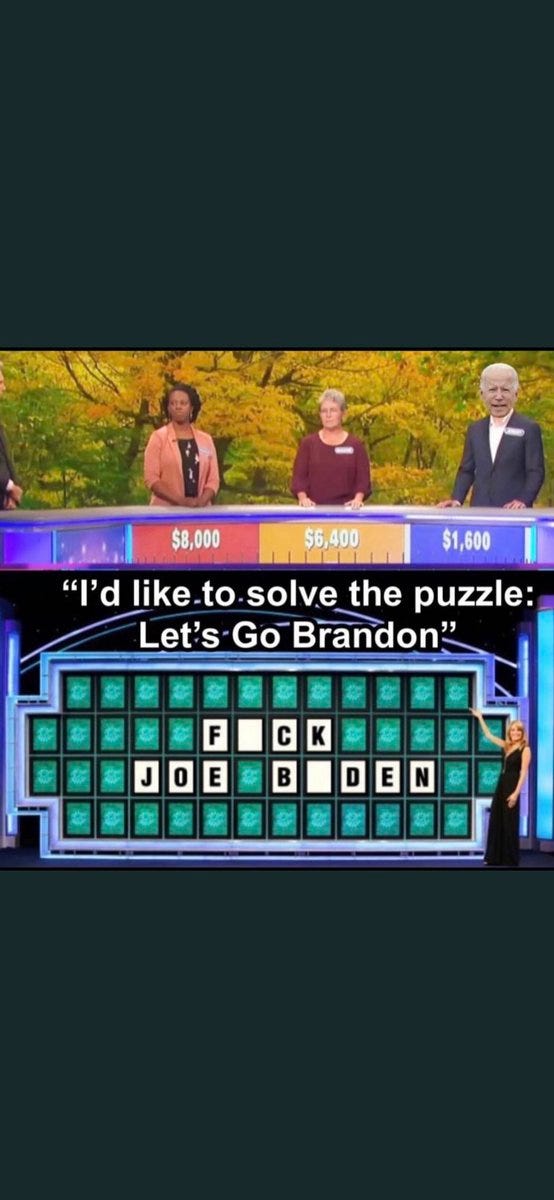
… while a sitting senator who claims to be a Christian tweeted a picture that said, “F-CK JOE B-DEN.”

The phrase that comes to mind is Fat Albert’s admonition that these people are like school in the summer. No class.

I don’t want to excuse the activists. Harassing someone in the private setting of a bathroom is threatening behavior and Sinema should not reward it. If people get the idea that this sort of behavior works, it will only encourage it further.

I do hold Cruz to a higher standard, however. As a senator, we should expect more dignified behavior from him. As someone who was once considered a leader of conservative thought, we should expect him not to resort to common trolling. As a Christian, we should expect him not to engage in offensive and insulting behavior.

The common denominator is that both incidents involve social media. The internet sites have a way of making us say and do stupid things. The anonymity and our craving for likes and shares lower our inhibitions and lead to a sort of mob mentality. This isn’t to say that people never did stupid things for attention in the old days, but the internet has raised the problem to a new level.

We can always hope that the hackers do a better job of shutting Facebook down next time. And maybe they’ll take Twitter with them.


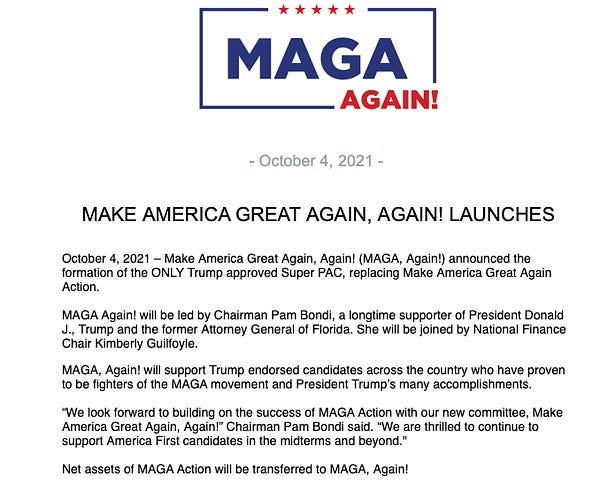
Finally, in an unsigned announcement, MAGA Again became the “only Trump approved Super PAC.” While the announcement did not mention a 2024 campaign by Donald Trump, I’m pretty certain that it means he’s running.

From the Racket

Monday, October 4, 2021

Is a mileage tax hidden in the infrastructure bill?

 One of the new internet rumors going around is that the new infrastructure bill (the real, bipartisan infrastructure bill, not the partisan “human infrastructure” one) contains a secret new tax on vehicle mileage. If true, the stealth tax on driving would be a violation of President Biden’s pledge not to increase taxes on Americans who earn less than $400,000.

To determine if and what the details of this new mileage tax include, I dug through the text of HR 3684, the Infrastructure Investment and Jobs Act. A quick search confirms that Section 13002 is indeed titled, “National Motor Vehicle Per-Mile User Fee Pilot.” So yes, there is something called a motor vehicle user fee in the bill, but what does it mean that this is a “pilot?” The devil is in the details.

Photo by Nabeel Syed on Unsplash

The bill explains that the goal of the program is “to demonstrate a national motor vehicle per-mile user fee (A) to restore and maintain the long-term solvency of the Highway Trust Fund and (B) to improve and maintain the surface transportation system.”

The text of the bill further explains the parameters of the program:

In carrying out the pilot program, the Secretary, 
in coordination with the Secretary of the Treasury, shall--
            (1) provide different methods that volunteer participants 
        can choose from to track motor vehicle miles traveled;
            (2) solicit volunteer participants from all 50 States,     the 
        District of Columbia, and the Commonwealth of Puerto Rico;
            (3) ensure an equitable geographic distribution by 
        population among volunteer participants;
            (4) include commercial vehicles and passenger motor 
        vehicles; and
(5) use components of and, where appropriate, coordinate 
        with--
                    (A) the States that received a grant under section 
                6020 of the FAST Act (23 U.S.C. 503 note; Public Law 
                114-94) (as in effect on the day before the date of 
                enactment of this Act); and
                    (B) eligible entities that received a grant under 
                section 13001.

So the bill seeks to recruit “volunteer participants” from all 50 states to “demonstrate” whether user fees based on mileage are feasible. As part of the plan, the volunteers will choose a method of tracking their mileage such as “Third-party on-board diagnostic (OBD-II) devices,” smartphone applications, telemetric data collected by automakers, motor vehicle data obtained by car insurance companies, or data collected from fueling stations.

But is this truly a volunteer program? Perhaps the government will deem that people are volunteering to pay the fee when they drive their cars.

One of the most useful things that I learned in college was that laws and contracts contain a definitions section. Regardless of the typical meaning of a word, if you are looking at a legal document, you should look to the definitions section to see what it means in that context.

If the document contains the word “car,” but the definitions define “car” as a “grilled cheese sandwich,” then that’s what the legal meaning of the word “car” is in that document. This comes up a lot in gun control bills. People say that the phrase “assault weapon” is meaningless. While that may be true from a gun owner or manufacturer standpoint, those bills each define the term, and looking at the definition included will tell you precisely what the bill’s authors mean by it.

It’s true in this case as well. The phrase “volunteer participant” means “an owner or lessee of a private, personal motor vehicle who volunteers to participate in the pilot program.” Similar definitions apply to commercial operators and fleet owners. So there is no hidden, sinister doublespeak involved in calling participants “volunteers.”

The program does include the possibility of revenue collection and stipulates that any revenues will be “ deposited into the Highway Trust Fund.” The question remains as to why anyone would volunteer to pay a mileage tax if they don’t have to.

Some people would willingly pay higher taxes. Warren Buffett and other wealthy individuals have famously asked the government to tax their income at a higher rate, but that’s not all. If you buy personalized vanity license plates, for example, you are volunteering to be taxed at a higher rate than for a standard, plain jane tag.

Interestingly, however, the bill contains a section on “payment” that hints that the volunteers will be paid to participate in the pilot program. The bill does not specify the amount of the payments but notes that the Treasury and Transportation secretaries “shall estimate an amount of payment for each volunteer based on the vehicle miles submitted by the volunteer for the calendar quarter and issue such payment to such volunteer participant.”

Paying the volunteers makes sense. If the government wants to get widespread participation in the program in order to make an accurate assessment of the utility of the mileage fees, the volunteers would likely have to be compensated rather than saddled with an additional tax. The Warren Buffetts of the world who want to pay more taxes are relatively rare.

The question remains as to why we need the user fee pilot program in the first place. The answer to that is that the gas tax, the current mechanism for funding the Highway Trust Fund, is not working as well as it used to. The Tax Policy Center notes that tax rates on motor vehicles have not changed since 1993 and are lagging far behind inflation. Additionally, increased gas mileage and more electric vehicles mean that roads are seeing more wear and tear for less gas consumption.

All these factors taken together have created a funding problem for our national highway system. As we move toward larger shares of EVs, the Highway Trust Fund’s shortfall, estimated by the CBO at $141 billion over the next decade, is only going to get worse.

I wrote on Friday that I’m not a Libertarian. I don’t disdain public works with the exclamation “Muh roads!” and I don’t think that all “taxation is theft.” Taxes are part of the price that we pay for living in a civilized society and for providing infrastructure for the common good. I think that most Americans understand the need to contribute to the national kitty to keep roads and bridges in good condition.

Having said all that, I don’t like paying taxes and I especially don’t like seeing tax money wasted, I do recognize that some level of taxation is necessary, however. Even though I abhor the idea of user fees in most cases, the motor vehicle mileage tax is, if not an idea whose time has come, is at least an idea whose time is near.

The best-case scenario would be to allow a gradual phase-in for the mileage fees. Owners of older, gas-guzzling cars would probably do better under user fees than owners of fuel-efficient hybrids or EVs (which are currently free riders). These gas-sipping or gas-eschewing vehicles contribute to wear and tear on the roads and need to be part of the funding for road repair and construction.

It’s also worth noting that support for the user fees is not drawn along party lines. As I pointed out back in June, President Biden has consistently opposed the idea of a mileage tax because it would violate his tax pledge. On the other hand, some Republicans, such as Rep. Sam Graves (R-Mo.), the ranking Republican on the House Transportation and Infrastructure Committee, have advocated versions of user fees based on mileage.

The bottom line here is that the infrastructure bill does not contain a new mileage tax, but it is likely that a tax based on miles traveled will be in our not-too-distant future, both at the state and federal levels. Some states are already experimenting with the fees. For now, however, the gas tax reigns supreme and drivers might even be able to make a little extra gas (or battery) money by volunteering for the user fee pilot program.

From the Racket