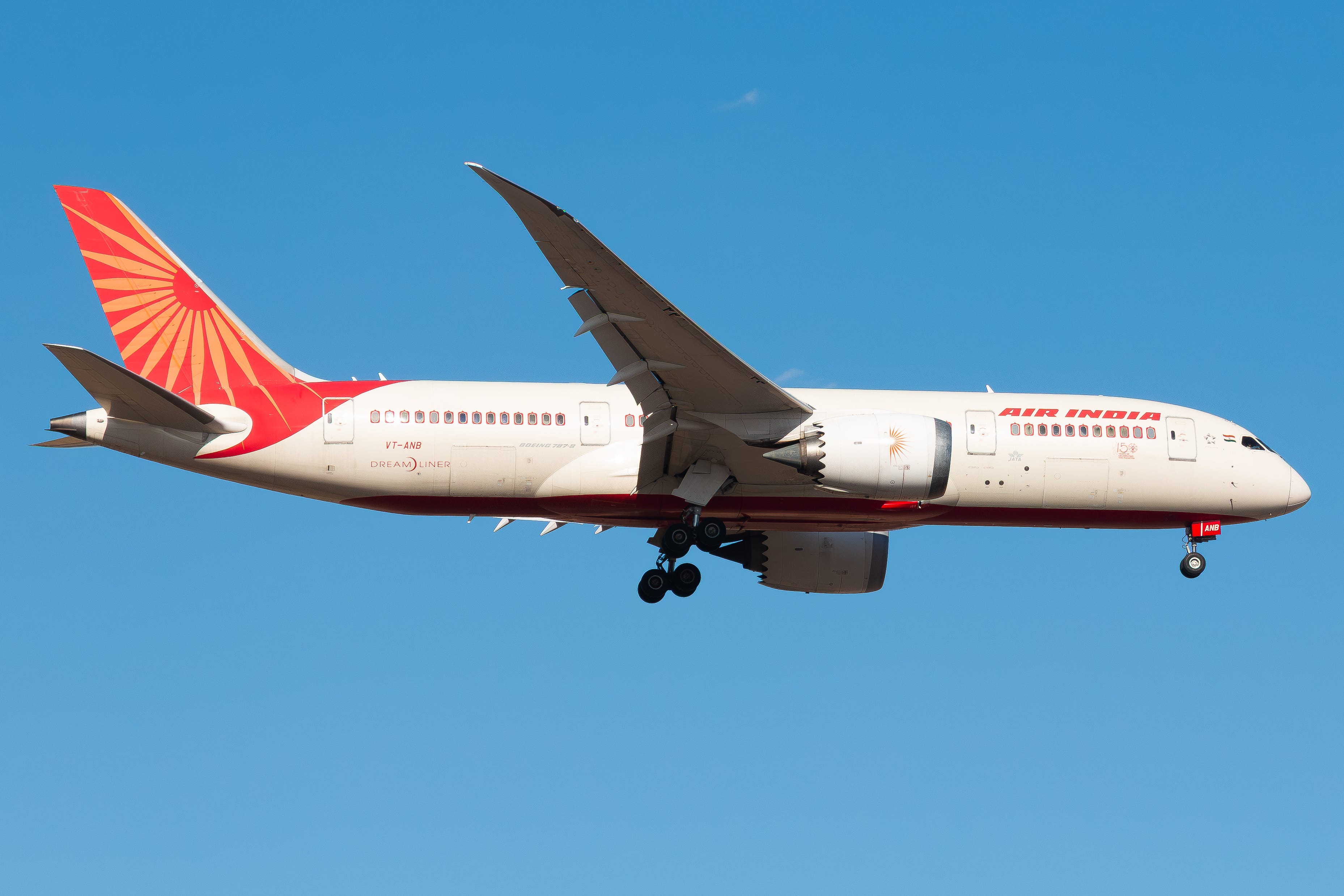
Back in June, we lost the first Boeing 787 Dreamliner when Air India Flight 171 crashed in Ahmedabad, India. The June 12 crash shortly after takeoff killed all but one of the 230 passengers, all 12 crew members, and 19 people on the ground. An additional 67 people on the ground were injured.
Right away, there was a lot of speculation about happened. The apparent cause of the crash was the simultaneous loss of power in both engines. Modern jet airliners are packed with safety features and redundant systems so the list of things that are likely to cause an engine to fail is short. The list of things that could cause a simultaneous power loss is much shorter.
Modern jet engines are extremely reliable. Failures do happen, but failure rates are typically in the range of one failure every 100,000 to one million hours. That doesn’t mean that engines never fail, but failures are rare. And pilots are trained to handle the airplane on one engine.
The most dangerous time for an engine failure is on takeoff. The “v1 cut” is considered a worst-case scenario in which an engine is lost on the takeoff roll before the airplane reaches flying speed. If the failure occurs before v1, the precalculated takeoff decision speed, the pilots stop the aircraft. If the failure occurs after, v1, the takeoff is continued.
I’ve only had one engine failure in over 10,000 hours of flying, and it came at v1. I was in my second day of IOE (initial operating experience) at Atlantic Coast Airlines, a Delta Connection carrier, flying a Dornier 328 Jet. The training captain was at the controls for that leg and I was the first officer in the right seat. We had performed the maneuver many times in the simulator, and real life proved very similar. The airplane flew well on one engine so we climbed to a safe altitude, completed the emergency checklist, and returned for an uneventful landing.
Interestingly, the Rolls Royce Trent 1000 engine that is on the majority of Dreamliners has had a history of problems. Some parts, such as compressor rotor blades and intermediate and high-pressure turbine (HPT) blades, had durability problems. A failure of these blades might require shutting down the engine in flight. (I also had a precautionary shutdown in my early flying career in a BAe Jetstream 41 turboprop after our engine instruments became erratic.)
These scenarios didn’t fit Air India, however. The 787 should have been able to fly on one engine, and the odds of parts failing on both engines at once were low.
That led to the possibility of pilot error combined with a mechanical problem. Back in 2015, TransAsia 235, a turboprop airliner, generated viral video as dash cams recorded the plane veering over a highway seconds before it crashed. In that case, the crew reported an engine failure, but investigators later determined that the crew secured the wrong engine, accidentally shutting down the engine that was still providing power. It was a self-induced total loss of power. New information suggests that the crew of Jeju 2216, which crashed in South Korea in 2024, made a similar mistake.
Last week, new information suggested that the Air India crash may have been malicious. The preliminary accident report implied that one of the crew members might have shut off the fuel switches to both engines shortly after takeoff.
You might ask yourself why there are switches to cut off fuel to the engines. The answer is that certain emergencies, such as engine fires, require shutting off fuel. If the engine is burning, you don’t want to keep feeding it fuel. Many aircraft have a fire switch that shuts off fuel, hydraulic lines, the engine-driven electric generator, and pneumatic systems associated with the engine in one press. Engines are also typically shutdown after the flight by shutting off fuel flow.
Because of the consequences of shutting off the wrong engine in the heat of battle when dealing with an emergency, flight crews are taught to follow the checklist. Some emergency action items are from memory, but in modern aircraft, these are short and are immediately followed up with a written checklist.
Crews are also taught to verify with the other crew member before moving critical switches like fuel cutoffs or fire switches. The crew member performing the checklist points to the switch and does not proceed until the other crew member, who is actively flying the airplane, confirms that the correct switch is being moved. Rushing can turn a small emergency into a big one.
Additionally, critical switches are often protected from accidental selection in a number of ways. Some switches have a plastic cover that must be opened to protect the switch while others must first be pulled over a guard to be moved.
The Dreamliner has a locking feature on the fuel switches that was the subject of an FAA safety bulletin in 2018 after several aircraft were discovered with locking switches that had been installed without being engaged. The switches normally have to be raised to be moved to the cutoff position. The FAA recommended that Dreamliners be inspected and the faulty parts replaced. The preliminary report notes the bulletin was not mandatory and Air India did not follow the procedure.
Per Reuters, the preliminary report on the Air India crash may says that the fuel cutoff switches were moved from “run” to “off” shortly after takeoff, and the aircraft began to lose power at 650 feet above the ground. The cockpit voice recorder (CVR) revealed one pilot asking the other why the switches were cut off. The second pilot denies doing so.
The CVR records audio in the cockpit. The report does not identify which pilot said what, but investigators should be able to determine this. The CVR includes inputs from both headset microphones and a cockpit area mic that picks up ambient noises. If the dialogue is not identified by the associated pilot mic, investigators should be able to identify the speakers by their different voices.
Airliners are not equipped with video recorders in the cockpit so there is no way to know if one of the pilots moved the switches. Video cameras in the cockpit have long been opposed by pilot groups that fear (and not without reason) that they might be used punitively by companies and regulators.
The report does note that the fuel switches were moved back to the run position shortly after they were cut off. Jet engines are often controlled by computers that attempt to relight failed engines automatically, and the report indicates that the engines were being restarted. Due to the low altitude, there was not enough time, however. The time from the first cutoff switch being turned off to the end of the engine data recording was only 29 seconds, and starting a jet engine usually takes a minute or two.
While there is no definitive answer to the Air India mystery at this point, the possibility of a malevolent action by a pilot must be considered. Over the past several decades, pilot murder-suicides have become a frequent cause of airline crashes, although that’s partly due to the fact that there are so few airline crashes at all. Among the crashes that were definitively or probably caused by pilot suicide were EgyptAir 990 in 1999, GermanWings 9525 in 2015, Malaysia 370 in 2014, and China Eastern Airlines 5735 in 2022. In 2023, an Alaska Airlines pilot commuting on Horizon Airlines tried to shut off both engines in flight.
Currently, there is no firm evidence that either pilot intentionally crashed Air India 171, but even if the fuel control switches were faulty, the odds seem long against both of them failing and moving to cutoff at the same time.
We may never know exactly what happened to Air India 171, and as a pilot, I hate to speculate that one of my brotherhood would choose to end his life by dishonoring the trust that his passengers, his fellow crew members, his company, and his government have placed in him. Nevertheless, we know that it does happen. While it is rare, suicide by airliner may be more common than we realize because there is often no concrete evidence of intent.
Airlines and regulators often make mental health issues worse by denying medical certificates to pilots who seek treatment (and admit it on the medical application). It’s possible that better mental health screening might be needed for airline pilots, but the system should also be reformed to encourage pilots to get the help they need.
As the investigation continues, there will probably be more definitive information about the conversation between the pilots, their backgrounds and mental states, and whether the fuel switches might have been faulty. It’s very possible that we may never have satisfactory answers.



.jpg)