Showing posts with label Paul Manafort. Show all posts

Wednesday, August 22, 2018

Donald Trump And The Terrible, Horrible, No Good, Very Bad Day

Jimmy Buffett once wrote that there are good days and bad days and going half-mad days. For President Trump, August 21 will go down in history as one of the latter two options. Bad news supposedly comes in threes and Tuesday was no exception. The string of bad legal news for the president may make the day a defining moment in the midterm elections, if not the entire Trump Administration.

The worst news for the president was the revelation that his “fixer,” attorney Michael Cohen, had agreed to a plea deal. Cohen’s plea goes beyond damaging Mr. Trump through guilt-by-association since the counselor fingered his client, the “candidate,” as the person who directed him to make hush payments to two women who claimed to have had affairs with Mr. Trump. In other words, President Trump is directly implicated in illegal activity.

Rudy Giuliani, the president’s lawyer, admitted in May that Mr. Trump had reimbursed Cohen for the payments, but claimed that the president was unaware that the money had gone to buy the women’s silence. Cohen’s statement under oath is at odds with Giuliani’s version.

The second piece of bad luck was expected but will still sting. Mr. Trump’s former campaign manager, Paul Manafort, was found guilty on eight counts of tax fraud, bank fraud and hiding foreign bank accounts. Mr. Manafort faces up to 80 years in prison and still faces other charges as well, including a possible retrial on ten counts where the jury failed to reach a verdict.

Manafort’s conviction does not directly involve Donald Trump or the 2016 election, but it does involve Russia. Manafort worked for Viktor Yanukovych, the pro-Putin dictator of Ukraine, before he worked for Trump. Manafort was accused of hiding payments related to his Ukrainian work and faces additional charges of money laundering and failing to register as a foreign lobbyist.

The third piece of bad news was also somewhat of a surprise. Rep. Duncan Hunter (R-Calif.) and his wife were indicted on charges of using $250,000 in campaign contributions to finance a lavish personal lifestyle. Rep. Hunter had been under investigation since 2017, but the timing of his indictment was unexpected. Hunter’s legal problems only involve President Trump in that they are both Republicans, but it will make the president’s life much more difficult over the next few months and beyond.

Hunter’s indictment comes only a few weeks after another Republican congressman, Chris Collins of New York, was indicted for insider trading and subsequently suspended his campaign. With the midterms rapidly approaching, the two indictments, along with Manafort’s conviction, paint a picture of Republican corruption that could have effects that reach much farther than the two congressional districts that are suddenly more vulnerable to Democratic challengers.

The day’s events leave President Trump to face two different but overlapping problems. First, is the direct legal threat to the Trump presidency from Michael Cohen’s testimony. Because the payments violated campaign finance laws, it is almost certain that Donald Trump will now be subpoenaed to testify under oath. Three presidents have been subpoenaed, but the power to subpoena a sitting president has never been tested in court. President Trump may break new legal ground if and when his subpoena comes, if he chooses to resist.

It is less clear whether a sitting president can be indicted. Justice Department guidelines say that the president can only be impeached, but there may be exceptions. Courts have never ruled on the question so any attempt to indict the president would likely face years of appeals. Either a subpoena or an indictment could spark a constitutional crisis.

The indirect threat to the president is that the seemingly endless parade of corruption may sway the midterm elections. Democrats are already enjoying advantages in fundraising and voter enthusiasm while Republicans must contend with a wave of retiring incumbents. As the headlines trumpet the legal problems of a growing list of Republicans, the party’s image will be tarnished for other candidates. Corruption is always bad, but especially for a party elected on promises to “drain the swamp.” Democrat control of one or both houses of Congress would create a crisis of a different sort.

If nothing else is certain, the events of August 21 did make one thing clear. Despite Mr. Trump’s fervent wishes and tweets, the investigations of his administration will not be going away anytime soon.

Originally published on The Resurgent


Thursday, March 29, 2018

Trump Campaign Aide Communicated With Russian Agent During Election

Robert Mueller's team has drawn the first direct line between the Russian government and Donald Trump's campaign. Court filings by Mueller's investigators allege that Rick Gates, an advisor to the 2016 Trump campaign, was in contact with a known “former Russian intelligence officer” during September and October 2016. Gates was on the staff of the Trump campaign at the time.

The revelation came from the testimony of London-based attorney, Alex van der Zwaan, who said that he was told by Gates that his business associate in the in Ukraine was a “former Russian intelligence officer” with the GRU, Russian military intelligence. The court filings cited by the Wall Street Journal say that van der Zwaan admitted to concealing the fact that he and Gates had been in contact with the Russian just prior to the election. The conversations allegedly concerned the possibility of criminal prosecution in Ukraine for the activities of van der Zwaan and others under the previous pro-Putin regime.

Rick Gates and Paul Manafort worked in the Ukraine for supporters of Viktor Yanukovych from 2004 through 2014. Earlier this year, Gates and Manafort were indicted on charges of money-laundering and making false statements relating to their time in the Ukraine. Gates pled guilty and agreed to cooperate with Mueller's investigation.

Paul Manafort was hired to be Donald Trump's campaign manager in the spring of 2016 and Gates joined the campaign at the same time. Manafort was fired in August over his Russia connections, but Gates remained until after the election and worked on Trump's inaugural committee, only leaving as the Russia investigations heated up. The Daily Beast reported that Gates still had access to White House advisors as late as June 2017 without the president's knowledge.

The Russian agent is not named in the court filings and is referred to only as “Person A.” The filings state, “The lies and withholding of documents were material to the Special Counsel’s Office’s investigation. That Gates and Person A were directly communicating in September and October 2016 was pertinent to the investigation. Federal Bureau of Investigation Special Agents assisting the Special Counsel’s Office assess that Person A has ties to Russian intelligence service and had such ties in 2016. During his first interview with the Special Counsel’s Office, van der Zwaan admitted that he knew of that connection, stating that Gates told him Person A was a former Russian Intelligence Officer with GRU.”

The Wall Street Journal has identified “Person A” as Konstantin Kilimnik. The Journal notes that Kilimnik was a language instructor at the Institute of Foreign Languages and has denied being a spy.

Van der Zwaan is a Dutch national and the son-in-law of German Kahn, a Russian billionaire. He currently lives in a hotel in New York. As a member of an international law firm, van der Zwaan worked with Gates and Manafort on matters relating to the Ukraine. His lawyers say that he lied to Mueller to protect his job rather than to hinder the Russia investigation.

Gates' attorneys had no comment on the new allegations.

The filings by Mueller provide a direct link between the Russian government and an active member of the Trump campaign, but the trail does not go all the way to the president. The Daily Beast report on Gates notes that he was not liked by President Trump. One Trump campaign aide called him Trump's “whipping boy.”

Thus far, the court filings fall short of proving collusion or illegal activity relating to the campaign beyond making false statements to the FBI. The contacts allegedly deal with previous activities in the Ukraine rather than the 2016 election.


The new revelation will make it more difficult for President Trump to end the Mueller investigation. With direct links between members of his campaign and the Russian government, it would politically untenable to fire Mr. Mueller, even if the president feels more pressure to do so.


Originally published on The Resurgent

Thursday, September 21, 2017

Claims Of Obama-Era Domestic Spying Are Overblown

As a conservative, it pains me to be perceived as defending Barack Obama. I was a strong and consistent opponent of Obama during his eight years in the White House and rarely, if ever, agreed with him on anything. Yet at times, the criticism and attacks on Obama went too far and I feel obliged to speak up. Such was the case when conservatives charged, against all evidence, that Obama was actually a native Kenyan and that he planned to declare martial law in Texas. It’s the case now with charges of rampant spying on political opponents by the Obama Administration. Objectively speaking, the evidence to support these claims is simply not there.

Such is the case with the recent op-ed by Sharyl Attkisson in The Hill. As with many on the right, Attkisson assumes recent revelations of the surveillance of Paul Manafort are really an attempt to spy on Donald Trump. That doesn’t seem to be the case. Like the others, Attkisson fails to mention that the surveillance started two years before Trump tapped Manafort to be his campaign manager. Attkisson also overlooks the fact that there were many valid reasons for Manafort to be under scrutiny after he closely worked with the party of Ukrainian dictator and Putin figurehead, Viktor Yanukovych.

If the CNN report on the monitoring of Manafort is to be believed, and Attkisson seems to think it does, Manafort was apparently not under surveillance while he was Trump’s campaign manager. The report states that the two FISA warrants that covered Manafort were active from 2014 through “some point” in 2016 and again through fall of 2016 to early 2017. This seems to exclude the period from March through August 2016 when Manafort worked for the Trump campaign and possibly the entire time that Trump has been president.

Other examples of surveillance of by Attkisson are similarly overblown and misinterpreted. She cites comments by former Director of National Intelligence James Clapper and former Acting Attorney General Sally Yates that “they, too, reviewed communications of political figures, secretly collected under President Obama.” When examined, the testimony in question deals primarily with Michael Flynn, the national security advisor who was fired for lying about his conversations with the Russian ambassador. Flynn’s case falls under incidental surveillance in which the Russian diplomat, not Flynn himself, was the person under surveillance. Spying on foreign diplomats is a legitimate role of the intelligence community.

Likewise, Attkisson’s claim that the Obama Administration spied on Congress is misleading. The Wall Street Journal article on which her claim is based makes clear that the government of Israeli Prime Minister Benjamin Netanyahu was the surveillance target, not members of Congress. The article makes clear that the NSA did not intentionally monitor the congressmen, saying that the incidental collection of their conversations with the Netanyahu government led to an “Oh-s— moment” and very valid concerns that the Obama Administration was intentionally monitoring the legislative branch.

Attkisson also cites the example of Rep. Jane Harman (D-Calif.). In the 2012 article linked by Attkisson on Counterpunch.org, Harman was allegedly the subject of two NSA wiretaps in 2006 and 2009. Obama can obviously not be blamed for the first wiretap since George W. Bush was president in 2006. In any case, once again we see that the target of the surveillance was not Rep. Harman, but a suspected Israeli agent.

Attkisson’s example of Dennis Kucinich (D-Ohio) is another example of a congressman being snared by contact from suspected foreign agents. In Kucinich’s case, the government recorded a call made to his congressional office by Saif el-Islam Qaddafi, at the time a high-ranking official in Libya’s government and a son of the country’s ruler, Moammar Qaddafi.

While the Obama Administration did spy on Fox News journalist, James Rosen, it appears that it did so legally. The Department of Justice obtained a warrant to search Rosen’s emails in connection with an investigation into leaked classified information, says the Freedom of the Press Foundation.

Likewise, the cyber spying on the Associated Press was “legal, as far as I can tell,” CNN legal analyst Jeffrey Toobin said at the time. “The administration isn't violating the First Amendment. But they are certainly doing more than has ever been done before in pursuing the private information of journalists. And we'll see if there's any political check on them, because there doesn't appear to be any legal check on what they're doing.”

Attkisson’s claim that the Obama Administration spied on her is also unverified. The CBS News article describing the breach that Attkisson links to contains a disclaimer: “To be clear, the federal government has not been accused in the intrusion of Attkisson's computer; CBS News is continuing to work to identify the responsible party.”

Attkisson sued the Obama Administration over the hacking in 2015. The suit is ongoing and she says that the Trump Administration is continuing to defend the case in court. She fails to explain why the Trump Administration would defend illegal actions by the Obama Administration, especially if Donald Trump was also a victim of Obama’s illicit surveillance.

In her closing argument, Attkisson cites alarming statistics about the increase in surveillance under Obama. Nevertheless she fails to point out that, per her source, in 2016, when Obama had supposedly increased surveillance at an alarming pace, only 336 US citizens were targeted by FISA warrants. Likewise, the same memo that Attkisson cites as evidence that the “intelligence community secretly expanded its authority in 2011 so it can monitor innocent U.S. citizens like you and me” actually says that the NSA realized that “its compliance and oversight infrastructure… had not kept pace” and “undertook significant steps to address these issues….”

Additionally, the alarmists fail to acknowledge that the first request for a FISA warrant on Trump campaign staffers was rejected in June 2016. This rejection seems to indicate that at least some intelligence officials under Obama took domestic surveillance protections seriously.

Likewise ignored is a statement in The New York Times from April 2017. Citing an unnamed official, the Times reported with respect to surveillance of Carter Page, another Trump campaign official, “The Justice Department considered direct surveillance of anyone tied to a political campaign as a line it did not want to cross.” This may explain the break in surveillance of Paul Manafort as well.

While there is a lack of evidence of systemic abuse of surveillance by the Obama Administration, there are legitimate concerns. For example, how did the recording of Kucinich’s phone conversation find its way into the hands of reporters four years later? The leaks of Michael Flynn’s conversations to the media were illegal, the lies Flynn told about them to Vice President Pence notwithstanding. The leakers have never been publicly identified or punished.

The unmasking of American subjects of incidental surveillance by Obama Administration officials is also problematic. Susan Rice appears to have been cleared of wrongdoing by House investigators, but Samantha Power still needs to explain her actions.

Finally, the revelations that the CIA inappropriately accessed Senate computers in 2014 shows the need for strict third-party oversight. Nevertheless, the fact that the breach was disclosed at all is encouraging. A subsequent review found that the incident was the result of an error and not intelligence officers acting in bad faith. More protections for journalists from surveillance would be an appropriate reform as well.

The claims of rampant Obama-era spying reflect many of the hallmarks of a classic conspiracy theory. For instance, the dots must be connected between many disparate events and rational explanations have to be ignored. A conspiracy by the Obama Administration to spy on political opponents would mean that virtually everyone in a leadership role in the intelligence community would be complicit, yet few have been fired by President Trump. When he did fire James Comey, illicit spying on Americans was not one of the reasons given.

Originally published on The Resurgent
Occam’s Razor holds that the simplest explanation is most often correct. In the case of Obama’s domestic surveillance, the simplest explanation is that there was probable cause for monitoring in most cases. That includes the cases of Paul Manafort and Carter Page. In other cases, some Americans were caught up in incidental surveillance of legitimate surveillance targets. Michael Flynn fell into this category. Donald Trump may have as well. 

Wednesday, September 20, 2017

What the Surveillance of Paul Manafort Means

The big story these days is the breaking news that Donald Trump’s campaign manager, Paul Manafort, was under FBI surveillance. This has brought forth a flurry of claims that Trump was right about his charges of wiretapping, that the FBI only tracked Manafort to find out what Trump was doing and that Manafort was only guilty of talking to Russian diplomats.

The real story is that this news isn’t breaking news at all. The story broke during the campaign that there was an active FISA warrant for surveillance of members of the Trump campaign staff. A November 2016 article by Heat Street (which has since been acquired by MarketWatch) reported that a broad FISA warrant request in June 2016 included Donald Trump as a target. This request was denied, but a subsequent, more narrow request was granted in October.

This was confirmed by the BBC in a January 2017 article which described how the warrant was issued to investigate two Russian banks. The investigation stemmed from intelligence passed to the US by an unnamed Baltic nation in April 2016. The intelligence allegedly included a recorded conversation “about money from the Kremlin going into the US presidential campaign.” The BBC article mentioned, but did not name, “three of Mr. Trump's associates were the subject of the inquiry.”

One of the three was Michael Flynn. Flynn was Trump’s first national security advisor. Flynn was fired early in the Trump Administration after it was revealed through leaked surveillance information that he had lied about conversations with the Russian ambassador. Flynn’s contacts with the Russians were apparently uncovered as an incidental target as the intelligence community monitored Russian diplomats. Flynn is still under investigation by both the Pentagon and Mueller’s task force.

In April 2017, the New York Times named a second target of the investigation. The report stated explicitly that Carter Page had been the target of a FISA warrant after he left the Trump campaign. “The Justice Department considered direct surveillance of anyone tied to a political campaign as a line it did not want to cross,” the report said, citing an unnamed official.

Paul Manafort, Trump’s campaign manager, was the third target of the investigation. Manafort had long had ties to the Putin government. He had worked as a consultant for the pro-Russian political party that controlled the Ukraine until it was toppled by a revolution in 2014. Manafort’s name was listed in the so-called “Black Ledger” that detailed secret payments by the Ukrainian ruling party. The ledger, which was discovered after the revolution, showed that Manafort received at least $1.2 million from the pro-Putin ruler of Ukraine per AP reports. Manafort was fired by Trump in August 2016 after the story of the Ukrainian payments broke.

The new story by CNN detailing Manafort’s surveillance says that Manafort was the subject of two FISA warrants. The first, centered on his work in the Ukraine, began in 2014 and “was discontinued at some point last year [2016] for lack of evidence, according to one of the sources.”

The dates for the second warrant are not known but it apparently began after “FBI interest deepened last fall because of intercepted communications between Manafort and suspected Russian operatives, and among the Russians themselves.” The warrant reportedly continued until early 2017. The dates suggest that Manafort was not monitored while he was an official part of the Trump campaign, although they do cover a period when he had discussions with President Trump. “It's unclear whether Trump himself was picked up on the surveillance,” CNN notes.

Another report by the New York Times says that federal agents raided Manafort’s home in July 2017. Again, this was after his official role as a member of Donald Trump’s campaign staff was long over.

So was Donald Trump right when he claimed that Obama was “tapping” his phones? So far there is still no evidence of this. Surveillance of Trump’s associates is not the same as surveillance of Trump himself. This is especially true if the surveillance did not occur during the period when Trump’s associates were working on his campaign. This would also indicate that the surveillance was not to find out what the Trump campaign was up to.

Further, the surveillance of Paul Manafort was not the result of business-as-usual contacts with Russian diplomats. A FISA warrant was issued for Manafort because he was communicating with Russian agents. A FISA warrant is not proof of guilt, but it does require probable cause. The denial of the June 2016 warrant request is proof that warrants are not issued on a frivolous basis.

The investigation into Paul Manafort and the Russian interference in the 2016 campaign is not yet complete. In the weeks and months to come, we may learn exactly why Manafort was talking to the Russians and what was said. At this point, there is no smoking gun, but there are indications, such as the decision to threaten Manafort with indictment, that Special Counsel Mueller is building a strong case. Part of that case may be on incriminating evidence that resulted from surveillance under the FISA warrant.

Originally published on The Resurgent


Thursday, July 13, 2017

Comparing Timeline to Emails Creates a Big Problem for Trump

The text of Donald Trump Jr.’s emails detailing the meeting with Russian attorney Natalia Veselnitskaya is troubling enough, but the way the emails fit into the overall timeline of the presidential campaign and the unfolding Russia scandal are even more problematic for the Trump Administration. The emails, released by Donald Trump, Jr., provide confirmation that members of the Trump campaign were open to accepting “Russia and its government's support for Mr. Trump” and actions taken by the Trump campaign may indicate that Donald Trump himself was aware of the offer and intended to use the Russian government’s intelligence information.

The email chain began on June 3, 2016, about a week after Donald Trump had officially secured a majority of Republican delegates to become the presumptive nominee. At this point, the hacking of the Democratic National Committee and the theft of the emails was not public knowledge.

On Tuesday, June 7, 2016, Donald Trump announced, “I am going to give a major speech on… probably Monday of next week [June13] and we’re going to be discussing all of the things that have taken place with the Clintons and I think you’re going to find it very informative and very, very interesting.”

The next day, June 8, the @DCLeaks_ Twitter account posted the first links to stolen emails on the DC Leaks website. The DC Leaks website and Facebook accounts apparently debuted the same day.

On Thursday, June 9, Donald Trump, Jr., Jared Kushner and then-campaign manager Paul Manafort met with Natalia Veselnitskaya, “The [sic] Russian government attorney” referred to in the emails, in New York’s Trump Tower.

On Sunday, June 12, WikiLeaks founder Julian Assange said on British television that more leaked emails relating to the Clinton campaign would be coming out soon.

Donald Trump did not make his promised “very interesting” speech on June 13, but on June 14, the Washington Post broke the news that hackers had penetrated the DNC network and “gained access to the entire database of opposition research on GOP presidential candidate Donald Trump.” The report, which identified the culprits as “Russian government hackers” even at that early date, also said that “the intruders so thoroughly compromised the DNC’s system that they also were able to read all email and chat traffic.” The Post also reported the hackers had targeted Republicans as well. Trump’s speeches from that week did not contain any new and notable information about Hillary.  

The next day, June 15, a hacker calling himself “Guccifer 2.0” contacted The Smoking Gun to claim credit for the hack of the Democratic National Committee. Guccifer 2.0  claimed to be a Romanian, but is widely suspected to be a creation of Russian intelligence.

On June 18, the Washington Post reported that the Trump campaign had removed a pledge to provide weapons to the Ukrainian forces fighting the Putin-backed invasion of their country. The report says that the changes were made “last week,” which would mean the platform changes immediately followed the meeting of Trump’s campaign advisors with Veselnitskaya.

On June 27, the first stolen DNC emails were published on the DC Leaks website.

A month later, on July 22, WikiLeaks released a second batch of DNC emails. The FBI announced that it was opening an investigation into the hack shortly after.

It was at this point that Donald Trump publicly asked Russia for help in finding the emails that were deleted from Hillary Clinton’s private server. “I will tell you this,” Trump said on July 27 at a press conference, “Russia: If you’re listening, I hope you’re able to find the 30,000 emails that are missing.”

A few months later, just before the final release of stolen emails by WikiLeaks, Roger Stone, a Trump advisor, seemed to hint that something big was coming. “Trust me, it will soon the Podesta's time in the barrel,” Stone tweeted on August 21. In the week before the final email dump on Oct. 7, Stone posted three tweets hinting that something was coming according to Business Insider, including one on Oct. 3 that read “I have total confidence that @wikileaks and my hero Julian Assange will educate the American people soon.”

While Donald Trump, Jr. claims that nothing of substance emerged from the meeting with the Russian lawyer, his response to the emails and the subsequent actions of the Trump campaign clearly show an intent to use information obtained from a foreign government to discredit a political rival. Such coordination is possibly illegal and certainly unethical.

While there is currently no paper trail that leads directly to Donald Trump, Sr., Trump’s speech on June 7 suggests that he was aware that something was in the wind. Additionally, his July 27 appeal to Russia looks starkly different in view of the revelation that the Russian government had offered its assistance to his campaign a month before.  

In addition to the fact that none of the Trump advisors disclosed the meeting and that Donald Trump, Jr. initially lied about what was discussed, the emails create another problem for the Trump Administration.  The timing of the meeting and the platform change raise the possibility of a quid pro quo with the Russians. The fact that the Trump campaign changed the Republican Party platform in a way that benefitted the Russian government immediately after the Russians offered dirt on Hillary is something that will be difficult to explain away. It is also a decision that can likely be traced to Donald Trump himself.


Although the Donald Trump, Jr. emails are not a smoking gun to prove that the Trump campaign colluded with Russia, but they are close to it. 

Originally published on The Resurgent

Tuesday, May 16, 2017

Why Does Russia Keep Popping Up in the Trump Administration?

There is an old saying that says where there is smoke, there is fire. These days, if Russia was smoke, the Trump Administration would be a four-alarm blaze. The question is why Russia is a recurring subject within the Trump Administration.

The rumors of Russian influence within the Trump Administration go back as far as Trump’s announcement of his candidacy. Rumors surfaced quickly about Trump’s longstanding business ties to Russia and The Hill noted that the Kremlin had funded nationalist opposition groups in several countries, such as Marine Le Pen’s National Front in France, which recently came close to winning the presidency.

Several of Trump’s former advisors were linked to Russia and Vladimir Putin. First to go was Paul Manafort, Trump’s first campaign manager. Manafort was a political consultant for Ukrainian dictator and Putin ally, Viktor Yanukovych, for 10 years until he was toppled by a revolution in 2014. Trump fired Manafort in August 2016.

Carter Page was a foreign policy advisor to the Trump campaign. Page was forced to take a leave of absence from the Trump campaign after allegations that he met with Russian officials on a trip to Moscow. Page was apparently the target of FBI surveillance for his links to Russia.

Roger Stone, another Trump campaign aide, claimed to have communicated with WikiLeaks founder, Julian Assange, and may have had foreknowledge of the WikiLeaks dump of Podesta emails in October 2016. WikiLeaks is widely believed to be a Russian front organization. Stone claims that he resigned from the Trump campaign, while Trump says he was fired.

Michael Flynn survived the campaign to become National Security Advisor. Unfortunately, shortly after Trump took office, Flynn was forced to resign for lying about contacts that he had with the Russian ambassador.

Amid the rumors of Trump campaign officials’ links to Russia, candidate Trump called upon Russia to “find the 30,000 emails that are missing” from Hillary Clinton’s server. When Trump made the statement, it was common knowledge that Russian fingerprints were all over the first hack of the Democratic National Committee a month earlier. The hack of John Podesta’s email account has also been traced to Russia.

After the election, when briefed on the evidence for Russian interference in the election, President-elect Trump finally admitted that “Russian entities” were responsible for the hacking in January, a conclusion that most other observers had long since reached. Even then, he denied that the interference was aimed at helping his campaign.  

While there is so far no smoking gun that members of the Trump campaign conspired with the Russians on the hacking and election tampering, Lawfare Blog notes that “cooperation [between the Trump campaign and Russian hackers] was an open and public feature of the campaign. It included open encouragement of the Russians to hack Democratic targets; denial that they had done so; encouragement of WikiLeaks, which was publicly known to be effectively a publishing arm of the Russian operation, in publishing the fruits of the hacks; and publicly trumpeting the contents of stolen emails.”

Writing for Just Security, Julian Sanchez argues that secret contacts between the campaign and the Putin government were not needed. “Russia’s efforts on Trump’s behalf were, for the most part, pretty open, even if Trump affected not to notice them,” he says. “Trump’s praise of Vladimir Putin—grounded in an affection that long predates his political career—was public, as was his gleeful exploitation of the fruits of hacks against his opponents and encouragement of more of the same, as was his attempt to exculpate Russia long after the intelligence community had reached consensus about their responsibility, as was his use on the campaign trail of stories pushed out by Russian state media.  Trump could see they were helping him, they could see he appreciated it and was reciprocating. What, exactly, would have been the marginal benefit of some further secret communication making this happy symbiosis a matter of explicit agreement?  Collusion would have been redundant.”

At this point, it is Trump himself keeping the Russia scandal alive. After the firing of FBI Director James Comey, Trump told NBC’s Lester Holt, “And in fact when I decided to just do it, I said to myself, I said 'you know, this Russia thing with Trump and Russia is a made-up story, it's an excuse by the Democrats for having lost an election that they should have won'.” This shocking statement confirmed charges by the critics that the firing was at least partly due to Comey’s handling of the investigation of Russia’s election interference and contacts with the Trump campaign.

When President Trump defended rather than denied his sharing of classified material with the Russian ambassador and foreign minister, it was simply the latest in a long line of contacts between the two organizations. Like many of the other contacts, Trump’s sharing of classified material was probably legal, but ethically questionable and almost certainly unwise.

Why does Russia keep popping up in the Trump Administration? Because Donald Trump encouraged the Russian interference in the campaign and – knowingly or unknowingly – hired a plethora of pro-Putin advisors. The president’s clumsy attempts to deflect the investigation into the campaign’s Russia ties and ensure that the subject won’t go away anytime soon.

Originally published on The Resurgent

Thursday, February 16, 2017

Spies Don’t Trust Trump with Intelligence

In what may be an unprecedented move, America’s intelligence community is reportedly keeping the country’s most sensitive intelligence information from its president. A Wall Street Journal report cited both current and former intelligence officials who said that concerns that the information might be leaked or compromised had prompted the agencies to withhold certain information.

Even before the forced resignation of Gen. Flynn due to his lack of forthrightness about his contacts with Russia, the Trump Administration was at odds with the intelligence community. President Trump was one of the few to deny the findings of the FBI and the CIA that Russia interfered in the presidential election. In January, Trump hinted at a restructuring of the intelligence community in what some thought was retribution for the investigation into Russia’s role in the election. Also in January, Russia was rumored to have compromising information on Donald Trump himself.

Flynn was also not the only member of the Trump camp to have suspicious ties to Russia. Paul Manafort, Trump’s campaign manager, was fired during the campaign for his connections to Russia. CNN reported that “high-level advisors” to the Trump camp were in “constant communication during the election with Russians known to US intelligence” according to “multiple current and former intelligence, law enforcement and administration officials.” Manafort was named by CNN in the article, but it may also refer to Carter Page, Roger Stone and others.

Manafort denied the accusation. “I have knowingly never talked to any intelligence official or anyone in Russia regarding anything of what's under investigation," he said. "I have never had any connection to (Russian President Vladimir) Putin or the Russian government before, during or after the campaign.”

According to the Journal, intelligence information is sometimes sanitized to protect sources before it is given to government officials, but there is no known precedent for restricting the president’s access due to fears about “trustworthiness and discretion.” The report said that there was no known instance in which vital information relating to security threats or plots had been restricted.

The Journal’s sources cited two specific reasons for restricting Mr. Trump’s access. The first is the general statements of admiration that Trump made for Vladimir Putin at numerous times. The second is the specific request that Mr. Trump made for Russia to find Hillary Clinton’s deleted emails.

Officially, the intelligence community denies the Journal report. ““Any suggestion that the U.S. intelligence community is withholding information and not providing the best possible intelligence to the president and his national security team is not true,” said a spokesman for the Office of the Director of National Intelligence.

Likewise, the White House also disputes the account. “There is nothing that leads us to believe that this is an accurate account of what is actually happening.”


Regardless of whether information is being withheld, there is clearly a strained relationship between the Trump Administration and the intelligence community. “It’s probably unprecedented to have this difficult a relationship between a president and the intelligence agencies,” said Mark Lowenthal, a retired senior intelligence official. “I can’t recall ever seeing this level of friction. And it’s just not good for the country.”

Originally published on The Resurgent

Monday, July 25, 2016

Did the Russians just throw the election to Trump?

 
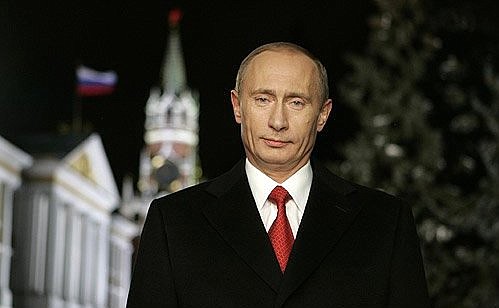
(Kremlin.ru)

The hack of the Democratic National Committee emails two days before the opening of the Democratic National Convention in Philadelphia has rocked the political world. The emails contain damaging exchanges that show that Democrat staffers, supposedly neutral in the primary, actively undermined the Bernie Sanders campaign. The bigger story, however, is that the Democratic email hack may have been intended to throw the U.S. presidential election to Donald Trump.

CNN reports that several cyber security firms have verified that the two groups of hackers that targeted the DNC were of Russian origin. One group monitored DNC communications for about a year and another specifically targeted Democratic opposition research on Donald Trump.

Defense One quotes the cyber security report that notes that the hackers “appeared to cease operations on Russian holidays, and their work hours seem to align with the UTC +3 time zone, which contains cities such as Moscow and St. Petersburg.” The report continues, “It’s the same group that hit the State Department, the White House, and the civilian email of the Joint Chiefs of Staff.”  

Adding to the evidence is the fact that Wikileaks is not a hacker group like Anonymous. Wikileaks gets the documents that it publishes from other sources. Two of the most famous Wikileaks sources were Edward Snowden and Bradley Manning. Manning was convicted of espionage and Snowden fled to Russia to escape prosecution. He remains there today.

While the news of Russian involvement doesn’t absolve the Democrats of the duplicity revealed in their emails, the fact that Vladimir Putin’s Russia would interfere with internal American politics is a serious problem. A future document dump could come just before the election when a candidate would not have time to respond. If Russia could hack and post sensitive emails, they could just as easily manufacture incriminating emails to dump at the right time.

Russia and the U.S. have recently been at odds over Syria policy, but Vladimir Putin and Donald Trump have long been chummy. Last year, the two men were so complimentary of each other that their relationship was referred to as a “bromance.” This is in contrast to Mitt Romney who called Russia America’s “number one geopolitical foe” in a 2012 presidential debate. Nevertheless, it seems doubtful that their mutual admiration would be enough of a reason for Putin to risk an international incident by interfering with internal U.S. politics.

As it turns out, Trump’s affinity for Russia goes beyond Putin to the 1980s. The Washington Post reported that Trump has had business relationships in Russia for decades and has sold many properties to Russian investors. The Hill reports on Trump’s extensive links to Russia including  

“Russians make up a pretty disproportionate cross-section of a lot of our assets,” Donald Trump Jr., said in 2008. “We see a lot of money pouring in from Russia.”

One of the highest level connections is through Trump’s campaign manager, Paul Manafort, who spent years as a consultant for the pro-Putin dictator of Ukraine, Viktor Yanukovych. Yanukovych was ousted in 2014 prior to Putin’s invasion of Ukraine. According to Politifact, Manafort spent about 10 years in Ukraine working for Yanukovych’s Party of Regions and only left after the Ukrainian revolution.

There is are other reasons for Russia and Putin to try to make sure that Donald Trump wins the election. Trump’s foreign policy would be even better for Vladimir Putin than that of Barack Obama or Hillary Clinton, who tried to reset Russian-American diplomacy in 2009. The Obama Administration and the European Union imposed sanctions on Russia in response to the invasion of Ukraine. If a pro-Russia candidate like Trump became president, it is likely that those sanctions would be removed.

Trump has shocked allies in recent days by stating that his administration might not honor American treaty commitments to defend NATO allies. Trump also floated the idea of withdrawing U.S. troops from foreign countries such as Japan and South Korea.

A chief beneficiary of Trump’s isolationist foreign policy would be Vladimir Putin. Putin’s Russia is already invading Europe through its proxy army of Ukrainian separatists and has its eye on restoring the former Soviet sphere of influence. Russia has also expanded its presence in the Middle East for the first time since the fall of the Soviet Union.

In fact, Trump has already given his approval to a more aggressive Russian foreign policy. Last year, Trump applauded Russian intervention in Syria on behalf of dictator Bashar Assad. “Let Russia fight ISIS, if they want to fight ‘em … in Syria,” Mr. Trump said at the time.

At about the same time that Wikileaks dumped its trove of documents online, Russia was bombing a base in Syria used by the U.S. and Britain. Trump did not comment on the attack.

It appears likely that the email scandal will continue to dog Ms. Clinton for the remainder of the campaign. Wikileaks founder Julian Assange has boasted that the group will post more documents in the future. Assange claims on ITV that there will be enough evidence to indict Clinton. It seems likely at this point that Ms. Clinton’s “homebrew” email server was compromised by the Russians as well.


The hacked emails showcase the corruption of the DNC, but they may show even more about Donald Trump. If the hackers were really acting on behalf of the Russian government, it raises serious questions about Trump’s foreign policy proposals as well as his connections to Vladimir Putin.