Showing posts with label Indiana. Show all posts

Friday, November 4, 2016

Democrats may regain Senate majority

US Capitol (Diliff/Wikimedia)
A month ago, the GOP seemed to be the odds-on favorite to retain control of the Senate. With the tumultuous month of October behind us, the odds seem to have shifted slightly to favor the Democrats regaining control.

The Democrats have a structural advantage due to the fact that they are defending only 10 seats while Republicans are defending 24. Only one Democratic seat, the Nevada seat of the retiring Harry Reid, was considered at risk. A total of eight Republican seats, many in blue or purple states, are threatened. Many of these at-risk seats were won in the Tea Party wave election of 2010. Wave elections often allow weak candidates to win who cannot retain their seat when political conditions return to normal.

FiveThirtyEight puts the chances that the Democrats will win the Senate at over 60 percent. A recent blog post noted that four of the eight most hotly contested races have seen major shifts. Three races have shifted toward the Republicans and one toward the Democrats. Indiana, New Hampshire and Wisconsin have moved slightly toward the Republicans while Pennsylvania now favors the Democratic challenger.

Here are summaries on the battleground Senate races for Republican seats:

·         In Florida, Sen. Marco Rubio’s lead over Democrat Patrick Murphy has tightened slightly, but Rubio is still the clear favorite.
·         In Illinois, Sen. Mark Kirk’s seat is all but lost. Rep. Tammy Duckworth’s lead has widened to 13 points in the Real Clear Politics average after Kirk made an embarrassing comment about Duckworth’s heritage.
·         In Indiana, a race previously considered a Democrat lock, Rep. Todd Young (R) was tied with former Senator Evan Bayh (D) in a recent poll. FiveThirtyEight’s models show Young’s chances of taking the seat surging from 30 percent to 45 percent. The seat is currently held by Republican Dan Coats, who is retiring.
·         In Missouri, Sen. Roy Blunt is in a tossup race with Secretary of State Jason Kander. FiveThirtyEight gives the race as a 55 percent chance of going to the Democrats, a slight improvement for Blunt.
·         In New Hampshire, Sen. Kelly Ayotte seems to be maintaining a margin-of-error lead over Gov. Maggie Hassan. FiveThirtyEight has downgraded Hassan’s chances of winning the seat from 67 to 56 percent. The race is still a tossup, but with slightly better odds for Ayotte.
·         In North Carolina, Sen. Richard Burr’s race with state Rep. Deborah Ross is still a tossup. FiveThirtyEight puts Ross’s chances of taking the seat at 34 percent, down nine percent from two weeks ago.
·         In Ohio, Sen. Rob Portman’s seat seems to be reliably Republican. Portman holds a double-digit advantage over Gov. Ted Strickland.
·         In Pennsylvania, Sen. Pat Toomey has trailed Katie McGinty in nine straight polls. The race is still close, with McGinty leading by an average of less than four points, but FiveThirtyEight has moved the race from a tossup to a 73 percent chance of a Democratic victory.
·         In Wisconsin, Sen. Ron Johnson’s chances are still not good. Former Democrat Sen. Russ Feingold has consistently led the race. FiveThirtyEight says that the race has moved slightly in Johnson’s favor, but Feingold still has a 90 percent chance of retaking the seat.


The sole Democratic battleground seat is Nevada. This race is a tossup between Rep. Joe Heck (R) and Attorney General Catherine Cortez Masto. Heck holds a slight advantage in the RCP average of polls, but FiveThirtyEight gives Cortez Masto almost a 60 percent chance of winning.

The current balance of power in the Senate is 54 Republicans to 46 Democrats (including independents). The Democrats need a net pickup of four seats to split control of the Senate or five seats to take a majority. In the case of a 50-50 split among the two parties, the incoming vice president can cast the deciding vote.

At this point, Democrats look likely to retain Harry Reid’s Nevada seat as well as pick up Republican seats in Illinois, Indiana, Pennsylvania and Wisconsin. These four seats would be enough to split the Senate evenly with the Republicans.

The fifth seat, to give the majority to the Democrats, will likely come from either Missouri, New Hampshire or North Carolina. All three races are tossups and FiveThirtyEight gives Democrats the edge in both Missouri and New Hampshire.

Regardless of whether Hillary Clinton or Donald Trump wins the presidency, it has been viewed as critical for Republicans to hold the Senate. The Senate has the role of confirming judges and Supreme Court justices as well as confirming treaties. Any bills from the House’s Republican majority, which is likely safe, must go through the Senate before they are signed into law by the president.

The most recent round of polling gives little hope of preserving the Republican Senate majority. As Republican Senate hopes fade, so do hopes of everything from keeping liberal justices off of the Supreme Court to repealing and replacing Obamacare.

Originally published on The Resurgent

Wednesday, April 27, 2016

Can Trump get to 1,237?

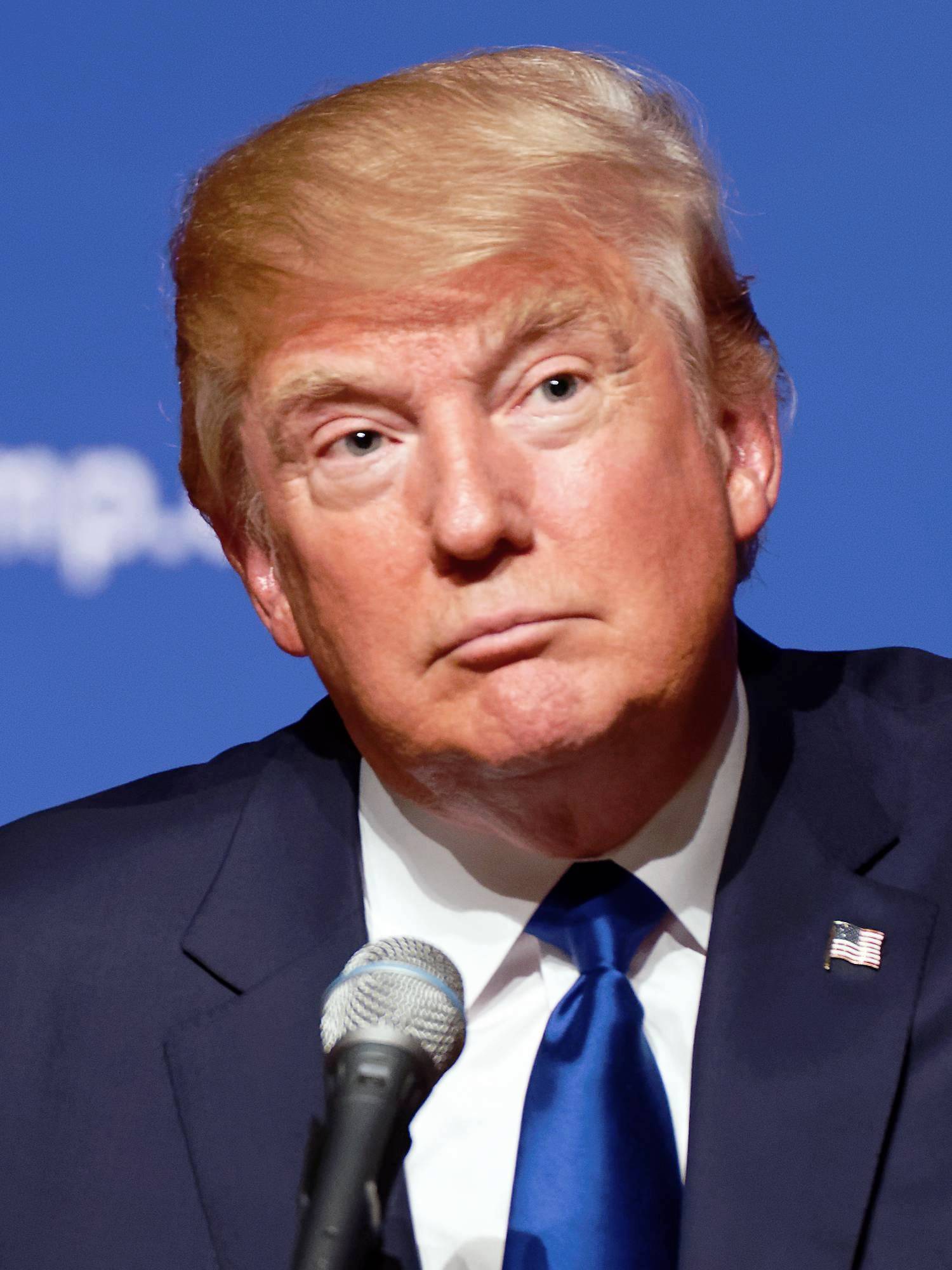
(Michael Vadon/Wikimedia)
After Donald Trump’s sweep of the Northeast last night, there is a feeling of inevitability in many quarters. Trump won Connecticut, Delaware, Maryland, Pennsylvania and Rhode Island, all with more than 50 percent of the vote. The big question now is: Can Donald Trump get to 1,237 delegates? And a second question is, with Trump winning big victories and racking up delegates, why does he continue to call the system rigged?

After the April 26 primaries, the most recent tallies show Trump with 950 delegates. At this point, Ted Cruz and John Kasich are mathematically eliminated from winning the 1,237 delegates needed to be nominated on the first ballot and can only hope to deny Trump a victory.

There are 13 primaries and 622 delegates remaining. At first glance, it seems that Trump’s road to the nomination is easy one. He only needs to win 46 percent of remaining delegates. In reality, due to the structure of the Republican primary, it might be more difficult that it seems. Several of the primaries are winner-take-all and Trump will not win all of these.

To analyze Trump’s chances, we’ll assume that he takes an average of 45 percent of proportional delegates and examine the probable outcomes of winner-take-all states. Forty-five percent is not an unreasonable number in light of Trump’s past performance and the fact that the race is down to only three candidates. It is also in line with current national polls.

The next prize is Indiana on May 3. Indiana is a winner-take-all state with 57 delegates, approximately 20 percent of what Trump needs. Polling shows that the race in Indiana is close. Trump leads by single digits and the deal between Cruz and Kasich may keep Trump from winning. Trump currently needs 287 delegates to clinch the nomination. If Trump wins Indiana, the number will reduced to 230.

On May 10, Nebraska and West Virginia hold primaries. Nebraska is winner-take-all with 36 delegates and West Virginia is proportional with 34 delegates. There is no recent polling in either state, but Nebraska would probably lean toward Cruz and West Virginia toward Trump. Assuming 15 delegates for Trump from West Virginia, he would need 215 more.

On Tuesday, May 17, Oregon holds its primary. The only poll available is a year old and does not show Trump in the race. Cruz, however, has performed well in other western states. The state’s 28 delegates will be award proportionally. If Trump keeps his ratio of 45 percent, he would win about 13 delegates and need 202 more.

Washington’s primary is on May 24. The state’s 44 delegates will be awarded proportionally. There is no polling available in Washington. Forty-five percent of the delegates would net Trump about 20 and leave him needing an additional 182.

June 7 is the last multistate primary day. The biggest prize is California with 172 delegates to be awarded proportionally. Current polling shows Trump at about 45 percent in California. He should win about 78 delegates and leave the state needing 104 more.

On the same day, Montana, New Jersey and South Dakota hold winner-take-all primaries. Trump would probably take New Jersey’s 51 delegates, but lose in Montana and South Dakota. New Mexico also holds a proportional primary on June 7. Cruz led by one point in New Mexico in a February poll, but ceded the state to Kasich in the deal between the two candidates. After winning New Jersey, Trump will only need 53 delegates. Even if he wins all of New Mexico’s 24 delegates, an impossibility, he will fall just short of the 1,237 delegates needed to secure the Republican nomination.

This explains why Trump calls the system rigged. He knows that even with his commanding lead in delegates and all the other candidates mathematically eliminated, the odds are against him amassing enough delegates to win the nomination on an uncontested first ballot.

Conventional wisdom holds that, as delegates begin to be unbound after first ballot, Trump’s chances of winning the nomination will diminish. Some delegates may initially be bound to vote for Trump, but actually support other candidates. After the first ballot, Trump’s much-touted negotiating skills will be required to convince his delegates not to flip to another candidate and to win other delegates to put him over the top. Considering Trump’s unpopularity with most of the party, this is unlikely.

Can Trump get to 1,237? It is possible, but not likely. He would need to maintain and even build on his momentum. Trump needs to win the winner-take-all states of Indiana and New Jersey as well as take about 55 percent of the remaining proportional delegates. This would mean doing much better in western states than he has done previously. Because Trump can see that it is unlikely that he will be the nominee, even though he will enter the convention with the most delegates, he charges that the system is rigged.

Read it on Conservative Firing Line or Freedom Daily


Sunday, July 19, 2015

Governors arm National Guard after Chattanooga murders

This week’s attack by an alleged Islamic extremist on a military recruiting office in Chattanooga was not the first such attack on soldier on American soil. In spite of a string of attacks on military bases and recruiting offices in the past several years, the Obama Administration several has not taken steps to allow military personnel to carry weapons for self-defense. Today a growing number of state governors are taking action to protect their state National Guardsmen from similar attacks.

According to CNN, there have been at least three successful attacks on military targets in the United States in recent years. In 2009, Carlos Bledsoe killed one soldier and wounded another outside an army recruiting office in Little Rock, Ark. Bledsoe was a convert to Islam who had been arrested in Yemen the year before in possession of a fake ID card, bomb making manuals and a phone that contained contacts with Islamic militants.

Also in 2009, Nidal Hasan, an army major and Muslim who opposed the war in Afghanistan, killed 13 soldiers and wounded 32 at Fort Hood, Tex.

In 2013, Aaron Alexis, a civilian contractor and former navy sailor, killed 12 people at the Washington Navy Yard. Alexis had a history of mental health problems.

In at least two other cases, plots to attack US military bases were disrupted by authorities. In 2008, five Muslim immigrants were found guilty of plotting to attack Fort Dix, N.J. "to kill as many American soldiers as possible" according to the Washington Post. Earlier this year, an Illinois National Guardsman and his cousin were accused of plotting to join ISIS and attack a National Guard base in Joliet, Ill. reported the Chicago Sun Times.

In spite of this pattern of attacks, military leaders and the Obama Administration still prohibit the carrying of firearms on military bases, a policy that dates back to March 1993. While the perimeter of many military bases can be easily secured, military recruiting offices cannot. As Maj. Hasan and Alexis demonstrated, a person with access to the interior of a military base can do serious damage before defenders can respond.

Army chief of staff Gen. Ray Odierno told Fox News yesterday that he would conduct a review of security procedures at recruiting offices, but thought that allowing recruiters to be armed might "cause more problems than it solves."

In a tweet, ABC News correspondent Luis Martinez said that “Marine Corps Recruiting Command has instructed Marine recruiters not to wear uniforms at work, part of force protection since Chattanooga.” This was unverified by other sources.

Some states are taking a stronger tack. The governors of Arkansas, Indiana, Louisiana, Oklahoma, and Texas have issued orders to their state National Guard troops to take action to prevent a Chattanooga-style terrorist attack.

At least six state governors have announced plans to allow National Guard troops to carry weapons. Houston’s ABC 13 said today that Greg Abbott (R-Tex.) will arm Texas National Guard soldiers at their bases to “not only serve as a deterrent to anyone wishing to do harm to our service men and women, but will enable them to protect those living and working on the base.”

Gov. Bobby Jindal (R-La.) issued an Executive Order yesterday directing the state’s Adjutant General to arm “selected Guard personnel… to preserve the lives, property, and security” of Louisiana Guardsmen. Jindal is a Republican presidential candidate.

In Florida, Rick Scott (R) issued an Executive Order temporarily moving National Guard recruiting offices from commercial stores to armories until state officials can assess and enhance the security of the stores according to the Florida Times-Union. Scott’s order also armed the state’s Guardsmen.

Arkansas Gov. Asa Hutchinson (R) also ordered full-time Guardsmen to be armed as deemed necessary by the Arkansas National Guard’s commanding officer according to a press release.

The Hill reports that Mary Fallin (R-Okla.) also issued an order allowing full-time Guardsmen in Oklahoma to be armed.

This afternoon, Mike Pence (R-Ind.) became the most recent governor to issue such an order according to Fox 59.

Individual governors can arm their state’s National Guard because the Guard is under state control in normal circumstances with the governor as the commander-in-chief. The National Guard can also be federalized by the president for use with the regular army in combat operations or disasters.

As the death toll from attacks on military installations mounts, it seems likely that more governors will take steps to protect their state soldiers from attack. As Greg Abbott said, “After the recent shooting in Chattanooga, it has become clear that our military personnel must have the ability to defend themselves against these type of attacks on our own soil.”


 Read the full article on Examiner.com