Wednesday, May 20, 2026

Few surprises in this week’s primaries


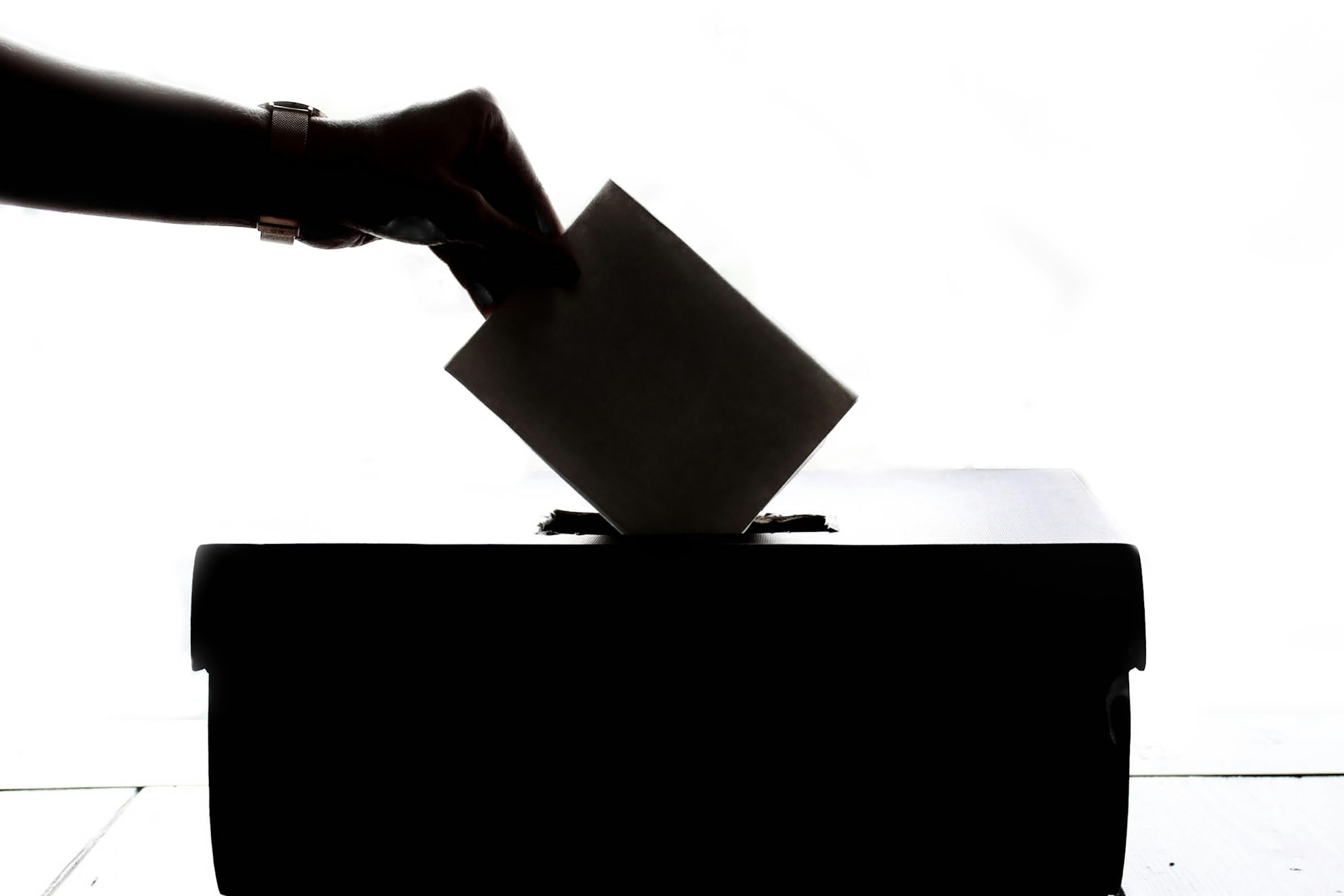
Yesterday was a primary day in Georgia, and the results held few surprises for those who had been paying attention. Perhaps the biggest surprise was that Democrat primary ballots outnumbered Republicans both in the early voting and on Election Day. Democrats had an edge of about 150,000 votes, which is very unusual for Georgia.

The actual results were pretty much as expected. Georgia requires a majority so there will be a runoff if no candidate gets more than 50 percent of the vote. The top two Republican candidates for governor were both MAGA: Rick Jackson, the billionaire who has spent $80 million of his own money to win a job with a $185,000 salary, and Burt Jones, the current lieutenant governor and an unindicted coconspirator in the 2020 fake elector plot. Former Atlanta mayor Keshia Lance Bottoms won the Democratic nomination outright. 


https://substackcdn.com/image/fetch/$s_!B7hu!,f_auto,q_auto:good,fl_progressive:steep/https%3A%2F%2Fsubstack-post-media.s3.amazonaws.com%2Fpublic%2Fimages%2F356cfd95-5a2b-4c55-8acb-d64076dbe73d_2070x1380.jpeg


Photo credit: Element5 Digital unsplash.com

Share

MAGA had a good night, and if you know the Georgia GOP, this was no surprise. In one of the more notable results, Vernon Jones, a former Democrat who is black, earned a spot in the runoff with Tim Fleming. Jones has a history of scandal that includes both firing white employees and replacing them with blacks and a history of sexual misconduct that includes a rape allegation. But he’s a black Trump supporter. Fleming, his opponent, is also an election denier. I wouldn’t trust either with the integrity and security of Georgia elections.

A bright spot for Democrats was the fact that Senator Jon Ossoff’s opponent will either be Rep. Mike Collins, a MAGA radical, or Derek Dooley, the son of a legendary UGA coach but a political neophyte. The runoff will test the influence of Gov. Brian Kemp, who handpicked Dooley, over the MAGA preference for Collins. Ossoff will likely beat either option.

One of the most curious, albeit not surprising elements of the evening, was the result of two state Supreme Court races. These nonpartisan races appeared on the primary ballots, and Democrats had placed high hopes on their preferred candidates, who ran afoul of ethics rules regarding statements addressing issues that they might rule on as justices. This scandal broke just before Election Day. (Accusations that Kemp moved the judicial elections to the primary to confuse voters are false. Judicial elections have been held in the spring for at least 10 years.)

Both incumbents won re-election, but the curious thing was that challenger Miracle Rankin ran eight points ahead of her co-Democrat Jen Jordan in the parallel race. There is speculation that this may have been due to the fact that Rankin’s name sounded “black” or that Democrat voters didn’t familiarize themselves with the ballot, but it may just be that Jen Jordan, a former state senator and candidate for attorney general, wasn’t very popular. The loss in the two races even as Democratic voters were more energized and engaged may be due to a hesitance to politicize the state judiciary.

Outside of Georgia, Thomas Massie’s congressional race in Kentucky was closely watched. Massie, a libertarian Trump critic, was targeted by Trump for defeat. Massie lost by about 10 points

In addition to being a Trump critic, Massie was a bit of a nut. His defeat may be partially explained by his response, in which he attacked his opponent’s support of Israel by claiming that he was in Tel Aviv during the election.

And finally, Texas has not yet held its primary, but Donald Trump endorsed another Vernon Jones-type candidate there. Ken Paxton is a serial adulterer who was impeached by Texas Republicans for corruption. It’s no surprise that Trump likes him, but his strong support from the Christian right is disappointing.

The big takeaway from Tuesday is that the Republican Party is firmly under Trump’s control. Dissenting politicians are being purged, even if it means that it is more likely that Democrats win control of the House and Senate. 

This is more confirmation that the old conservative Republican Party no longer exists. There is only Donald Trump’s personality cult and the Democrats. A vote for any Republican is a vote to enable Donald Trump’s authoritarian agenda. 

That’s the choice for November.


 From the Racket News

Tuesday, May 19, 2026

The US is to Cuba, as Iran is to the US

 Remember the analogies on the SAT? The question would give you two words, and then you’d have to match their relationship with two other words. For example, puppy is to dog, as kitten is to cat. 

We Gen Xers used to hate the analogy section of the SAT, but I was reminded of it recently by unfolding parallel world events. First, Cuba announced that it is out of oil. The island nation received most of its oil from Venezuela and has not received shipments from that nation since January, following the US raid that captured Nicholas Maduro. Most other oil deliveries have been inhibited by the Trump Administration’s blockade aimed at regime change.


Now, the Cuban government says that the island is completely out of oil and diesel fuel. Compounding the problem, the electrical grid is teetering, with rolling blackouts lasting as long as 22 hours per day in some areas. The irony here is that US policy towards Cuba is something that would trigger the ire of the United States if someone else did it. 

The manmade energy crisis may bring about regime change in Cuba, or it might make the country vulnerable to a US invasion, the US is reportedly considering indicting Raul Castro, but there are costs. There is a humanitarian crisis from shortages of energy, food and water that includes a skyrocketing infant mortality rate that is an obvious, painful cost of the blockade. The tarnishing of America’s image in Latin America at a time when China is making inroads into the Western Hemisphere is less obvious, but no less important.

But even more alarming is that Iran is doing to us what we are doing to Cuba. Oil and gasoline prices have risen as Iran continues to control access to the Persian Gulf, but so far we have not seen shortages. That may change within a few weeks. 

For the past few months, the world economy has relied on previously-shipped inventories of oil along with newly-pumped oil from other areas. Those inventories have steadily declined, including the release of 172 million barrels from the Strategic Petroleum Reserve, which, for context, puts the total contents of the SPR at less than 375 million barrels. Oil prices have remained relatively low on market hopes of a diplomatic solution to the crisis in the Strait of Hormuz that so far, has not come.

Industry experts predict that, without a resolution, the “low oil“ light for national economies could start to blink red by the end of June. Hamad Hussain, climate and commodities economist at Capital Economics, told Fortune that oil prices might follow a “non-linear” path to $130-140 per barrel if the Iranian blockade is not resolved soon. Read that as a sudden, near-vertical spike in oil prices. Such a spike could lead to efforts to reduce demand, such as rationing, or panic buying. 

In other words, we may only be a few months behind Cuba. 

One of the first commodities where consumers feel the pinch may be motor oil. There are reports of leaked internal memos from AutozoneToyota, and Nissan that indicate the companies are already preparing for potential shortages of motor oil. If you remember the Great Toilet Paper Panic of 2020, you already have an idea of what a motor oil shortage might look like, but at least oil changes can be postponed. 

Jet fuel shortages are also looming for the summer, particularly for Europe, where much of the go-juice is imported. While it’s unlikely that the airlines will run out of fuel, the summer travel season may come with flight cancellations and increased ticket prices.

All this is already on top of gasoline prices that are already high and climbing higher. The US is already flirting with its record-high gas price of $5.02, set on June 14, 2022, in the aftermath of the Russian invasion of Ukraine. Adjusted for inflation, the highest price was $4.05 gallon during the 2008 recession, the equivalent of $6.02 today.

And with higher energy prices comes higher everything else. Energy is used to produce and transport other products from food to furniture and clothes to cars. The energy-driven inflationary price increases are a hidden tax inside the cost of everything we buy. 

It’s unlikely that the US will completely run out of fuel like Cuba has, but we will feel a similar pinch unless the Strait issue is resolved soon. That, in itself, is unlikely. Either Trump buckles and makes a deal favorable to Iran or launches a massive, costly, long-term invasion and occupation of thousands of square miles of Iranian coastline. It’s a rock-and-a-hard place scenario, and the president will delay committing to either option as long as possible.

Trump is caught between wanting to resolve the Iran crisis successfully and not wanting to look weak, start a protracted war, or crash the global economy. The conundrum seems to have him stuck in a loop of threatening and then postponing severe consequences to the Iranian regime, hoping each time that Iran will fold.

At some point, however, the economic damage is going to reach a point where he either has to admit defeat or go all in. That decision point may be reached when oil reserves get catastrophically low and prices start to spike again as fears of shortages mount. After all, the US military needs oil to prosecute a war against Iran.

And there is the possibility that Cuba will also turn hot. As the situation on the island becomes increasingly desperate, the Cuban government may make a move that Trump could use as a pretext for an invasion. Axios recently reported that Cuba has amassed hundreds of drones over the past few years. These drones might be used in an attempt to break the blockade, or they might be used defensively against the US base at Guantanamo Bay or targets in Florida if the US attacks.

Ultimately, it may be up to Congress to resolve both crises. A bipartisan group of war critics has come very close to passing a war powers resolution that could end or severely restrict Trump’s authority to unilaterally wage war on Iran. As economic catastrophe and midterms loom, more Republicans might break ranks with the president. The growing number of Republican incumbents successfully primaried by Trump-endorsed challengers may change the math of war powers politics.

On Cuba too, Congress needs to act to prevent yet another war that could overextend the US military and critically deplete stocks of munitions. Congress needs to make clear to the toddler-in-chief that he can’t have another war until he finishes his last one.

Thanks for reading The Racket News ™! This post is public so feel free to share it.

Share

ILLEGAL ALIEN Donald Trump posted a picture of himself with a shackled ET to Truth Social.


From the Racket News

Friday, May 8, 2026

An unintended consequence of the Iran war?

 Whenever the government acts, the effect often flows to other areas of the country like ripples in a pond after a stone is tossed in the water. These ripples often affect things in unexpected and sometimes counterproductive ways. This phenomenon is sometimes called the Law of Unintended Consequences.

Donald Trump’s war on Iran is a government action that is ripe for unintended consequences. In fact, we’ve already seen a few. 

The initial, limited attack has given way to a lengthy stalemate over control of the Strait of Hormuz. That stalemate, along with the loss of control over the Strait and its associated energy crisis, themselves represent an unintended consequence of the airstrikes. I am 100-percent certain that Donald Trump expected a quick Venezuela-style strike followed by another capitulation and victory lap rather than a protracted quagmire that rapidly morphed into a threat to the world economy. 


Image created by Chat GPT

Share

A world economic collapse could be another unintended consequence of Trump’s Iran policy. Spirit Airlines has already become the first major corporate casualty of the new status quo, but it likely won’t be the last. Chevron’s CEO recently predicted “physical shortages” and economic slowdowns as the nations adapt to the new, constricted flow of oil supplies. 

“Demand needs to move to meet supply,” Chevron CEO Mike Wirth said on Monday. “Economies are going to have to slow.”

The laws of supply and demand tell us that oil and gasoline prices will rise until they find an equilibrium with falling demand at the new level of supply. The increased price level will merely be painful for consumers and some businesses, but it will be financially fatal for others. 

All this brings me to my hypotheses of the day: What if Donald Trump turns out to be a boon to the adoption of EV technology?

With the exception of a brief flirtation with Tesla Cyber Trucks when Donald Trump and Elon Musk were in the midst of their bromance, the right has long been a vocal opponent of electric vehicles. Not only have anti-EV memes been a staple of the online right, but the Trump Administration has been hostile to EV incentives. Criticism of EVs has included questions about costs and efficiency, the environmental friendliness of battery production, and prepper concerns about the availability of electricity in an apocalyptic scenario. (Spoiler alert: gasoline probably won’t be widely available in a doomsday scenario either, and it normally takes electricity to pump gas.)

One of the big roadblocks to the adoption of EVs has been low gas prices. There was little reason to consider an EV when you could fill up even the large fuel tank of an SUV for $2.50 per gallon. Even the much-maligned gas spike during the Biden Administration, which was actually due to Vladimir Putin’s attempted invasion of Ukraine, was a temporary blip lasting only a few months. Domestic energy production also spiked, reaching a record high during the Biden Adminstration although few realized or admitted it. By the end of his term, gas prices were in line with historic averages

The irony is that Republicans have long accused Democrats of secretly trying to raise gas prices as a means of coercing Americans into transitioning to EVs. Now that gas prices are rising and will soon break records under conditions that can be traced squarely back to the policy choices of a Republican president, they call for patienceand even make false claims that prices are already falling. 

The current situation is much different from the short spike under Biden. Experts warn that gas prices won’t return to pre-war levels anytime soon. The war and the dueling blockades have created systemic chaos and shortages that will take months to sort out after the Strait is reopened, and there is no sign that the Strait is going to reopen anytime soon. No reliable sign anyway. 

At minimum, we are looking at elevated gas prices for months, possibly for years. As I write this, the US average price for regular gasoline is $4.56 per gallon. In February, it was $2.92. To put it in consumer terms, filling up a 15-gallon gas tank just went from $46 to $68. That’s an extra $22 per fill-up. If you’re a commuter or soccer mom who fills up two to three times per week, those costs multiply. If your family has several cars, the costs multiply again. 

And gas prices are still rising. Where they stop, nobody knows.

An extra $100 per week isn’t enough by itself to justify trading in your gas guzzler for a hybrid or an EV, but the Trump Effect on gas prices has removed a powerful disincentive against considering EVs: the idea that gas prices are low, so there is no reason to consider new technologies. As prices continue to rise, many consumers who are in the market for new cars will take a close look at hybrids and EVs as a way to reduce their exposure to high energy costs. 

Other objections to EVs have already been largely overcome. EV prices have falleneven as ranges and efficiency have increasedCharger availability has expanded with many public chargers available at no charge. (A little EV humor there.) New battery and charger technology also allows charging so fast that charging time can rival the time it takes to make a fuel stop at a gas station. EV battery life has also improved, and many automakers include warranties that cover the battery for the typical usage life of the car

EV technology has come a long way in the last few years. EVs are now practical for a large share of the population’s typical driving needs, but unfamiliarity and anxiety about range and batteries have made adoption of the technology slow. Few would have expected Trump’s war on Iran, a war in which he once openly fantasized about taking Iranian oil, to provide the impetus to overcome the fears about adopting EVs, but oil prices that are above $4 and climbing may be the incentive that many Americans need. 

I would not be surprised if EV sales didn’t increase due to the energy crisis. I’d be more surprised if they didn’t. And like Republicans giving credit to Barack Obama for being the best gun salesman in history, Donald Trump’s failed Iran policy may get a lot of credit for unintentionally spurring many Americans to take the leap towards electric vehicles.

History shows that government programs often often have results that can be the opposite of what was intended. It looks like that will be the case with the attack on Iran in multiple ways. 

And did someone say “gerrymandering?”


From the Racket News